
Travel by Design: La Dolce Vita on the Amalfi Coast
Published: Sep 10, 2026
Life is indeed sweet on the Amalfi Coast, something I was able to experience firsthand during two delightful weeks there. Some of you may know that I was an exchange student during my senior year of high school in the northern city of Turin, in Piedmont. It is a very different part of Italy, with a four-season climate and close proximity to the Alps. I had many wonderful experiences that year, and the organization—American Field Service (AFS) in the U.S. and Intercultura in Italy—provided me and the other five Americans living with Torinese families with opportunities to visit several other parts of the country.
I was fortunate to experience Carnevale in Ivrea, another mountain town; spend spring break on the island of Elba, where Napoleon was exiled; and spend another week that spring in Umbria. I was even invited back to stay at that family’s summer home on the island of Giglio. However, during my year abroad, I only passed by the Amalfi Coast. Happily, this summer I finally remedied that.
A Week in Positano
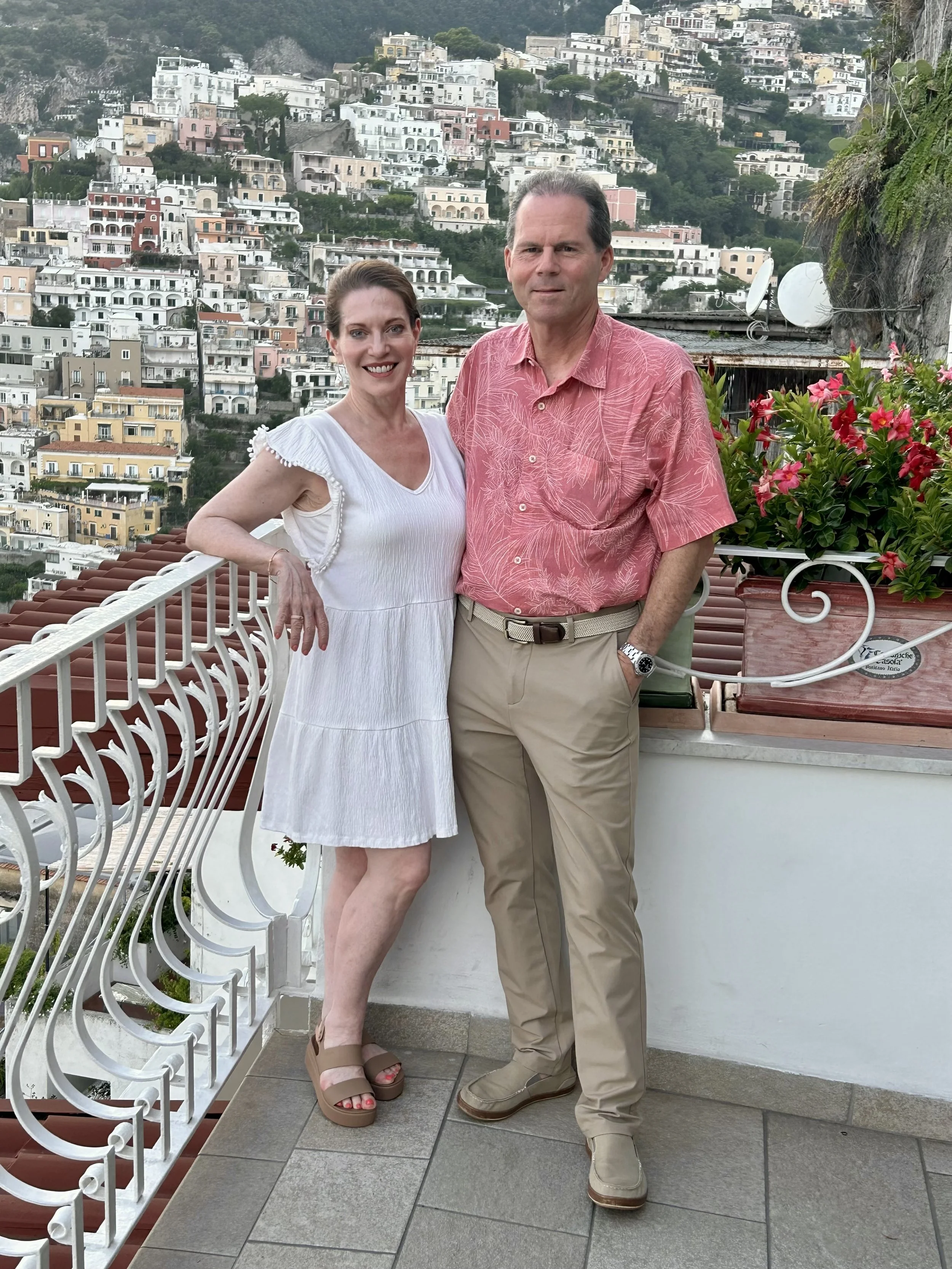
Our first week was spent in a private villa in Positano. Positano is a charming hillside village that drops down into the sea. Summer is extremely popular there and it is hot, crowded and busy. By contrast, the villa was a quiet, lovely respite with a garden and a pool that both got frequent use. We had daily adventures in town. One highlight was visiting a Roman villa that was miraculously preserved by volcanic ash from Pompeii. I have always been fascinated by Pompeii and marveled at those ruins but the frescos in this villa, while only a few, were unbelievably bright and ornate. https://marpositano.it/web/en/
Another day we took a cooking class where we made (and ate!) fried zucchini flowers, cavatelli pasta and fresh fish. One thing you notice about Italy is how regional the cuisine is. While I rarely ate pasta and tomatoes while living in Turin, on the Amalfi Coast, these are staples and most dishes, whether protein or carbs are finished with olive oil, fresh tomatoes and basil. It’s such a clean, easy and healthy way to cook. The olive oil was local and full of flavor. The tomatoes came from the chef’s own garden that morning. When I first came home from my year in Italy, I vowed to always make my own pasta sauce. At some point I dropped that habit but have resolved to start doing that again. Now, I just have to find some good tomatoes!
Going to Capri was high on my to-do list. We chartered a private yacht, an Italian designed boat by the Italian manufacturer, Pardo which makes a perfect Mediterranean day boat. We knew this having enjoyed several days on a Pardo a few years ago in Porto Cervo, Sardinia. We jetted out of the marina and enjoyed cruising the coast, circumnavigating the isle of Capri. When we disembarked, we took a scenic, open-air taxi ride up to Ana Capri and cooled off with an obligatory granita. Lemon slush takes on a whole new level in this part of the world, being made with fresh lemons. In Anacapri spell they top it with half of a fresh-squeezed orange. What a welcome treat in the mid-day heat!
After browsing the designer boutiques and marveling at the views, we chose the other iconic form of transportation by taking the funicular down the hill back to the marina. Our boat captain, Ciro, promptly picked us up and suggested he take us to the town of Nerrano for lunch. Nerrano is a pretty group of buildings on the mainland coast that looked like a group of three hotels, each with a seaside restaurant and beach club. Ciro suggested his favorite and we took a tender to the restaurant’s dock while he anchored the boat. I tried the famous pasta spaghetti alla Nerano-style which reminded me of a lighter Carbonara since it’s made with sauteed zucchini, cheese and fresh basil.
We stopped near a grotto on the way back to Positano for a swim, the perfect end to a sweltering summer day. We had ordered a sumptuous antipasto spread for the trip home but enjoyed such a late lunch we had Ciro pack up the beautiful salami, mortadella, cheeses, focaccia and grilled vegetables. He also gave us a few bottles of Prosecco and we ended up having a casual dinner at the villa.
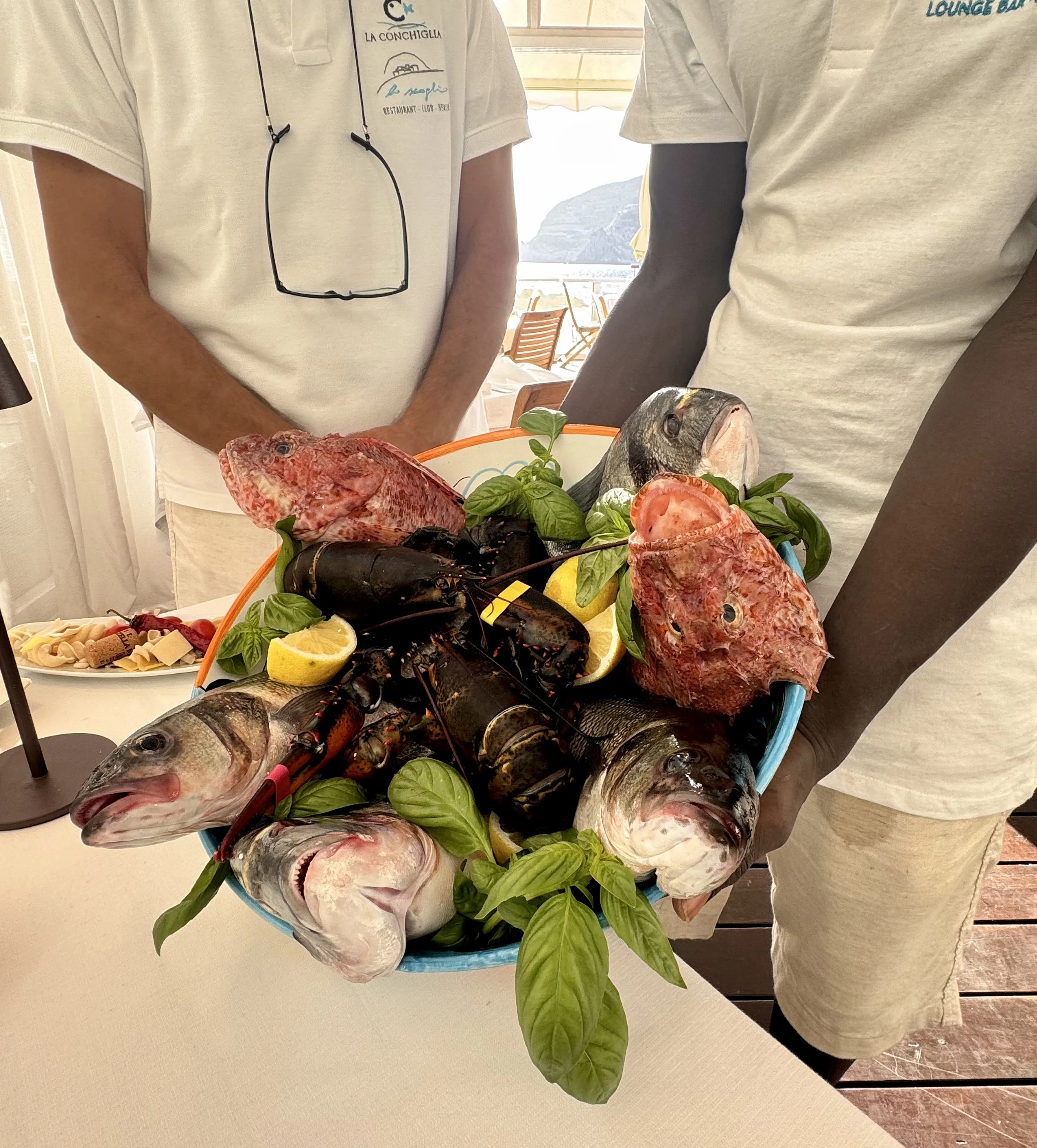
Another highlight of the trip was a day in Ravello. Set high above the coast, Ravello feels more relaxed and accessible than the tight, compact streets of places like Positano and Capri. We visited a ceramic factory, toured a villa with beautiful gardens, and enjoyed a luxurious lunch at the absolutely splendid Hotel Caruso. It was an idyllic day, and dining on the garden terrace with sweeping views of the sea was truly enchanting.
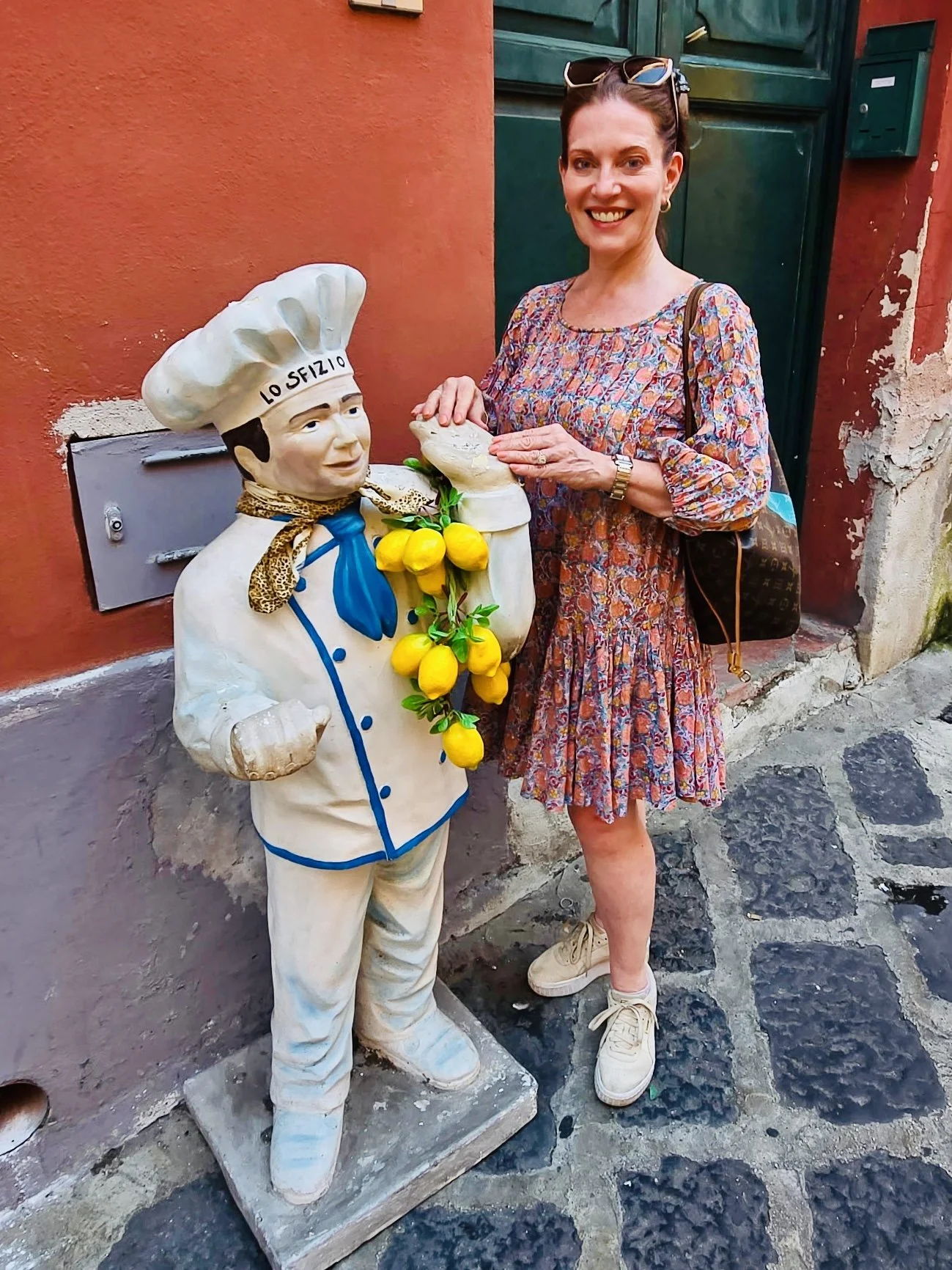
A note about handicrafts and design: every area we visited was filled with shops, many carrying similar locally inspired products. Lemons are a staple of the region, so you see them everywhere—on soaps and lotions, in cookies, oils and sweets, and as motifs on plates, fabrics and other decorative pieces.
Ceramics are also an important local craft, with everything from plates and platters to shot glasses and even full-sized custom ceramic tabletops. Handbags are another popular find, and I couldn’t resist picking up a few cute raffia bags trimmed in beautiful Italian leather.
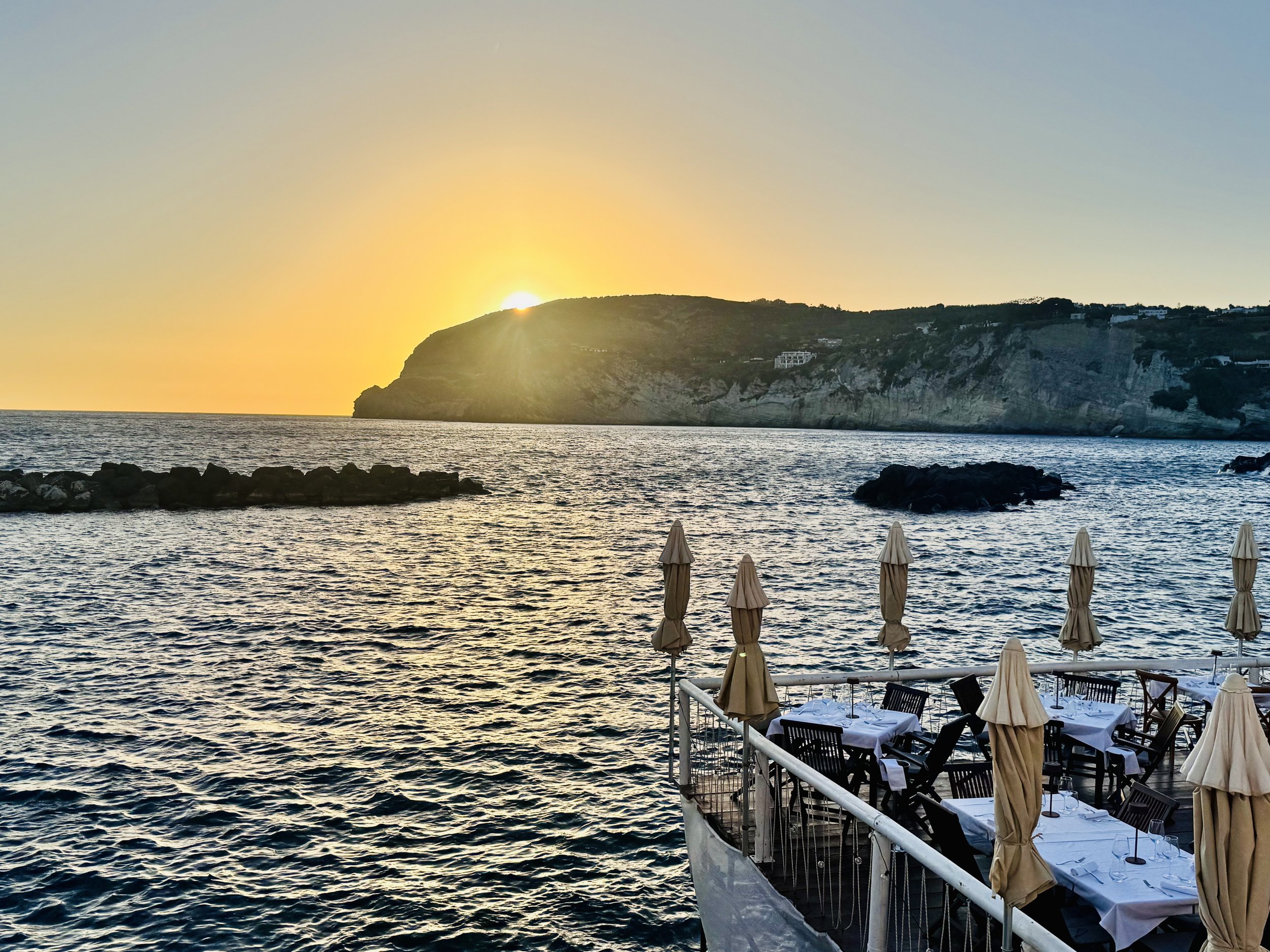
We finished our week in Positano and were eager to continue our trip. Positano is beautiful and delightful, but as I mentioned, it is also crowded, hot and humid. Living in Houston, Jon and I usually shy away from hot and humid destinations during the summer. Europe used to be a pretty good option, but I’ve read that it is heating up faster than any other continent and experiencing increasingly frequent heat waves.
Everywhere we went, temperatures were 9–12 degrees above average, which makes a substantial difference! Few places are equipped with air conditioning, and when they do have it, it’s often not as powerful as what we’re accustomed to in America. Nearly all dining is outdoors, so it’s something to be prepared for when visiting during the summer.
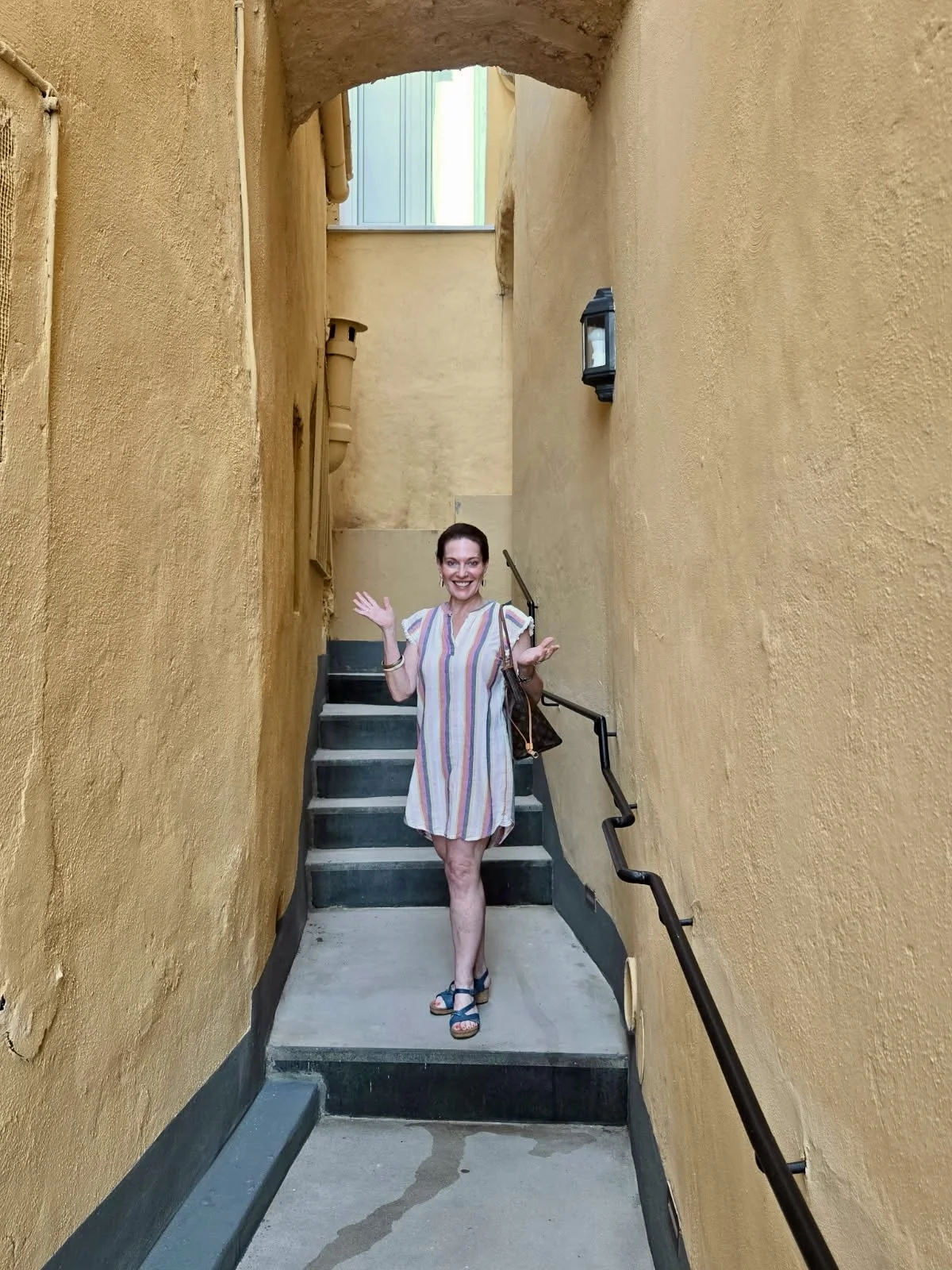
Positano is also surprisingly physically challenging. There is limited public transportation, and private cars and taxis can only access about half of the town. To get almost anywhere, you’ll encounter hundreds—literally hundreds—of stairs. Even if you’re fit, it’s a workout!
I usually exercise while traveling, but with all the walking and the many, many staircases, I pretty much gave up my daily workouts. Between climbing stairs and swimming, I figured I was getting plenty of exercise already!
Slowing Down in Ischia
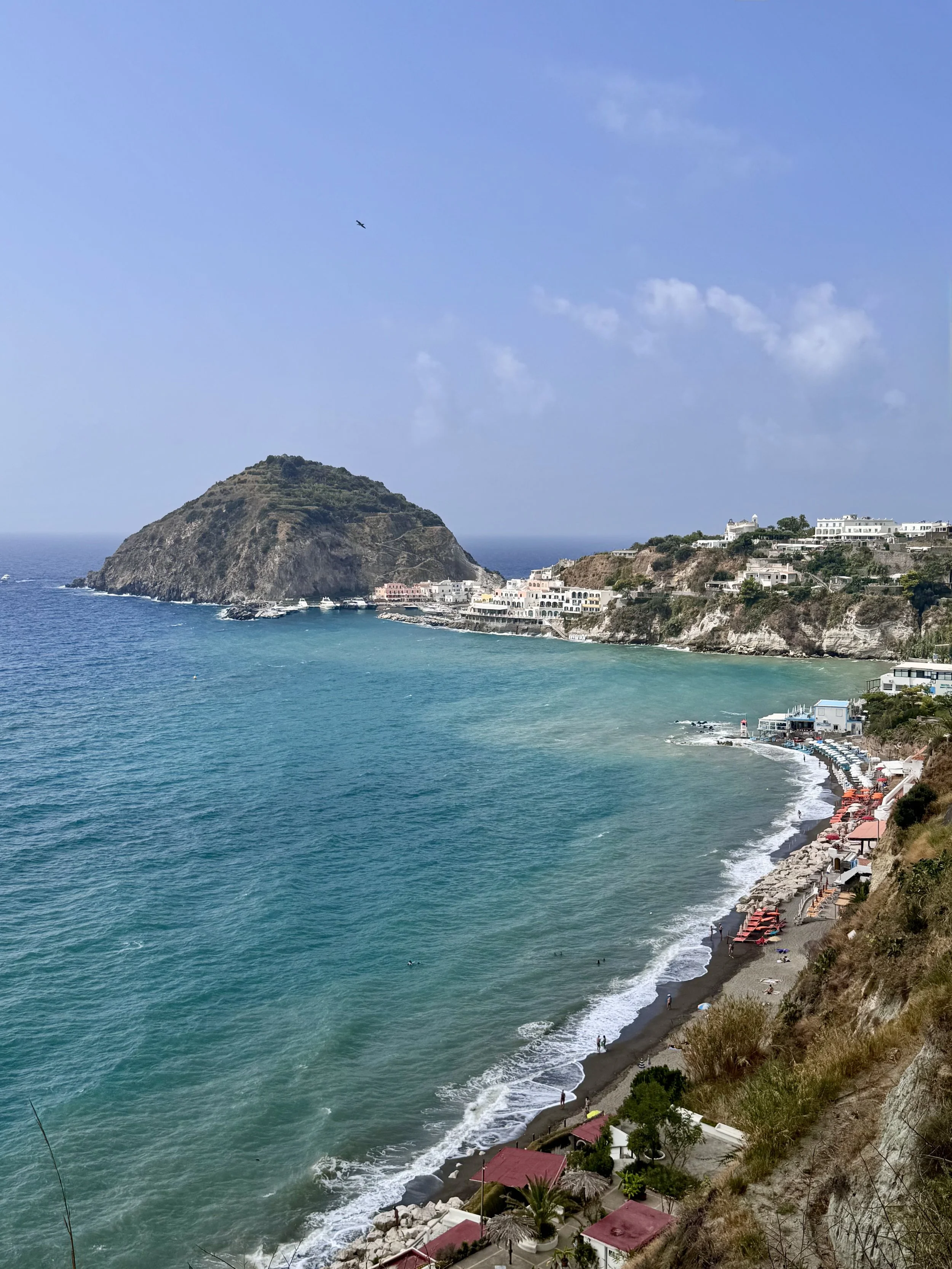
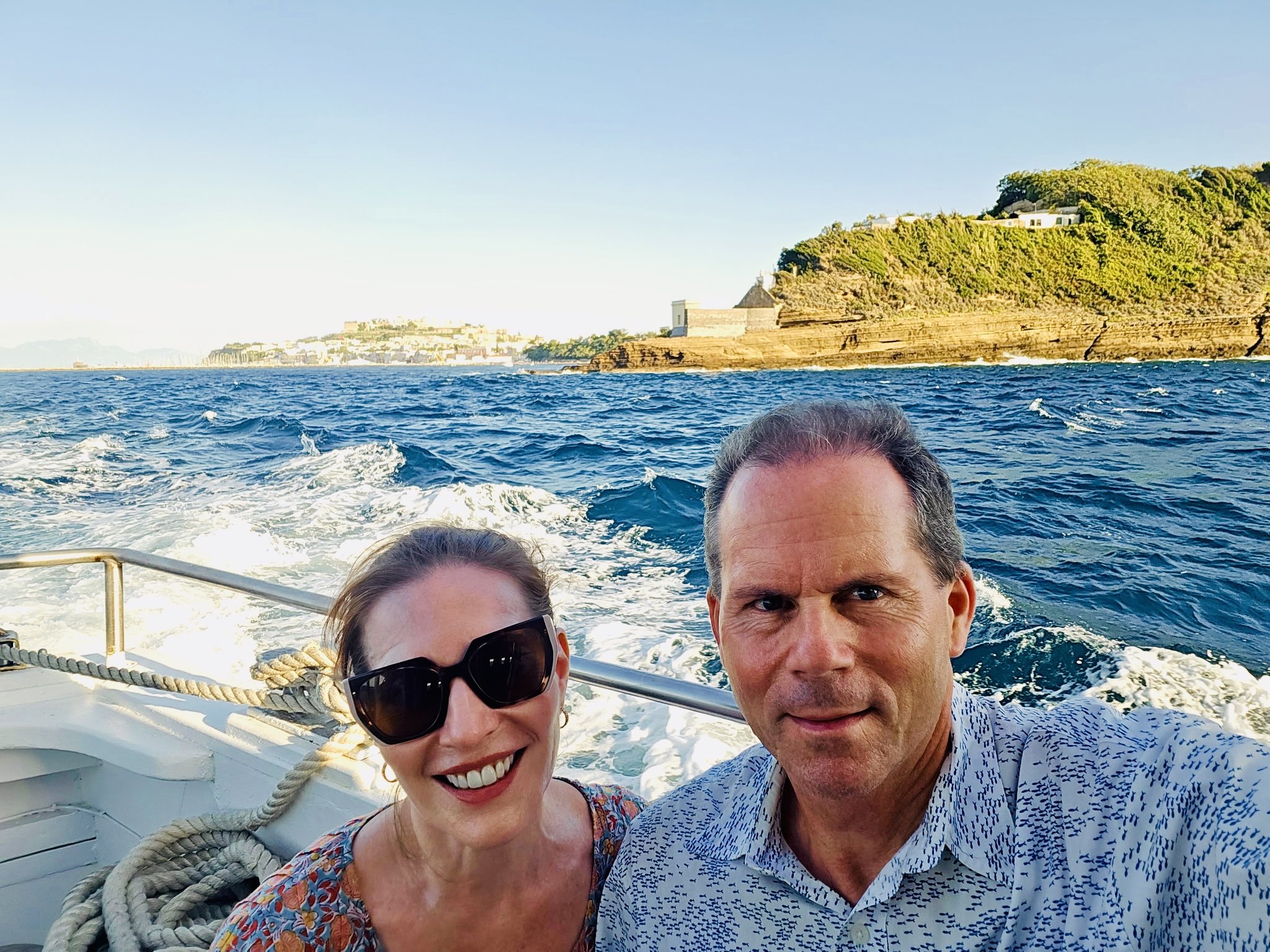
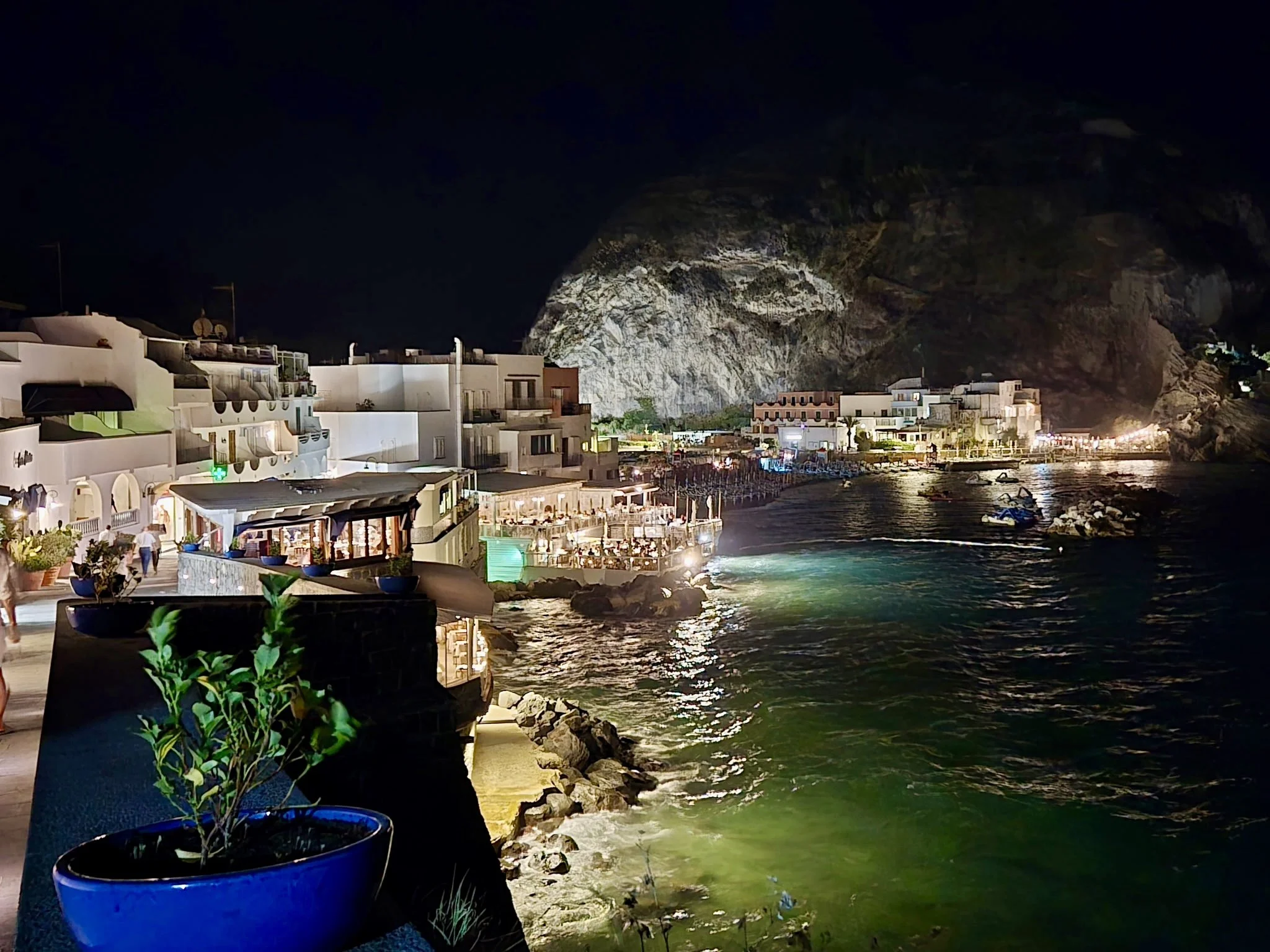
Our next phase started by taking a ferry to Ischia. Ischia is a smaller and less crowded island, favored by Italians. We were in the Sant’Angelo area at the south end of the island. On clear days you could see Capri and Positano from our room.
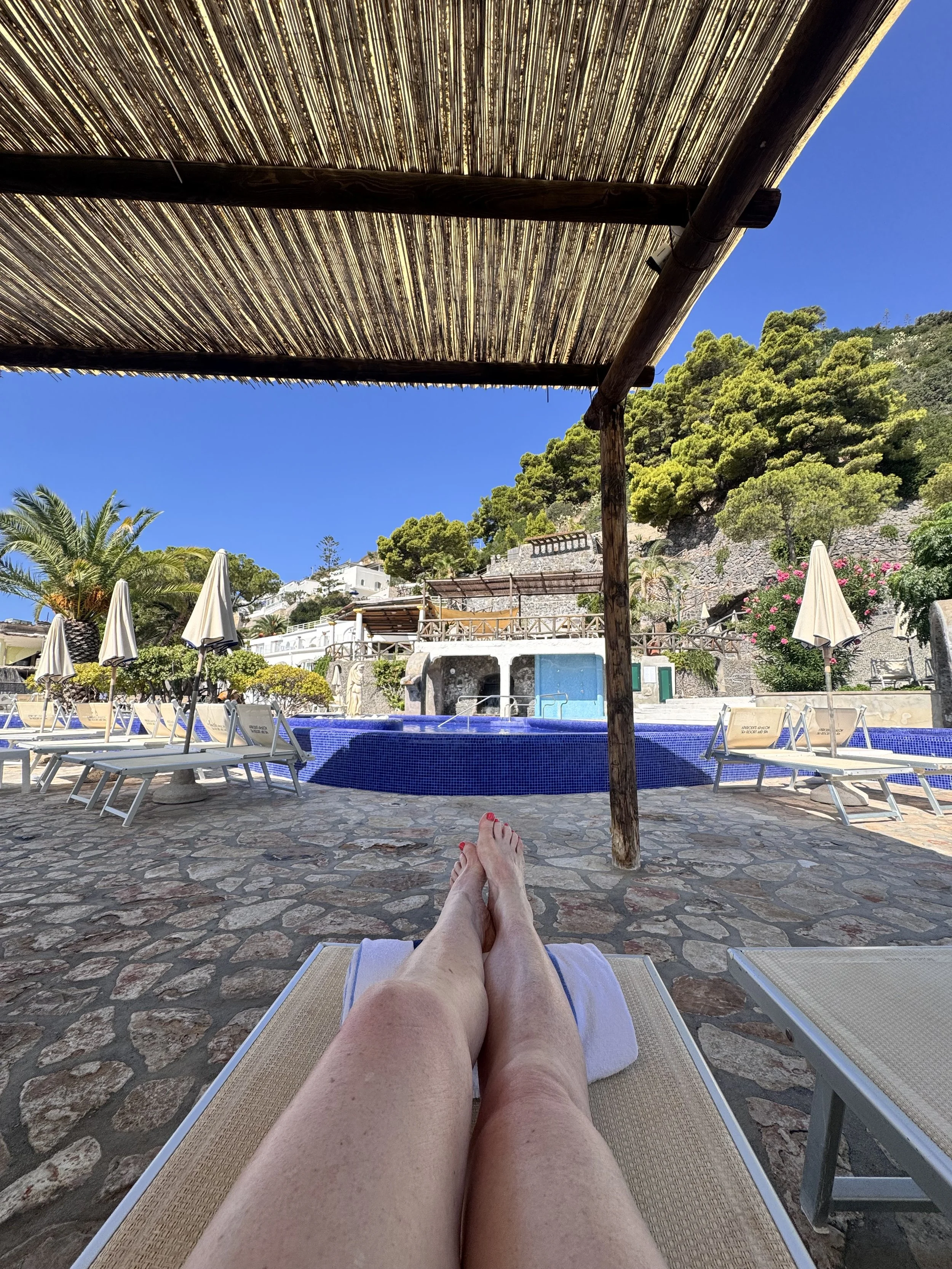
We stayed at Miramare Sea Resort, which was built in 1930. It had an elegant, simple, classic architecture with white walls, decorative tiles in white or hues of watery blue-green, and open-air concepts. It was flooded with light. We had a pretty balcony where Jon could peruse the maritime traffic and keep an eye on the various yachts that anchored in the nearby harbor.
It included their famous thermal pools with seven different temperatures from the hot springs and two seawater pools. They also had a fascinating area of “boiling sand” which included hot springs coming up onto the beach and heating the nearby sand. You had to watch out for those and wear flip-flops. We hiked and explored these areas and then enjoyed bathing in the sea just a few steps down from our room. We also indulged in the local custom of taking a siesta. After a late lunch we retired to our room and closed the shutters to escape the worst of the heat and full sun. Around 4 p.m., shops reopen and the towns come back to life. We adopted that daily rhythm.
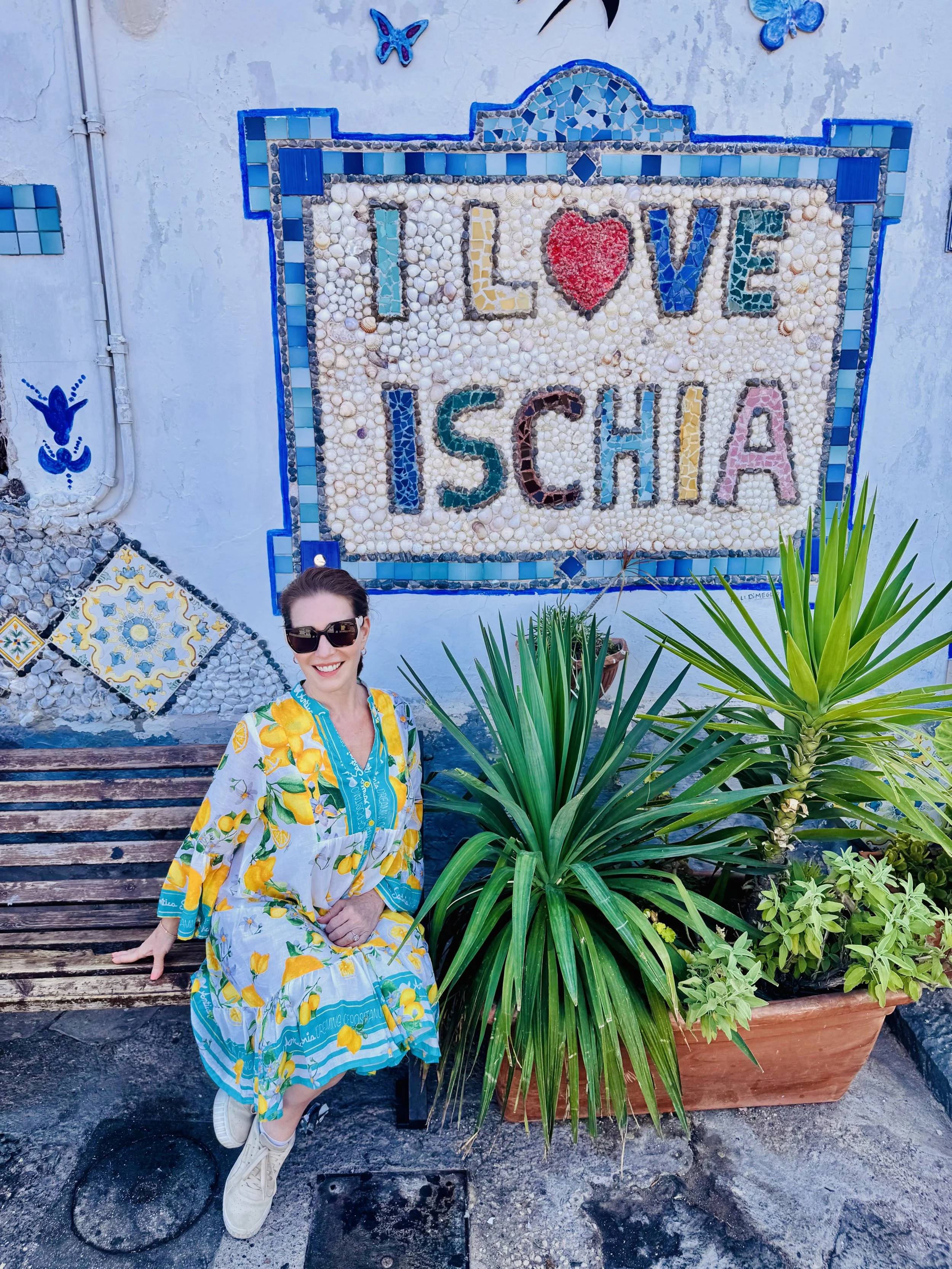
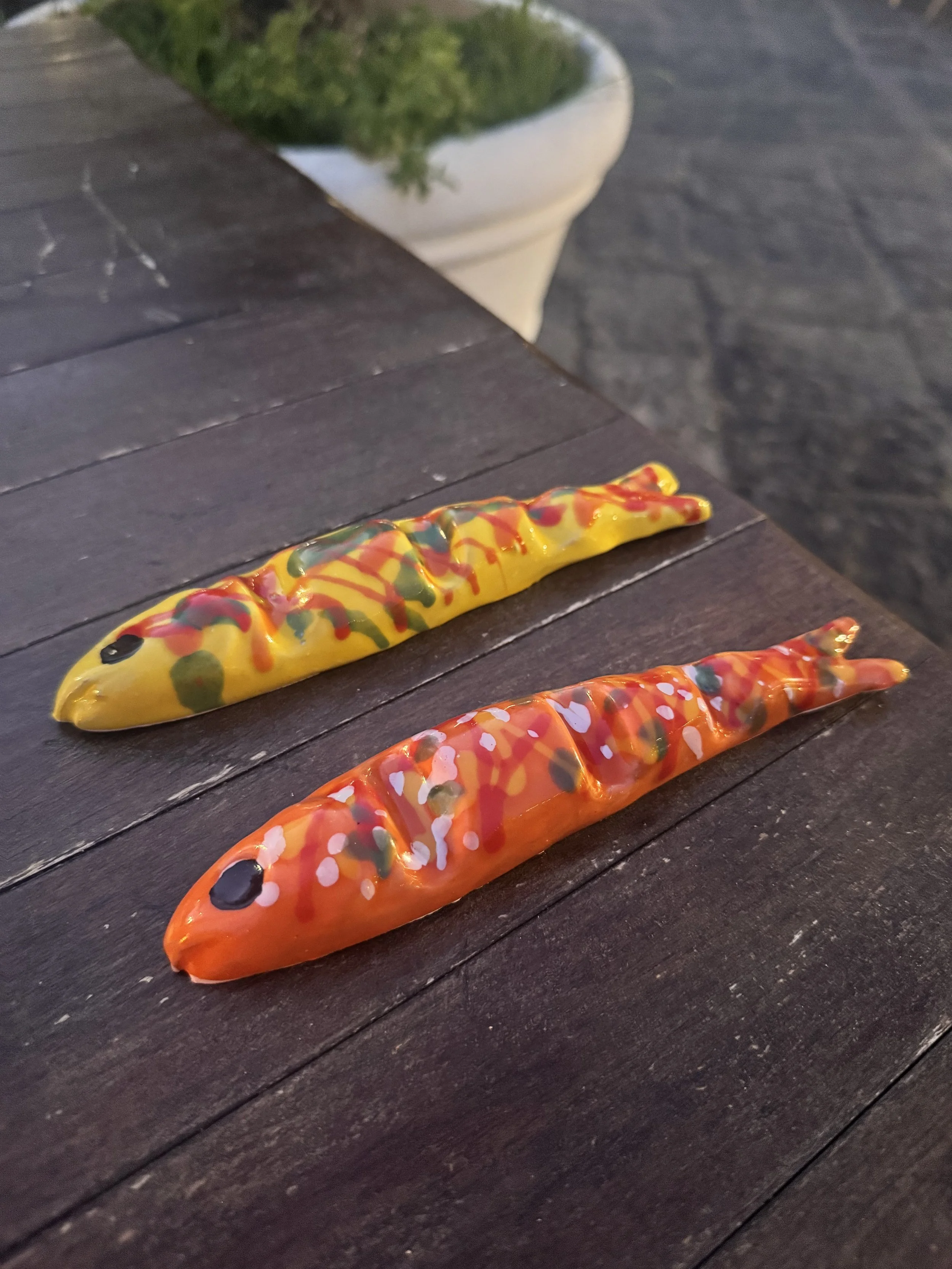
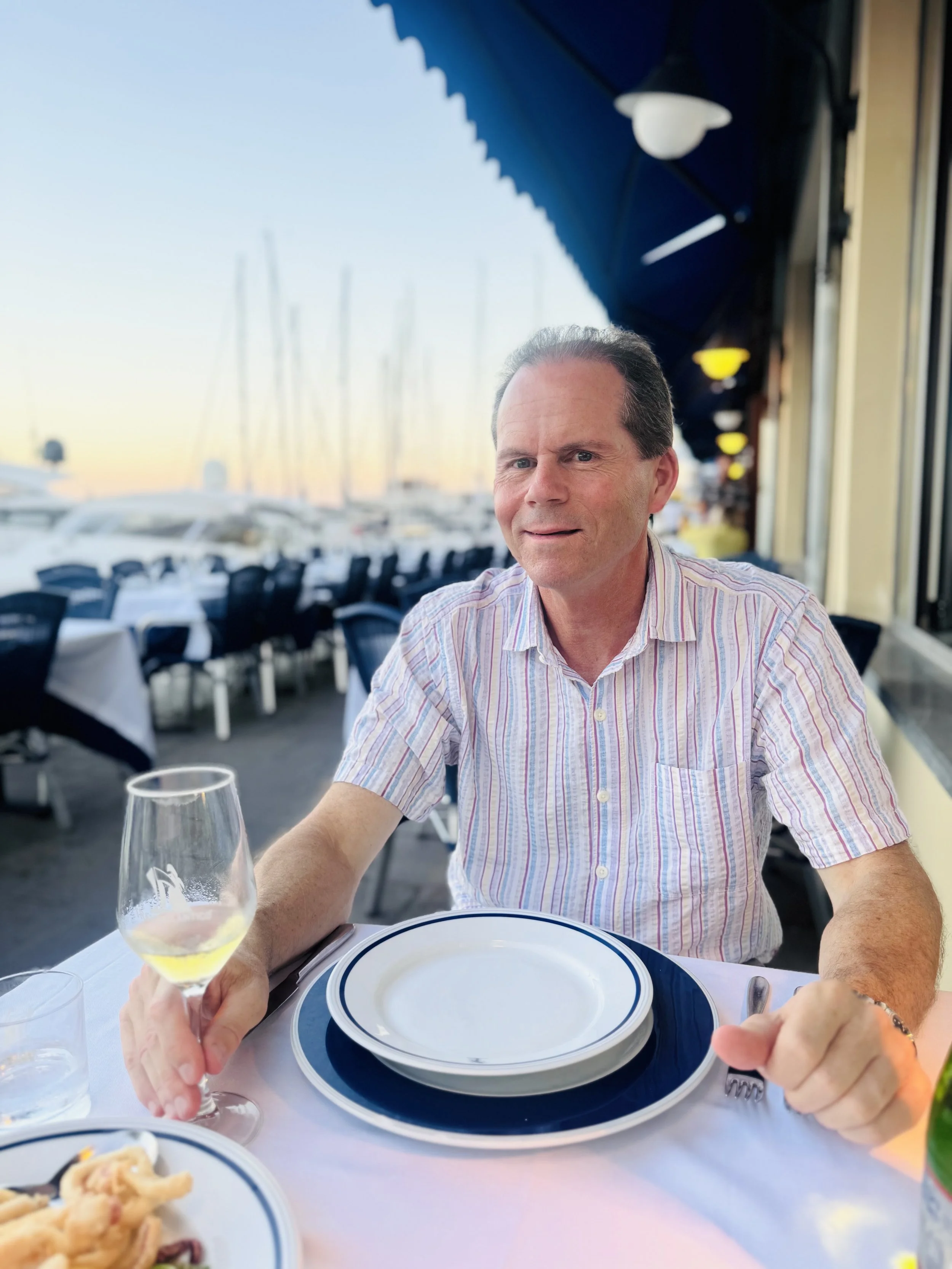
We enjoyed our small village, eating at several of the restaurants, indulging in the best lemon sorbetto we have ever eaten and searching for souvenirs. We found one item that we definitely wanted to take home. I don’t like putting my silverware back on the table while eating and I find fewer and fewer restaurants change it out between courses. I dislike when servers say, “keep your fork.” In Italy, even the small trattorias are strict about etiquette and bring you new silverware with every course.
However, they go a step further and nearly every restaurant has what are called poggiaposate or cutlery holders. I have several versions of knife holders at home, but the Italian version was larger and could hold all of your silverware at once, keeping it off the table. One local restaurant had fish-shaped holders which Jon liked, so we tracked down the source and bought them. Another restaurant had a clever and simple solution – they simply rested the forks on a cork. There is no shortage of cork in this country, nor at my house, to be honest!
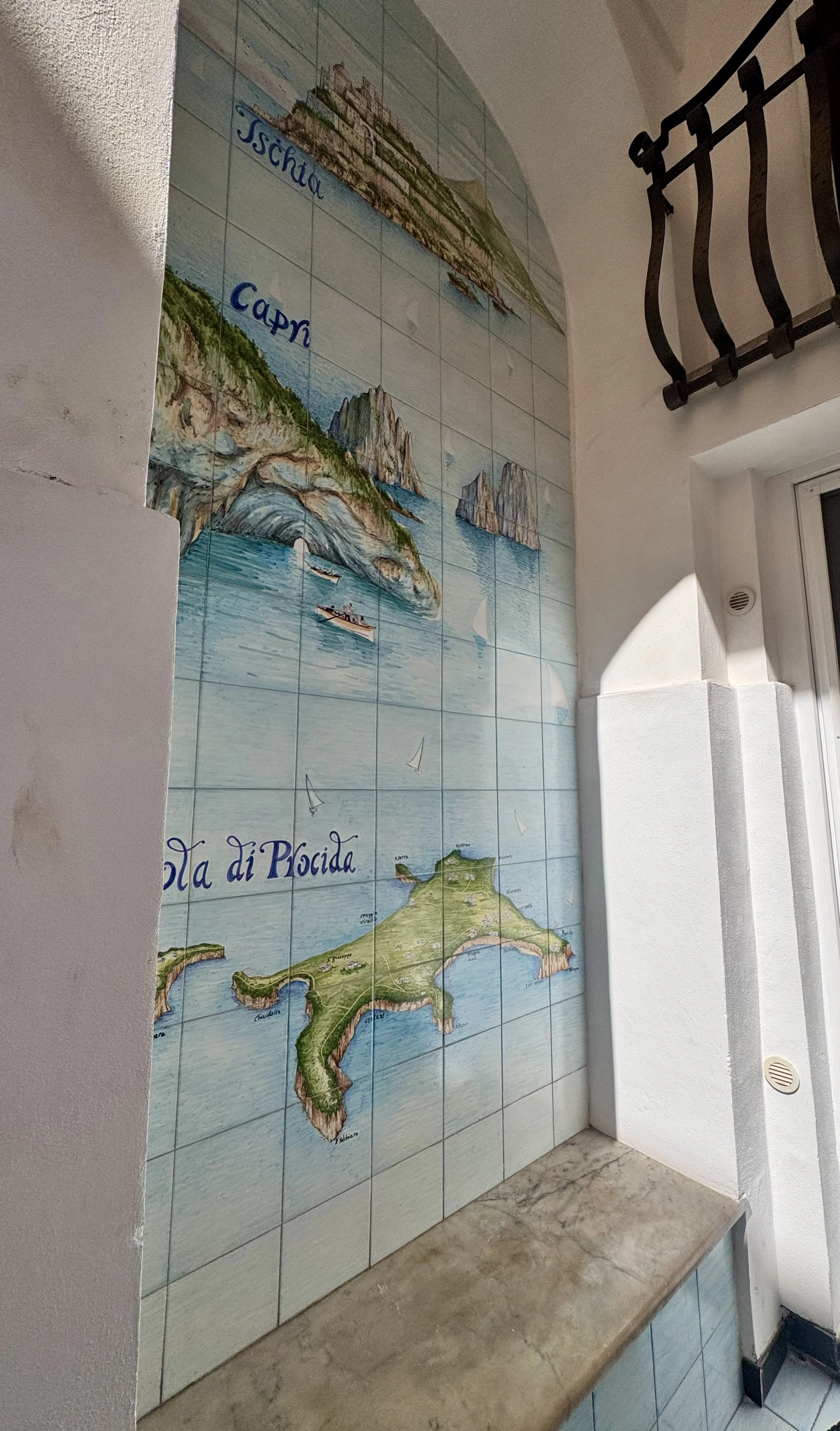
We did a day trip to Procida, another small island only 15 minutes from Ischia. Jon discovered it while researching the area and we easily visited the entire town, walking up SLOWLY to the top of the hill and descending to the colorful marina for a delightful lunch. We tried one of the specialties – lemon salad – which was typically local and simple, consisting of sweet local lemons, cut thin with rinds and dressed with olive oil, mint, chili flakes and salt. It was so delicious we ordered a second one instead of dessert.
One Last Night in Italia
Our flights to and from the area were routed through Naples, and with an early morning departure, we decided to spend our final night there for easy airport access.
We stayed at The Grand Hotel Parker’s, the oldest hotel in the city, where we were upgraded to a beautiful, elegant suite complete with the latest high-tech amenities. They also gifted us a bottle of wine and invited us to enjoy a drink at their fabulous rooftop bar.
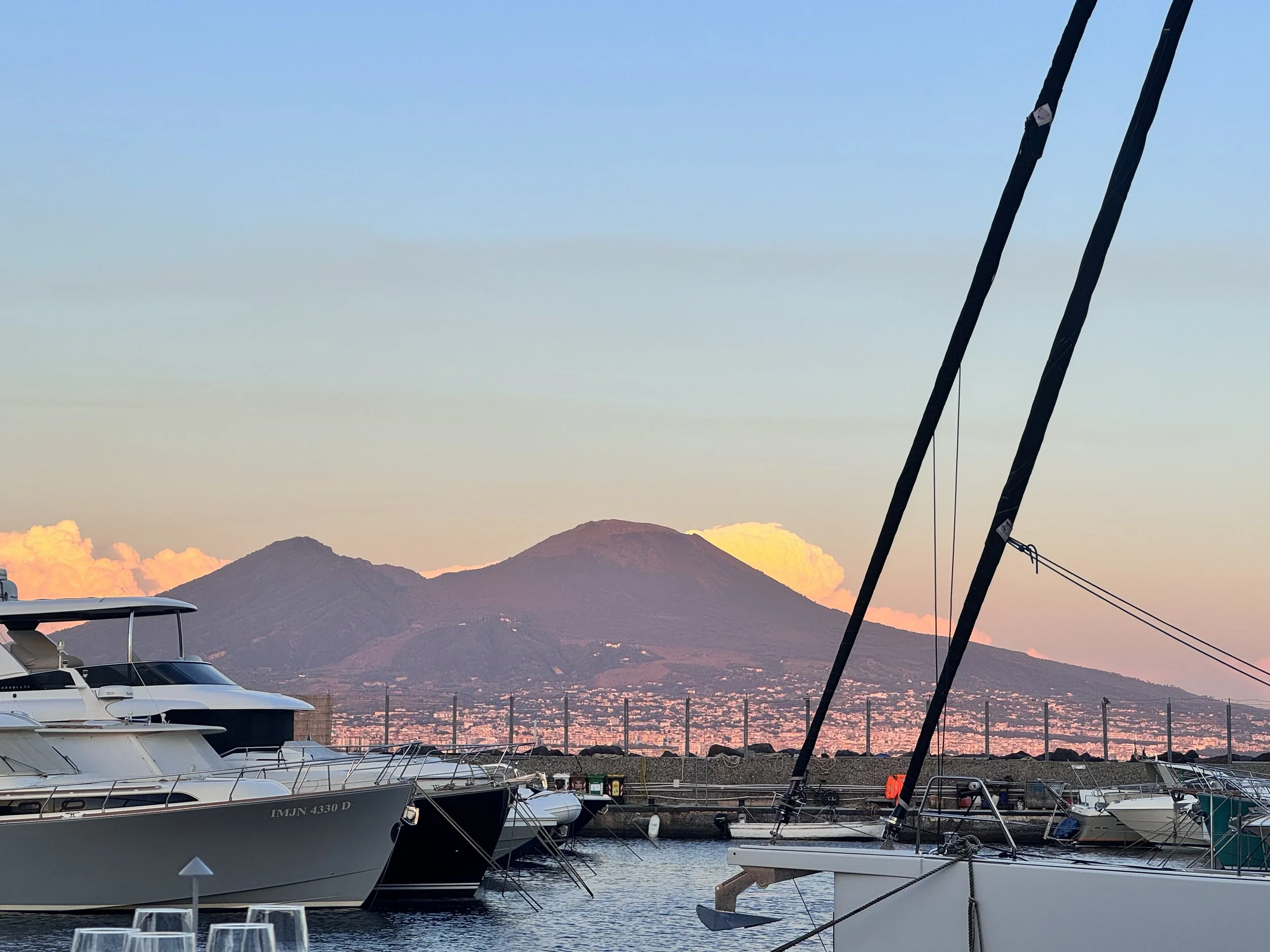
After a long walk through the city and a seafood dinner near the docks, we ended the evening back on the rooftop. The nighttime views of Mount Vesuvius were incredible, and it felt like the perfect way to say goodbye to Italy, raising a glass and toasting La Dolce Vita in style.
Travel by Design – Exploring the world, bringing inspiration home
A journal by Pamela Hope Designs
Thank you,
Meet Pamela
A LUXURY INTERIOR DESIGNER IN HOUSTON
Pamela O’Brien is the founder of Pamela Hope Designs in Houston, Texas. Pamela is an award-winning luxury interior designer, writer, and speaker. Prior to founding Pamela Hope Designs, Pamela served as a spokesperson in media and public affairs, working with media outlets like Dateline NBC and 48 Hours. This experience allowed her to travel the world and furthered her love for travel, culture, and interior design. After attending an executive course at the Harvard Graduate School of Design, Pamela launched her own interior design firm full-time. Pamela is known for building strong relationships with her clients, who later become friends and collaborators. She is highly influential in the Houston interior design space and shows no signs of slowing down.


Meet Danna
A LUXURY INTERIOR DESIGNER IN HOUSTON
Danna Smith has more than 30 years of experience in the design industry. She has been a buyer and merchandiser for four luxury showrooms in Houston and Dallas. Smith teaches an evening course at Houston Community College to nurture her passion for developing future design stars. Since joining Pamela Hope Designs in 2015, she has worked on some of her most beautiful and innovative projects yet.