The Value of Showing Up: Volunteering, leadership, mentoring and the unexpected rewards of giving back
Published: October 22, 2026
Over the course of my career, I’ve learned that some of the most valuable experiences happen outside the office. Like most business owners, I can always find a reason that I’m too busy to volunteer. There is a client who needs something, a deadline approaching, an installation to prepare for—or simply a very long list of things that didn’t get finished yesterday.
And yet, some of the best decisions I’ve made have involved saying “yes” anyway. Over the years, I’ve had the opportunity to serve in leadership and volunteer roles with organizations that are very different from one another, including the American Society of Interior Designers Texas Gulf Coast Chapter (ASID TXGC), the Devereux Texas Advisory Board (TAB), Episcopal Church Women (ECW) at St. John the Divine and Phi Mu Fraternity.
Each has enriched my life in a different way. Collectively, they have taught me something I wish more young professionals understood: volunteering isn’t simply about giving something away. Very often, you receive far more than you expected in return.
My parents, especially my mother, volunteered my entire childhood. Whether it was preparing items for a school fair or hosting a tea for Ballet West, I saw her selflessly provide support and assistance to various groups. During my early teens, we were members of the National Charity League (NCL) which offered us wonderful volunteer experiences as well as valuable time together.
Leadership Is Learned by Doing
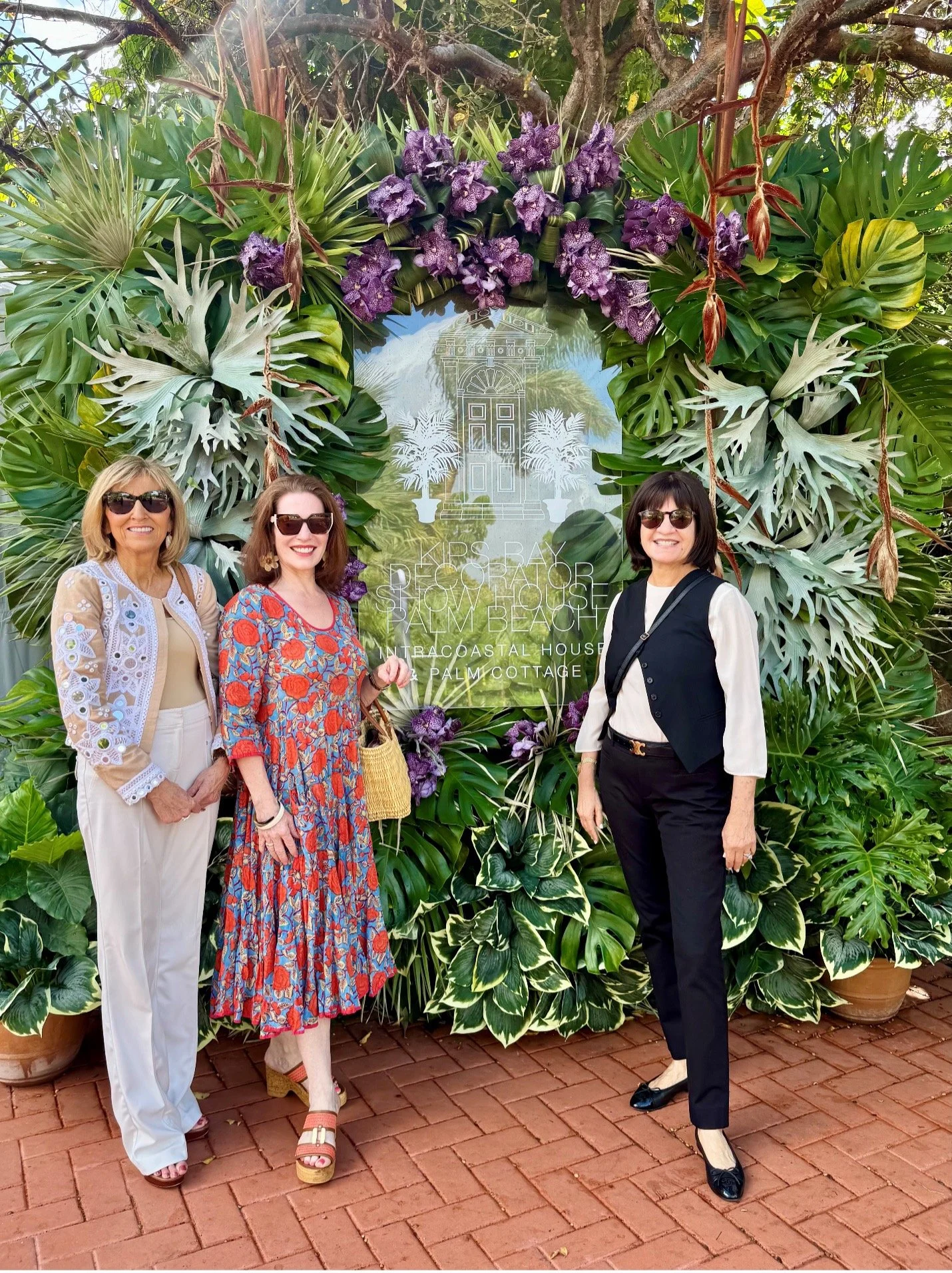
Pamela attends the Kips Bay Decorator Showhouse each year in Palm Beach, Florida with her fellow design friends and mentor, Lauri Ward (on right)
I’ve been involved with ASID for many years, and my participation in the organization has been an important part of my professional life. I was absolutely thrilled to become a member and add the designation to my credentials. It was early in my design career and I received so much support. I had several mentors over the years and their guidance was invaluable in helping me build PHD.
Interior design can be a surprisingly solitary business, particularly when you own a small firm. We spend our days focused on our clients, our projects and our teams. A professional organization gives us an opportunity to step outside of that world and work alongside other people who understand both the joys and the challenges of our industry.
It also provides opportunities to lead.
Leadership sounds very impressive when written in a biography. In reality, it often means organizing people, solving problems, making decisions when there isn’t a perfect answer and figuring out what to do when Plan A goes completely off the rails.
In other words, it’s excellent training for owning a business.
I started volunteering by joining a few ASID committees and within a year rose to the being on our local board. Serving with ASID has allowed me to learn from designers and industry partners I admire, develop relationships throughout our industry and, I believe, contribute something useful in return.
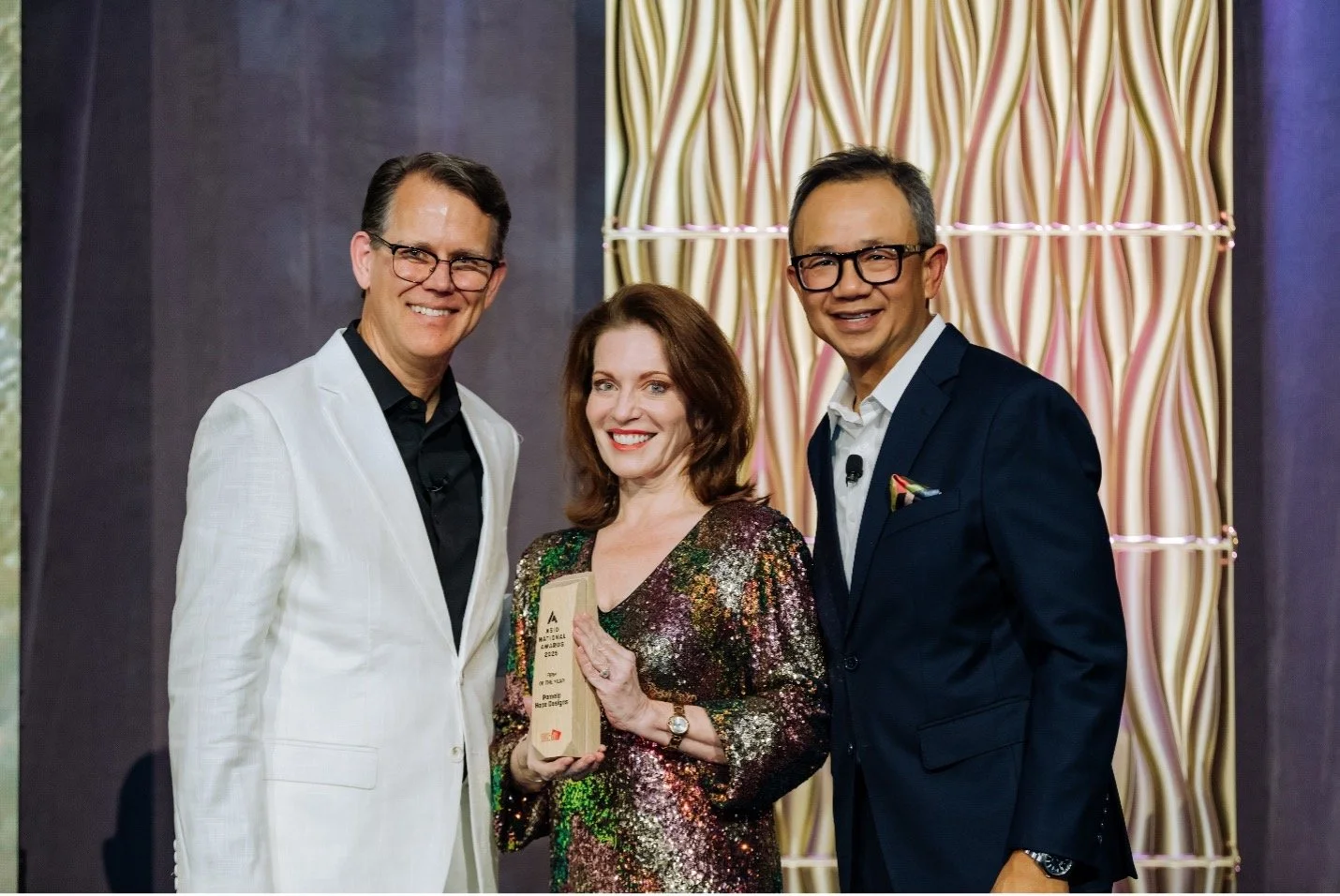
While I did not do it for accolades or recognition, I believe my ASID participation leadership roles were key reasons PHD was selected as the ASID Firm of the Year on our 50th Anniversary.
Networking Without “Networking”
Pamela accepting ASID Firm of the Year National Award
I’ve never particularly loved the idea of networking when it is treated as a business strategy.
Walking into a room thinking, “Who here can help me?” is quite different from walking into a room thinking, “How can I participate?”
The second approach has served me much better.
Some of the most valuable professional relationships—and wonderful friendships—I’ve developed began because we were working on something together. When you serve on a board or committee, you see people differently. You discover who follows through, who stays calm when something goes wrong, who has wonderful ideas and who can make everyone laugh when the meeting has gone on entirely too long.
Those relationships are genuine. And yes, over time they can lead to referrals, opportunities and business connections. But those are often the byproducts rather than the objective.
I was a member of BNI Greenway Chapter for 23 years. We were a powerhouse chapter for a long time and I often said that my favorite, best, most profitable and award-winning projects were direct referrals from my fellow members. To me, that is networking at its best.
Mentoring Works in Both Directions
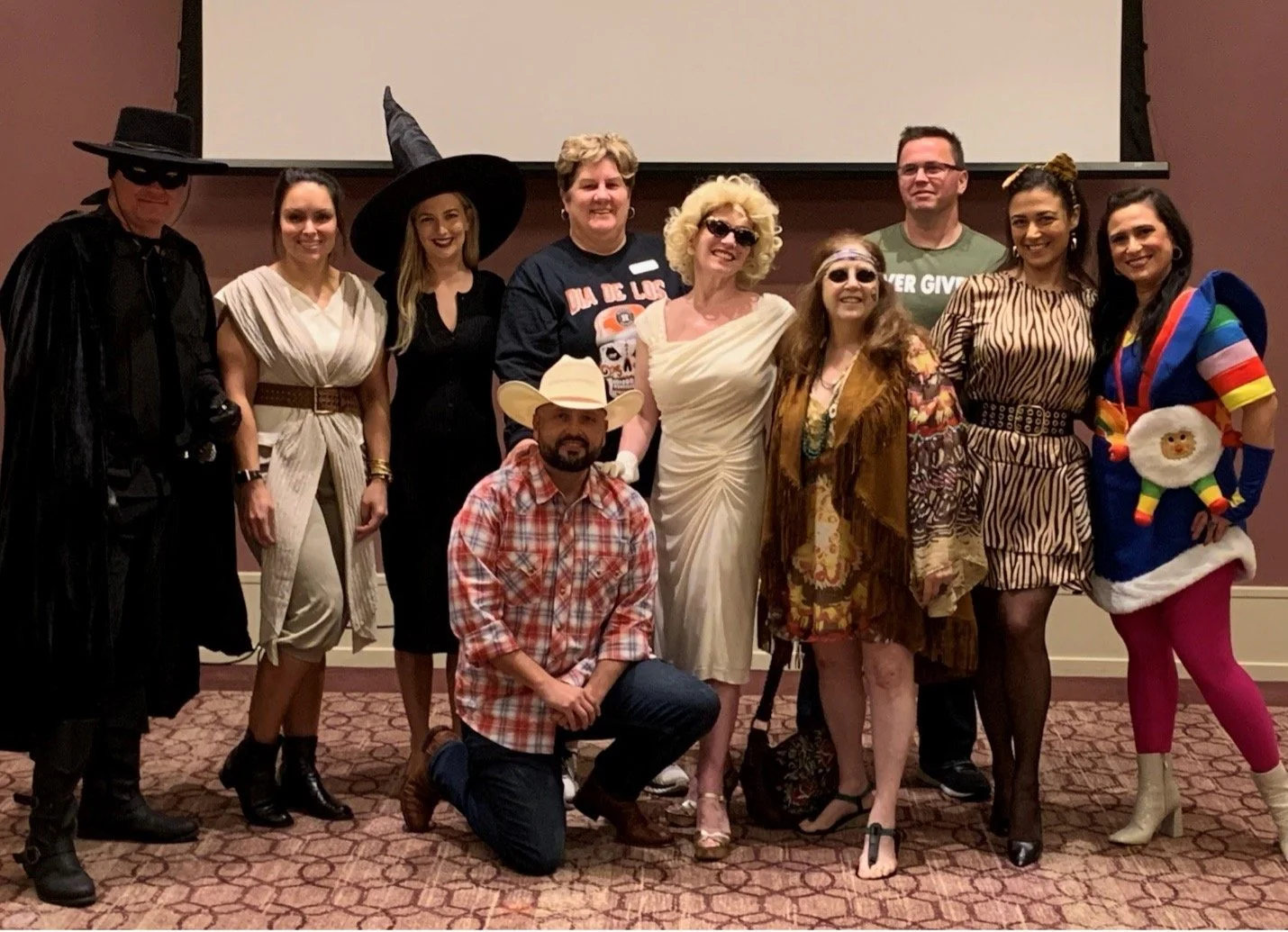
Pamela with her BNI partners in full costume for their 7 a.m. breakfast meeting which landed on Halloween – you can see the meetings were pretty fun!
After more than two decades in business, I’ve accumulated a fair amount of experience—some of it acquired gracefully and some of it acquired the hard way. One of the pleasures of reaching this point in my career is being able to share some of that experience with younger designers and professionals. But I think we sometimes misunderstand mentoring if we imagine all the knowledge flowing in one direction.
Younger professionals have plenty to teach those of us who have been doing this for a while. They approach technology differently. They may communicate differently. They bring fresh ideas, different expectations about the workplace and an entirely new perspective on an industry that continues to evolve.
A good mentoring relationship allows both people to learn. And sometimes mentoring isn’t formal at all. It can be answering a question, making an introduction, recommending someone for an opportunity or simply taking the time to encourage a person who is trying to find his or her way. Those small gestures matter.
Taking Your Skills Outside Your Own World
My involvement with the Devereux Texas Advisory Board has given me another perspective on service. There is something valuable about volunteering outside your own profession. It reminds you that the skills you develop running a business can have applications you never anticipated.
Business owners know how to organize, communicate, raise money, plan events, connect people, solve problems and somehow get things accomplished with limited time and resources. Those abilities can be tremendously useful to a nonprofit organization.
More importantly, serving an organization such as Devereux takes you outside your normal circle.
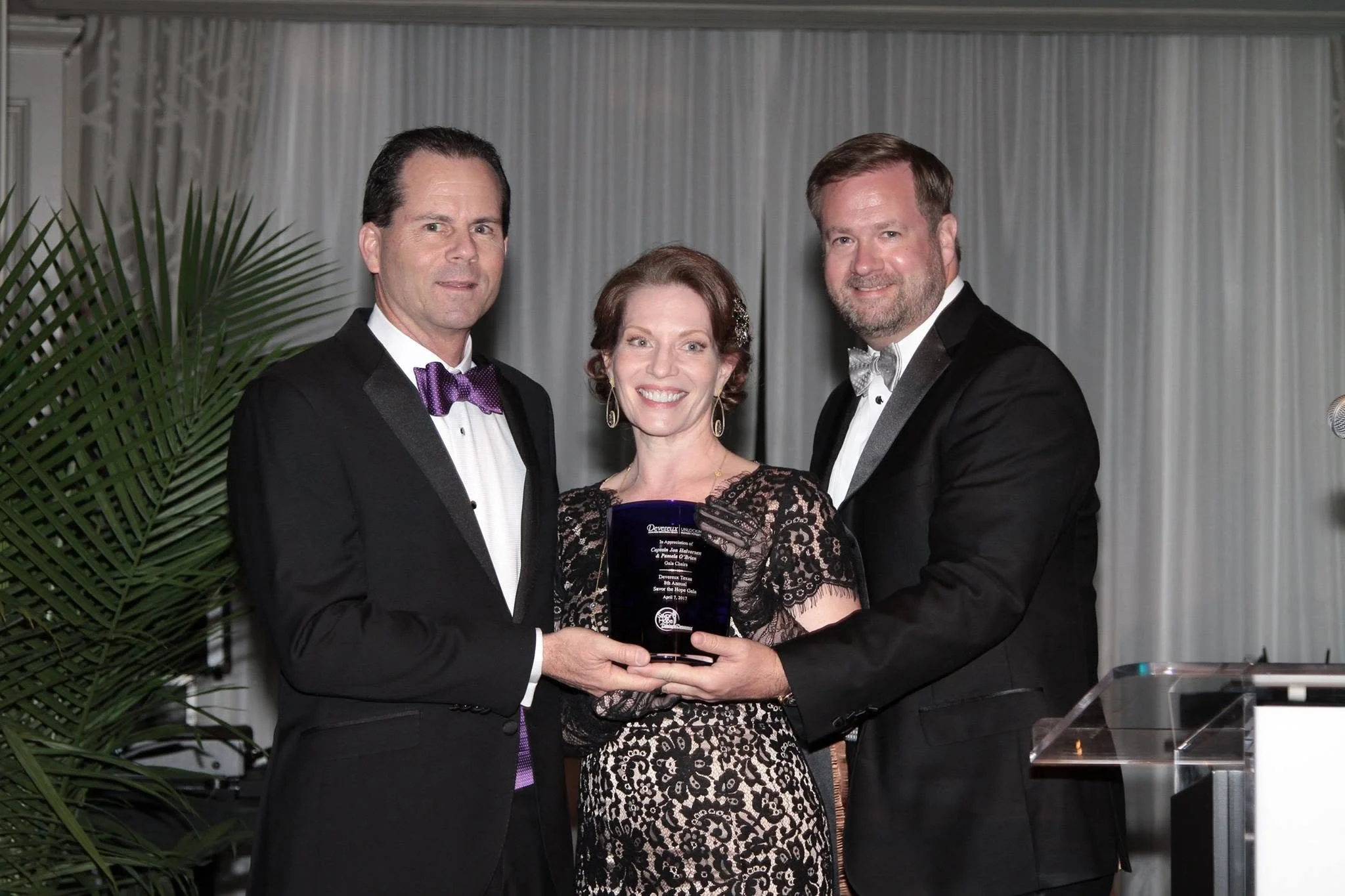
After attending many galas, Jon and I were honored to chair Savor the Hope in 2017. We selected a Downton Abbey theme and the evening was a big success.
It is easy to become absorbed in our own businesses and industries. Community service provides a useful reminder that there is a much larger world outside of them.
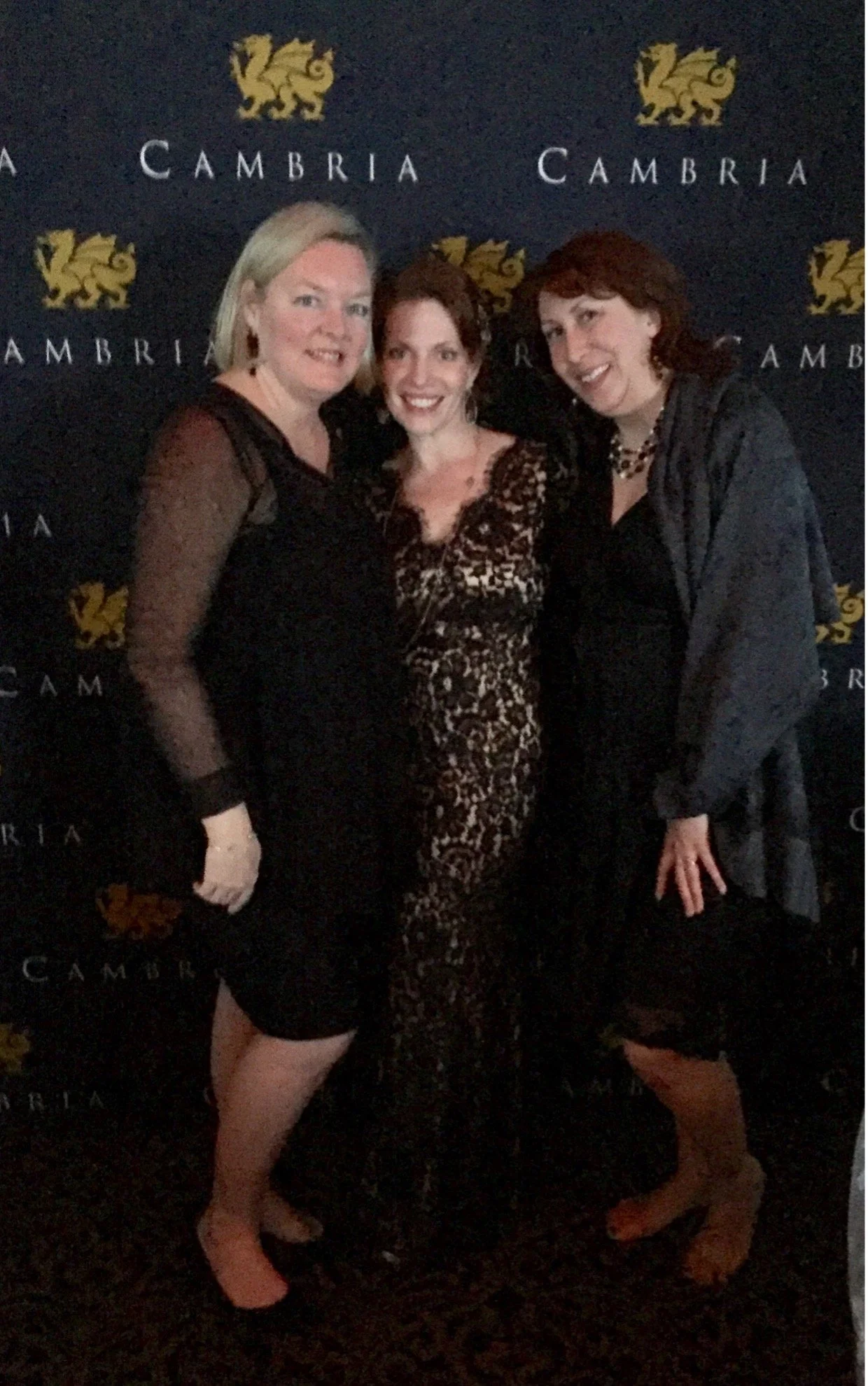
Pamela attracted corporate sponsors such as Cambria and Kitchen and Bath Concepts to the gala for the first time
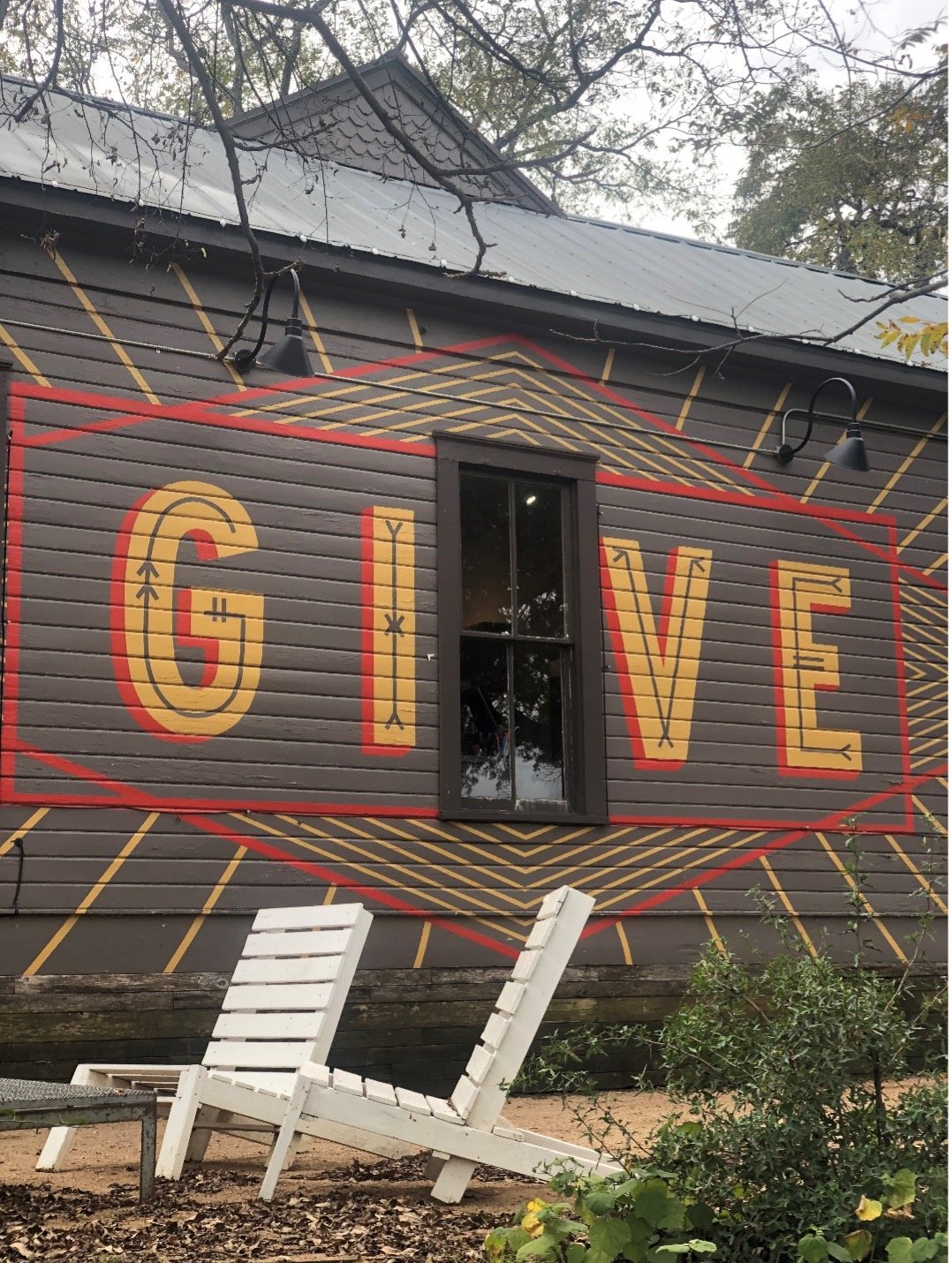
Sometimes You Simply Show Up
My involvement with Episcopal Church Women at St. John the Divine represents yet another kind of service. Not everything we do needs to advance a career, expand a professional network or teach us a new business skill. Sometimes we participate because we are part of a community.
Church and community organizations depend upon people who are willing to show up, take responsibility and do the work—often quietly and without much recognition. There is something wonderfully grounding about that.
I also think these organizations remind us that service changes throughout our lives. There may be years when we can chair the committee and years when all we can manage is helping for an afternoon. Both have value.
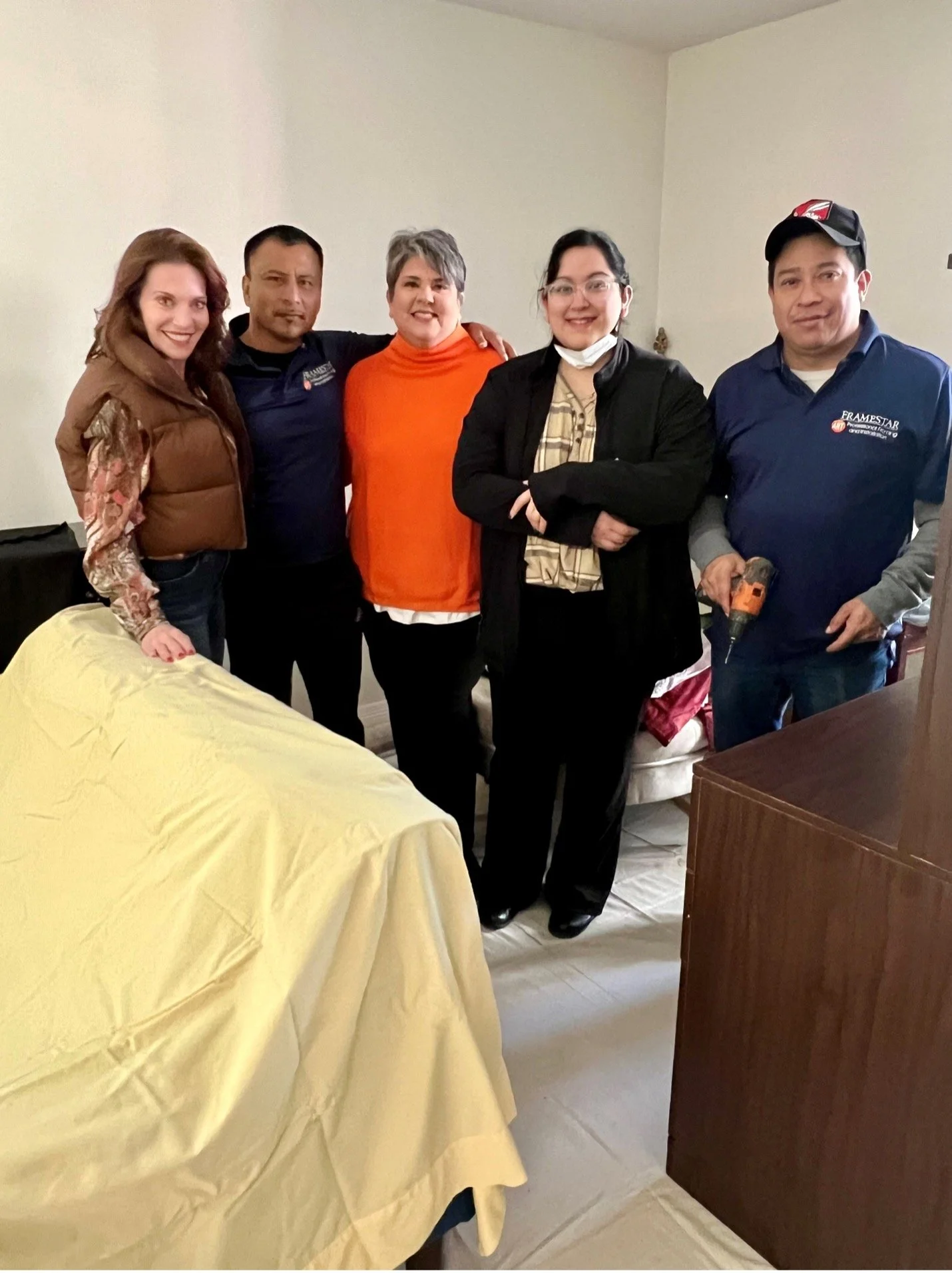
Pamela and team preparing to decorate an apartment for a senior citizen while taping the Make It Mine TV show
Stay Involved
I was active in school with clubs and various activities. I college I joined Phi Mu the second oldest fraternity in the United States. Of course, we had lots of fun and were very social, however, there was a strong emphasis on philanthropy. We learned how to govern a local organization, run efficient meetings and raise money for causes that were important to us and the organization. These are excellent life skills to set you up for future success.
One easy way to keep developing and giving back is to join alumni groups and stay connected to your past activities. I am a proud member of the local Alpha Pi Phi Mu alumnae chapter. In addition to donating and attending charity events, I have hosted the annual holiday party at my home for the last 20+ years.
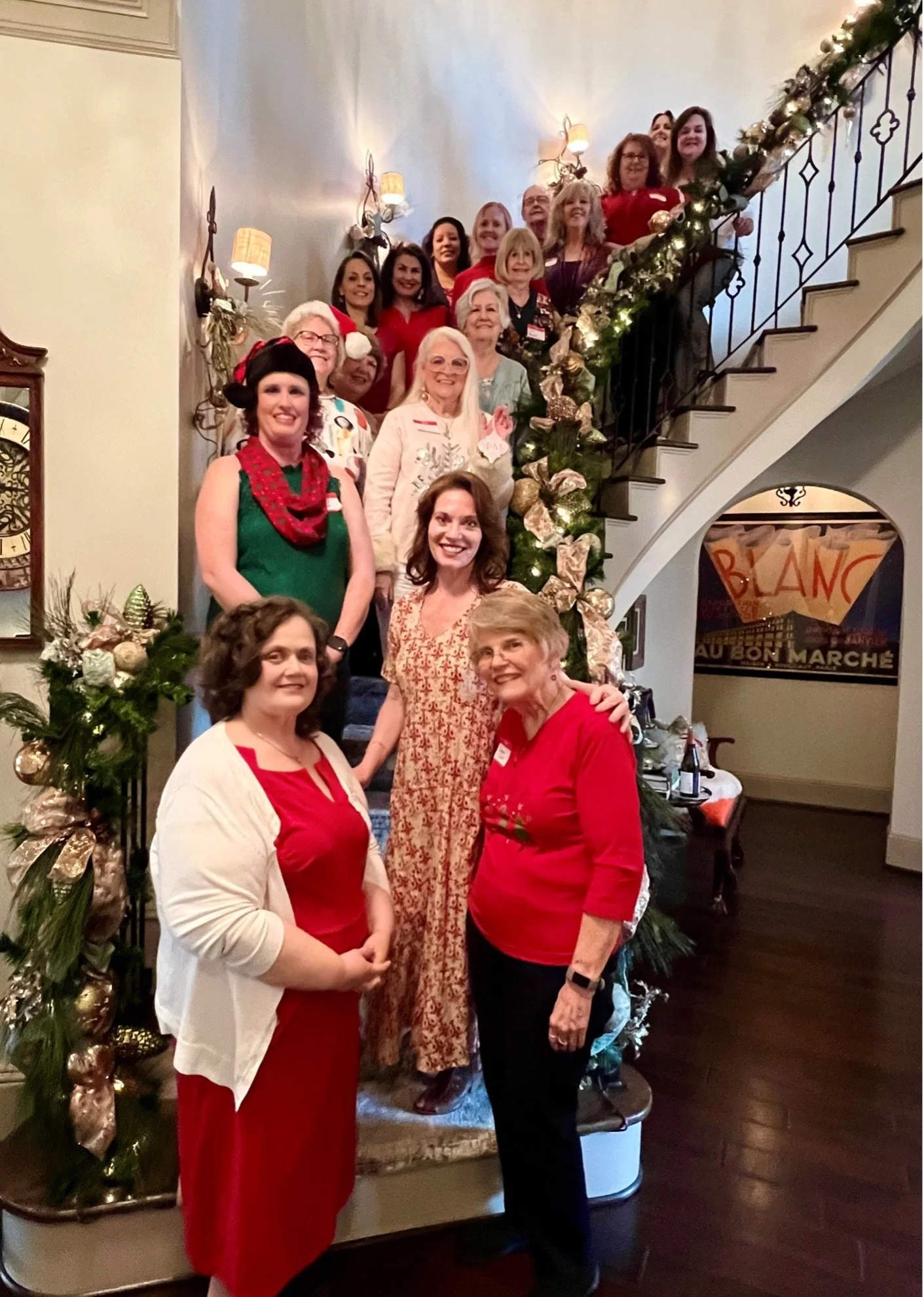
Pamela and fellow Phi Mus at their annual Christmas Party
You Don’t Have to Wait Until You’ve “Made It”
One thing I would particularly encourage younger professionals to understand is that giving back isn’t something you begin once your career is established.
You already have something to offer. You don’t need to be the president. You don’t need to join three boards. And you certainly don’t need another obligation simply for the sake of having one. Start somewhere that genuinely interests you.
Attend the meeting. Volunteer at the event. Join the committee. Offer a skill you already have. Ask someone more experienced if you can help. And when you have a little more experience yourself, turn around and offer a hand to the person coming up behind you.
Over time, something interesting happens. You volunteer because you want to contribute. You meet people because you show up. You develop relationships because you work alongside them. Those relationships lead to opportunities to lead, grow and prosper. Leadership gives you experience. Experience gives you something to share with someone else. And eventually, mentoring becomes another form of giving back.
I can’t say that I anticipated all of that when I first raised my hand to volunteer. I’m fairly certain I was simply agreeing to help with something. But I’m very glad I did. Because after all these years, I’ve come to believe that one of the simplest ways to make a difference—in your profession, your community and your own life—is to simply show up.
We are off to our next design project.
Fondly,
Pamela Hope Designs
Meet Pamela
A LUXURY INTERIOR DESIGNER IN HOUSTON
Pamela O’Brien is the founder of Pamela Hope Designs in Houston, Texas. Pamela is an award-winning luxury interior designer, writer, and speaker. Prior to founding Pamela Hope Designs, Pamela served as a spokesperson in media and public affairs, working with media outlets like Dateline NBC and 48 Hours. This experience allowed her to travel the world and furthered her love for travel, culture, and interior design. After attending an executive course at the Harvard Graduate School of Design, Pamela launched her own interior design firm full-time. Pamela is known for building strong relationships with her clients, who later become friends and collaborators. She is highly influential in the Houston interior design space and shows no signs of slowing down.