
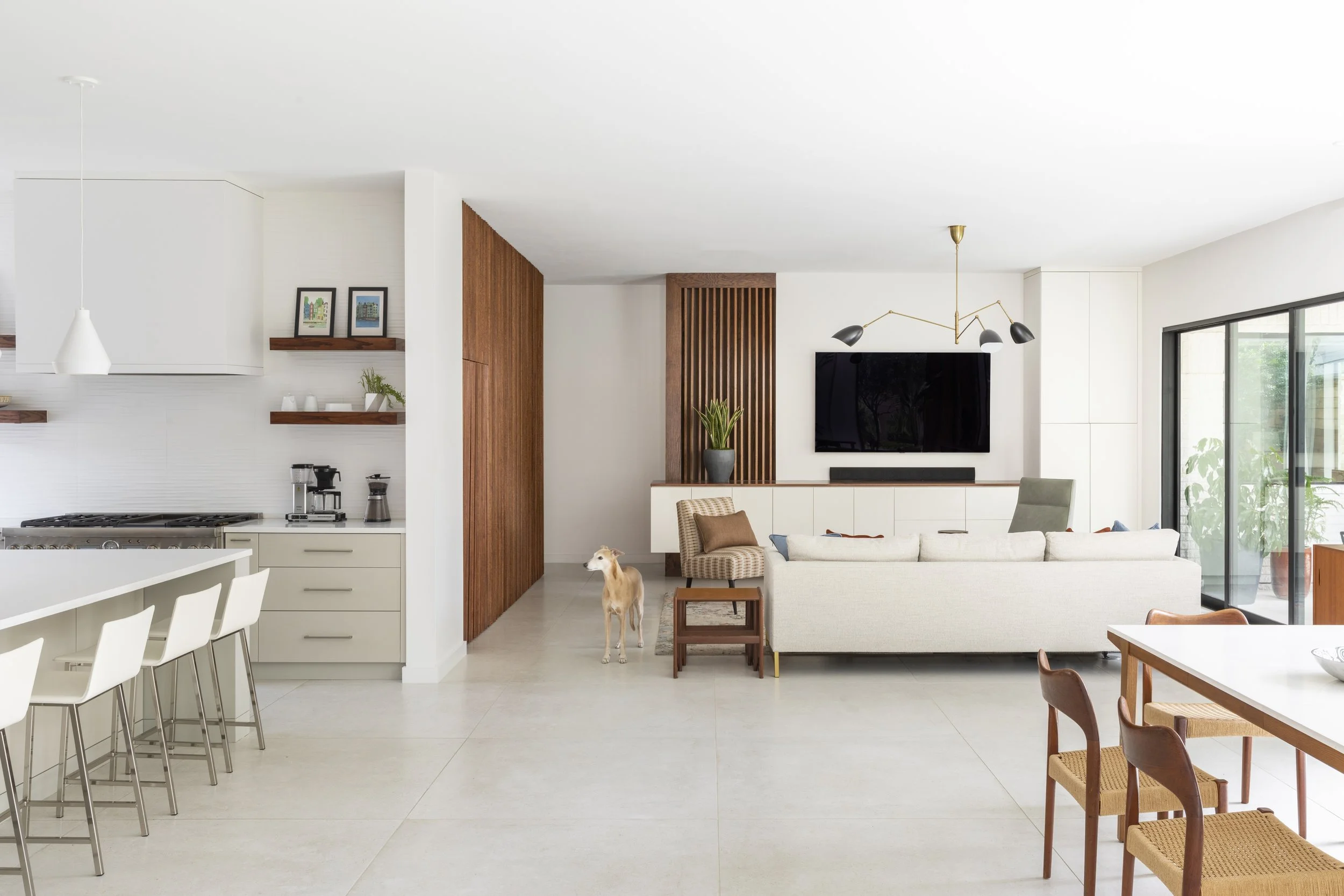
The Art and Science of Beautiful Spaces: Understanding the Principles of Interior Design
Published: August 27, 2026
Why does one room feel effortlessly beautiful while another seems unsettled, even when both contain attractive furnishings and beautiful materials?
The answer often lies beneath the surface. A beautiful interior is not simply a collection of pretty objects. It is a thoughtful composition in which beauty, function, emotion, and practicality work together.
Although good design may appear intuitive, it is supported by principles that designers study and apply to every space. The philosophical study of beauty is known as aesthetics—the exploration of why we perceive certain objects, spaces, and compositions as beautiful, meaningful, or emotionally moving.
Of course, beauty is personal. Our preferences are influenced by where we live, how we were raised, places we have visited, and the objects and memories we value. Yet many characteristics of good design transcend culture, geography, and time. Historic architecture, classical art, traditional craftsmanship, and modern interiors may look completely different while sharing an underlying sense of balance, proportion, rhythm, and harmony.
That is where interior design becomes both an art and a science.
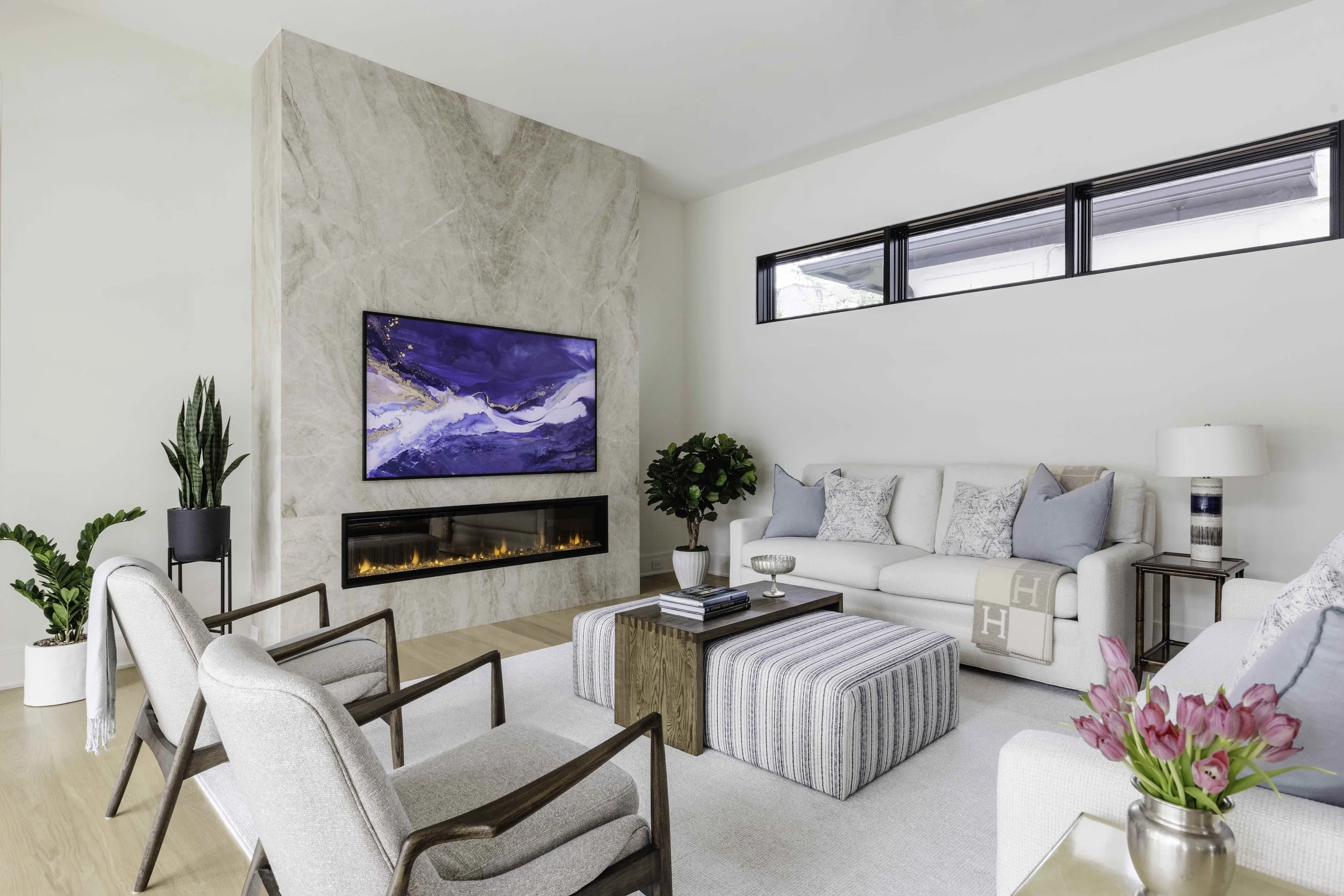
The Building Blocks of Interior Design
Designers use two important sets of tools when creating beautiful and functional environments: the Elements of Design and the Principles of Design.
The Elements of Design are the individual components used within a composition:
Form
Pattern
Texture
Scale
Light
Color
Think of these as the ingredients in a recipe. The Principles of Design are the guidelines that determine how those ingredients are combined.
The primary Principles of Interior Design are:
Proportion
Balance
Rhythm
Contrast
Emphasis and Focus
Harmony and Unity
Let’s look at how each one influences the way we experience a space.
Proportion
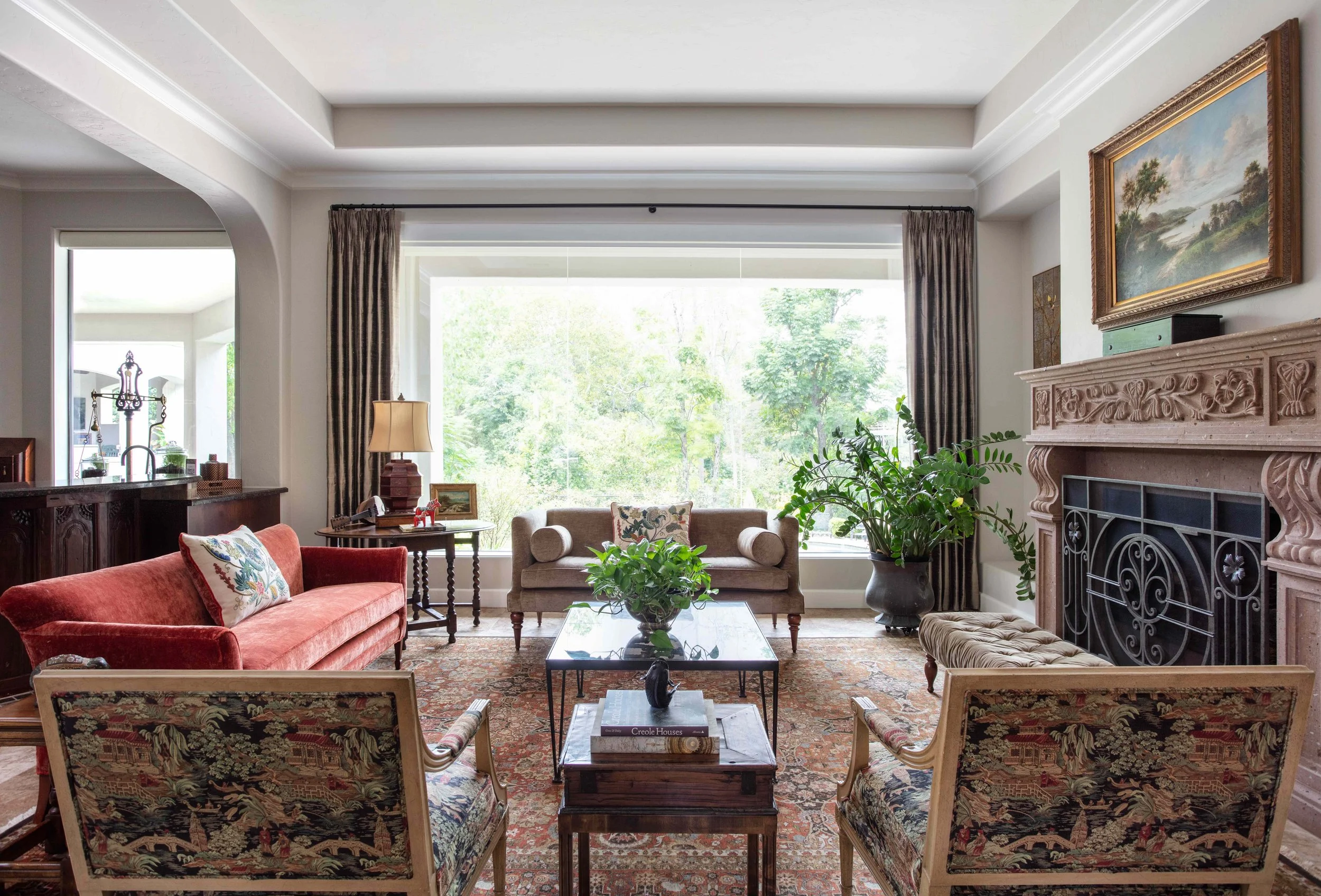
Proportion describes the relationship of the parts within a whole. It helps us determine whether individual elements feel appropriately related to one another.
A coffee table should relate comfortably to the sofa. A chandelier should feel appropriate for both the dining table and the volume of the room. Artwork above a console should have enough presence without overwhelming the furniture beneath it.
Proportion and scale are closely connected, but they are not exactly the same. Proportion involves the relationship between elements, while scale considers how an object relates to the room or the human body.
A chair may be beautifully proportioned on its own but still feel too small in a large living room. Likewise, a pendant light may be striking but feel out of scale above an expansive kitchen island.
Designers can also intentionally exaggerate proportion. An oversized light fixture, dramatically tall headboard, or large-scale piece of art can create personality and excitement. The key is understanding the principle well enough to break the expected rule with purpose.
Balance
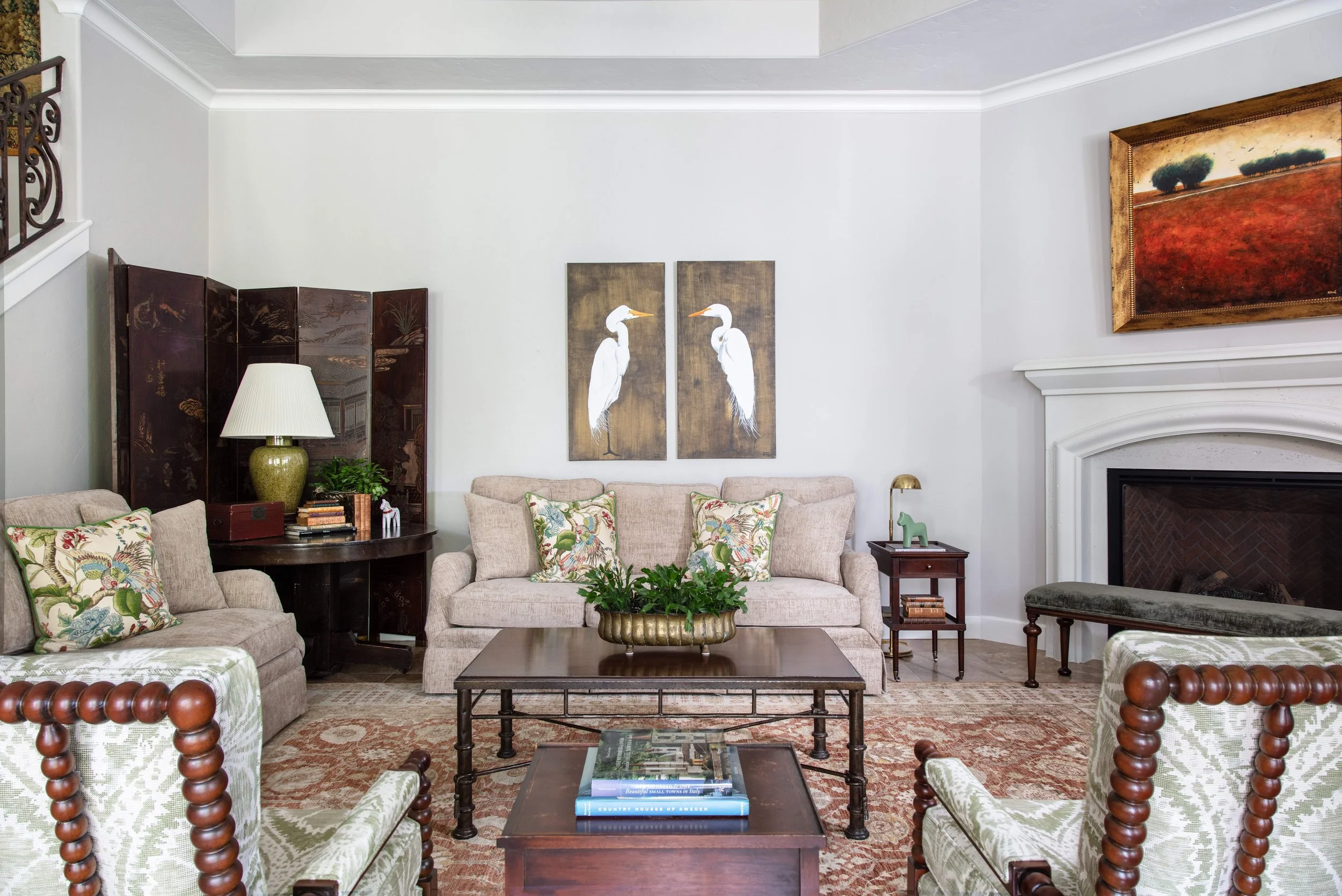
Balance refers to the distribution of visual weight within a composition. A balanced room feels stable and comfortable rather than heavy, crowded, or disconnected.
There are three primary types of balance: symmetrical, asymmetrical, and radial.
Symmetrical Balance
Symmetrical balance occurs when similar objects are arranged on either side of a central point. A bed with matching nightstands and lamps or a fireplace framed by matching elements creates an immediate sense of order.
Symmetry tends to feel calm, structured, and sometimes more formal.
Asymmetrical Balance
Asymmetrical balance uses different objects with comparable visual weight. A large chair on one side of a room, for example, might be balanced by a smaller chair, floor lamp, and side table on the other.
The objects do not match, but together they create equilibrium. Asymmetry often feels more relaxed, modern, and visually interesting.
Radial balance occurs when elements radiate outward from a central point, such as chairs surrounding a round dining table or furniture grouped around a central ottoman.
Balance does not mean everything needs to be perfectly even. It simply means that no part of the room feels unintentionally empty, crowded, or visually heavy.
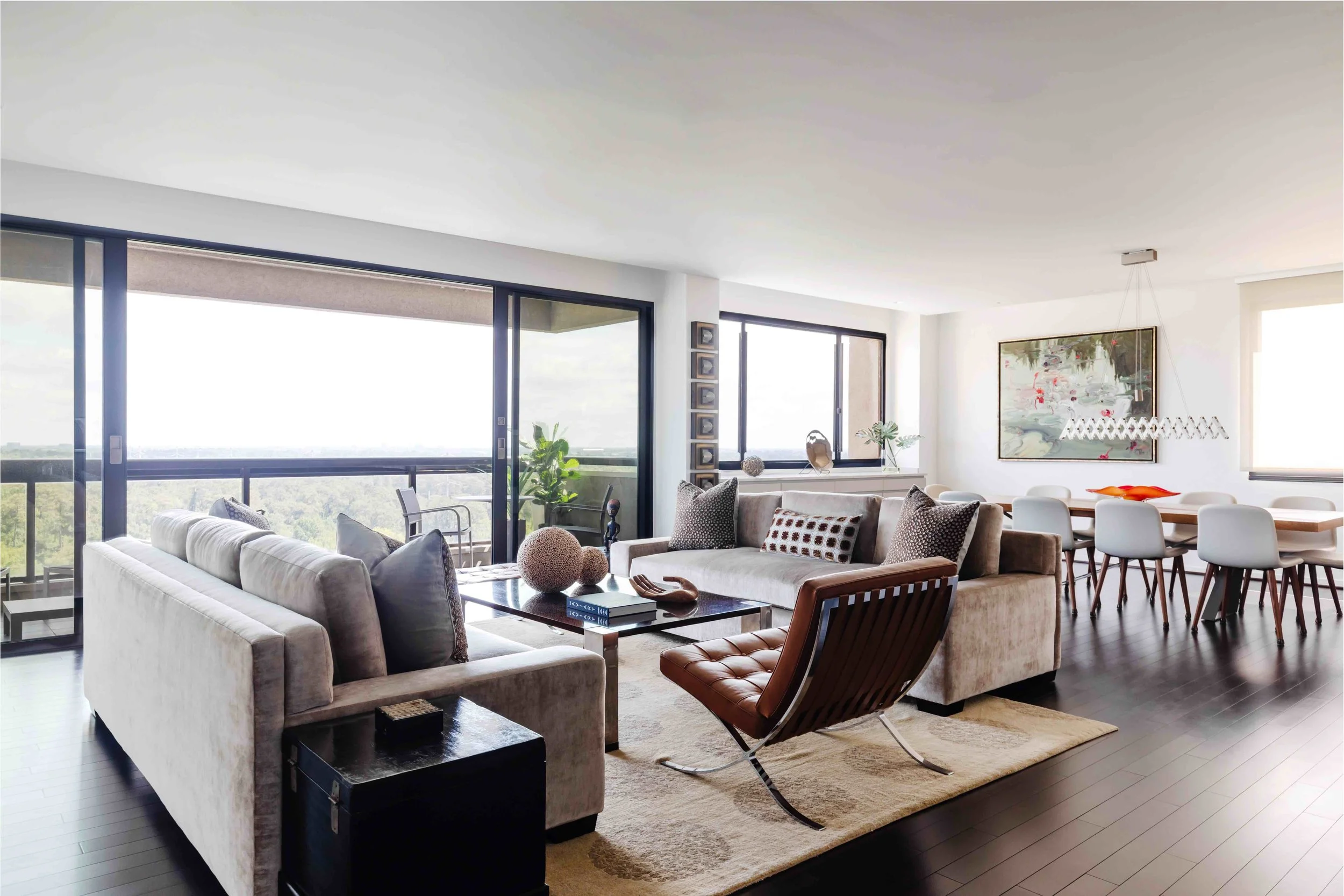
Rhythm
Just as rhythm creates movement in music, visual rhythm guides the eye through an interior.
Rhythm is often created through repetition. A color introduced in a rug might reappear in a pillow, artwork, or accessory. Similar finishes, textures, shapes, or architectural details can subtly connect different areas of a room.
It can also be created through progression—such as objects gradually increasing in size or a color moving from light to dark—or through alternation between different patterns, shapes, and materials.
Rhythm is especially important in open-concept homes, where repeated colors and materials can connect the kitchen, dining, and living spaces without making each area look exactly the same.
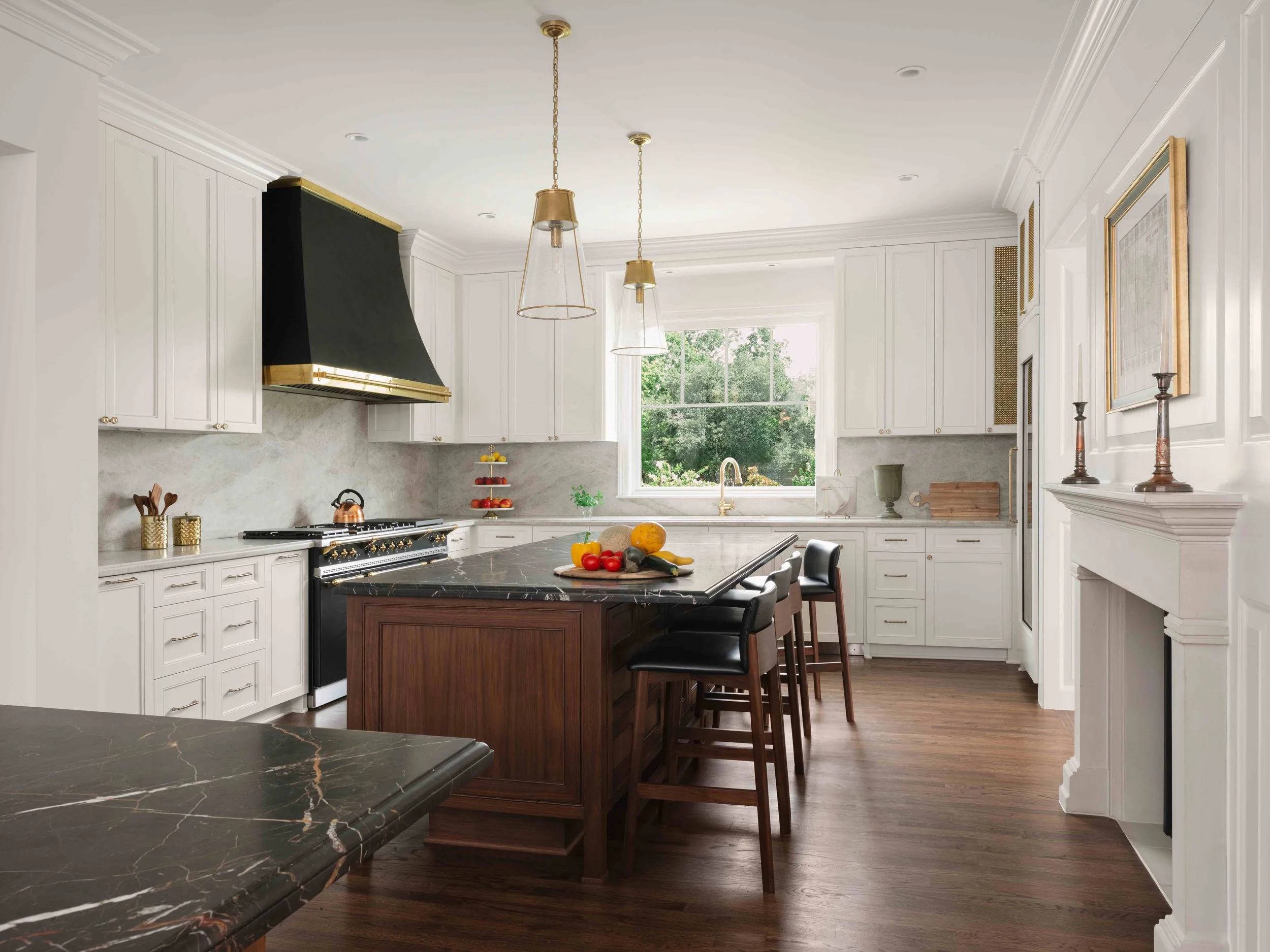
Contrast
Contrast is the perception of differences. It creates definition, energy, and visual interest.
It may come from light and dark colors, smooth and rough textures, straight lines and curves, glossy and matte finishes, or traditional and contemporary forms.
In this kitchen, for example, the dark range, hood, and island create a dramatic contrast against the light walls, cabinetry, and ceiling.
Contrast does not always need to be dramatic. A quiet, tone-on-tone room may rely primarily on differences in texture, while a bolder interior might combine black and white, old and new, or highly saturated colors.
Too little contrast can leave a room feeling flat. Too much can feel chaotic. The goal is to create just enough visual tension to give the space personality.
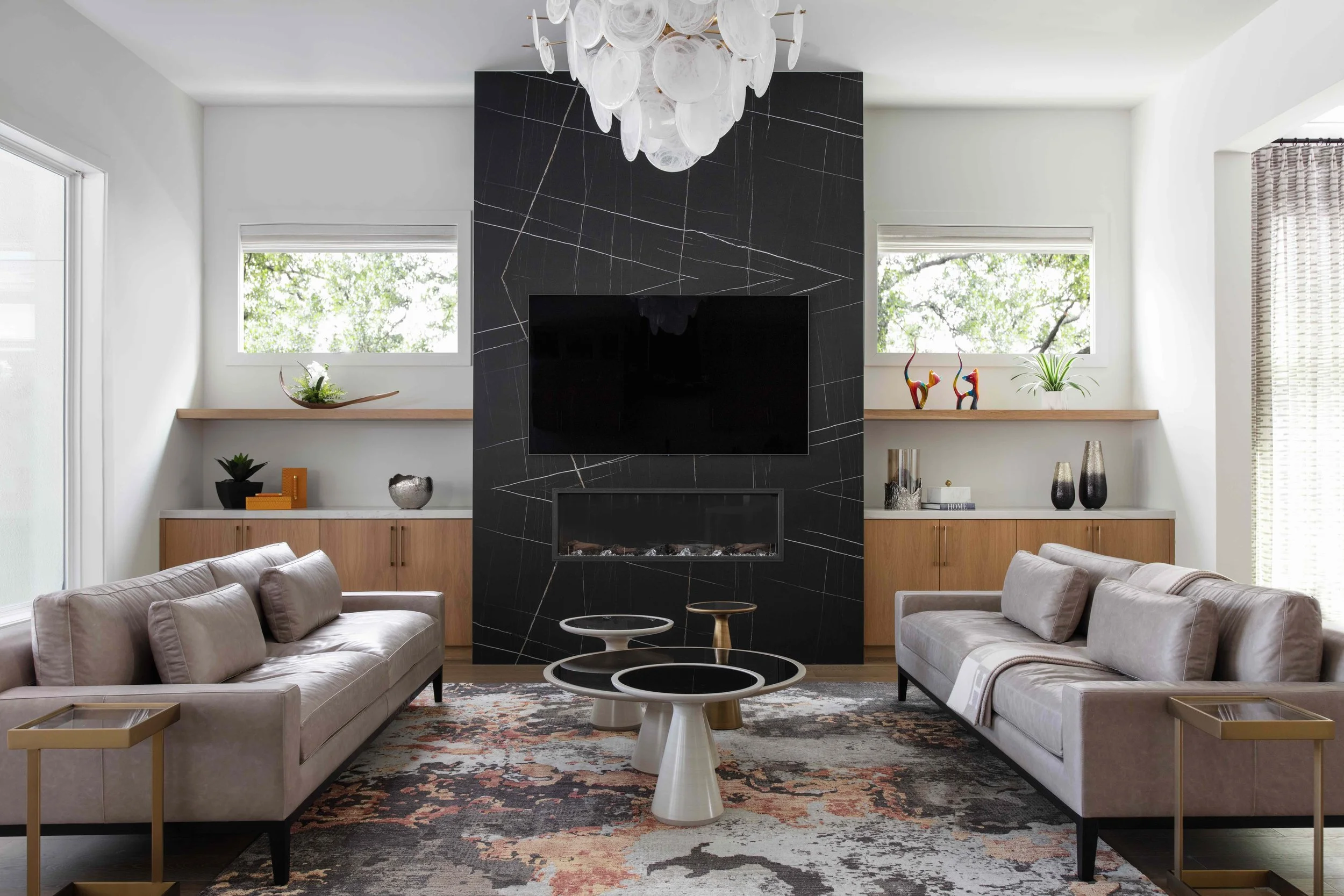
Emphasis and Focus
Every successful room needs a place for the eye to rest. Emphasis establishes importance, while a focal point gives the room a visual center.
Some rooms already have a natural focal point—a fireplace, beautiful view, architectural staircase, or dramatic window. In other spaces, the designer creates one through artwork, lighting, furniture, wallpaper, or a distinctive material.
Once the focal point has been identified, the other elements in the room should support it rather than compete with it. Furniture placement may direct attention toward a fireplace, while lighting might highlight a piece of art or architectural feature.
A room can contain several areas of interest, but not every object should demand equal attention. Emphasis creates hierarchy and allows the most important elements to lead.
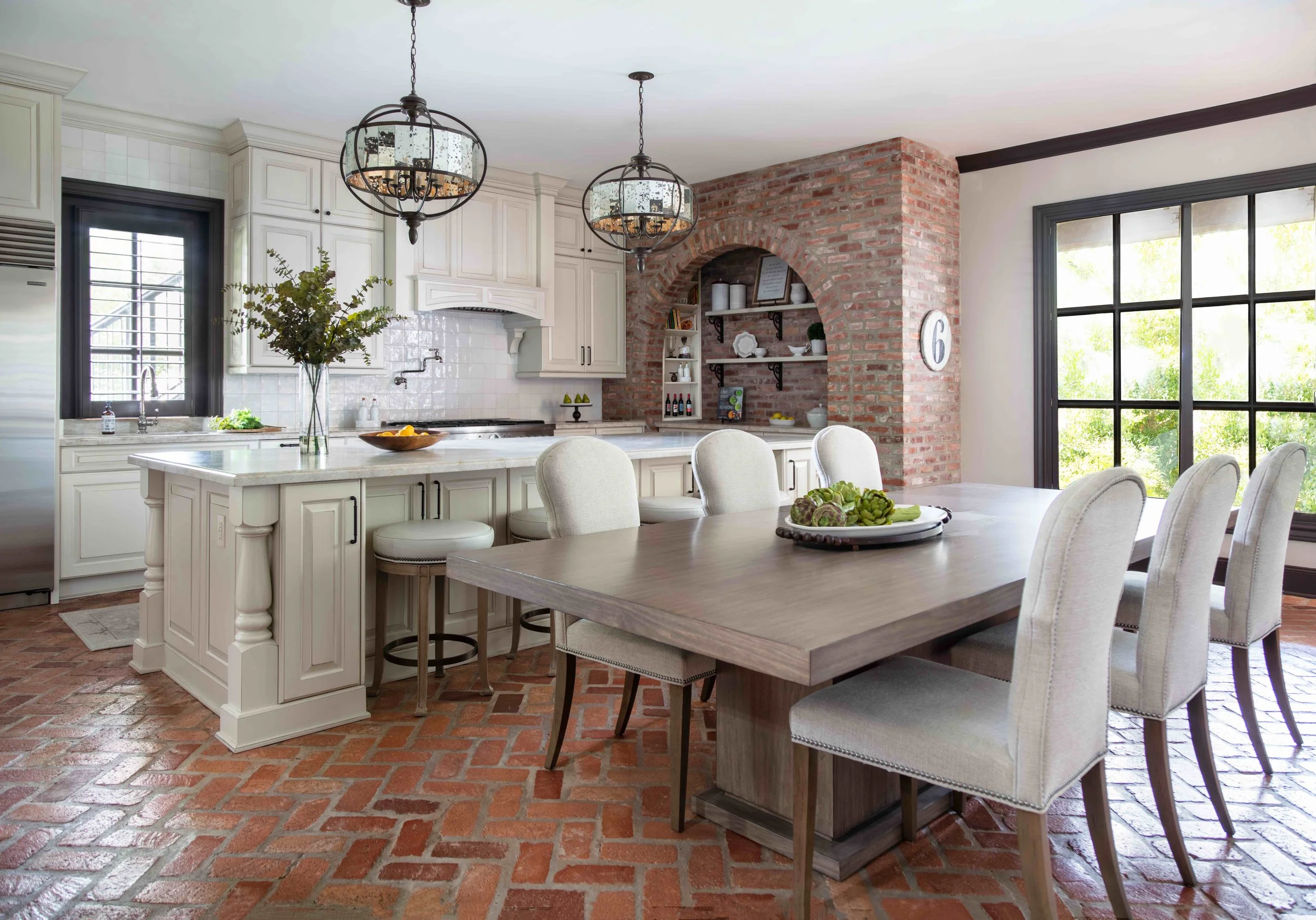
Harmony and unity
Harmony and unity create the sense that all parts of a design belong together.
The goal is not to make every object match. In fact, spaces that are overly coordinated can feel static or impersonal. Instead, harmony allows different furnishings, materials, colors, and architectural details to coexist within a shared visual language.
A home might contain antiques, contemporary furniture, family heirlooms, travel finds, and new artwork while still feeling cohesive through repeated colors, complementary shapes, consistent materials, or a similar level of formality.
Unity becomes especially important when designing an entire home. Each room can have its own personality, but transitions should feel natural. Flooring, trim, lighting, color relationships, and recurring materials help create continuity from one room to another.
A unified interior feels intentional—even when the individual pieces are diverse.
Bringing the Principles Together
The Principles of Design rarely operate independently. Proportion affects balance. Repetition creates rhythm and strengthens unity. Contrast can reinforce emphasis. Scale influences how comfortable and functional a room feels.
When analyzing a space, designers consider all of these relationships at once:
Is the furniture appropriately scaled for the architecture? Is the visual weight balanced? Does the eye move comfortably through the room? Is there enough contrast to create interest? Is there a clear focal point? Do the colors, materials, and furnishings feel connected?
Great interior design should ultimately support the people who use it. It should make everyday activities easier, invite people to feel comfortable, and create beauty that can be experienced every time they enter the room.
The principles provide structure, but they do not limit creativity. Instead, they give us a framework for creating spaces that feel personal, meaningful, and deeply satisfying.
Often, the best-designed spaces are not consciously analyzed at all. We simply feel that they work. The proportions feel comfortable, movement feels natural, and every element seems to belong.
That sense of ease is the art and science of good design working quietly in the background.
We are off to our next design project.
Fondly,
Pamela Hope Designs
Meet Pamela
A LUXURY INTERIOR DESIGNER IN HOUSTON
Pamela O’Brien is the founder of Pamela Hope Designs in Houston, Texas. Pamela is an award-winning luxury interior designer, writer, and speaker. Prior to founding Pamela Hope Designs, Pamela served as a spokesperson in media and public affairs, working with media outlets like Dateline NBC and 48 Hours. This experience allowed her to travel the world and furthered her love for travel, culture, and interior design. After attending an executive course at the Harvard Graduate School of Design, Pamela launched her own interior design firm full-time. Pamela is known for building strong relationships with her clients, who later become friends and collaborators. She is highly influential in the Houston interior design space and shows no signs of slowing down.

Meet Danna
A LUXURY INTERIOR DESIGNER IN HOUSTON
Danna Smith has more than 30 years of experience in the design industry. She has been a buyer and merchandiser for four luxury showrooms in Houston and Dallas. Smith teaches an evening course at Houston Community College to nurture her passion for developing future design stars. Since joining Pamela Hope Designs in 2015, she has worked on some of her most beautiful and innovative projects yet.