
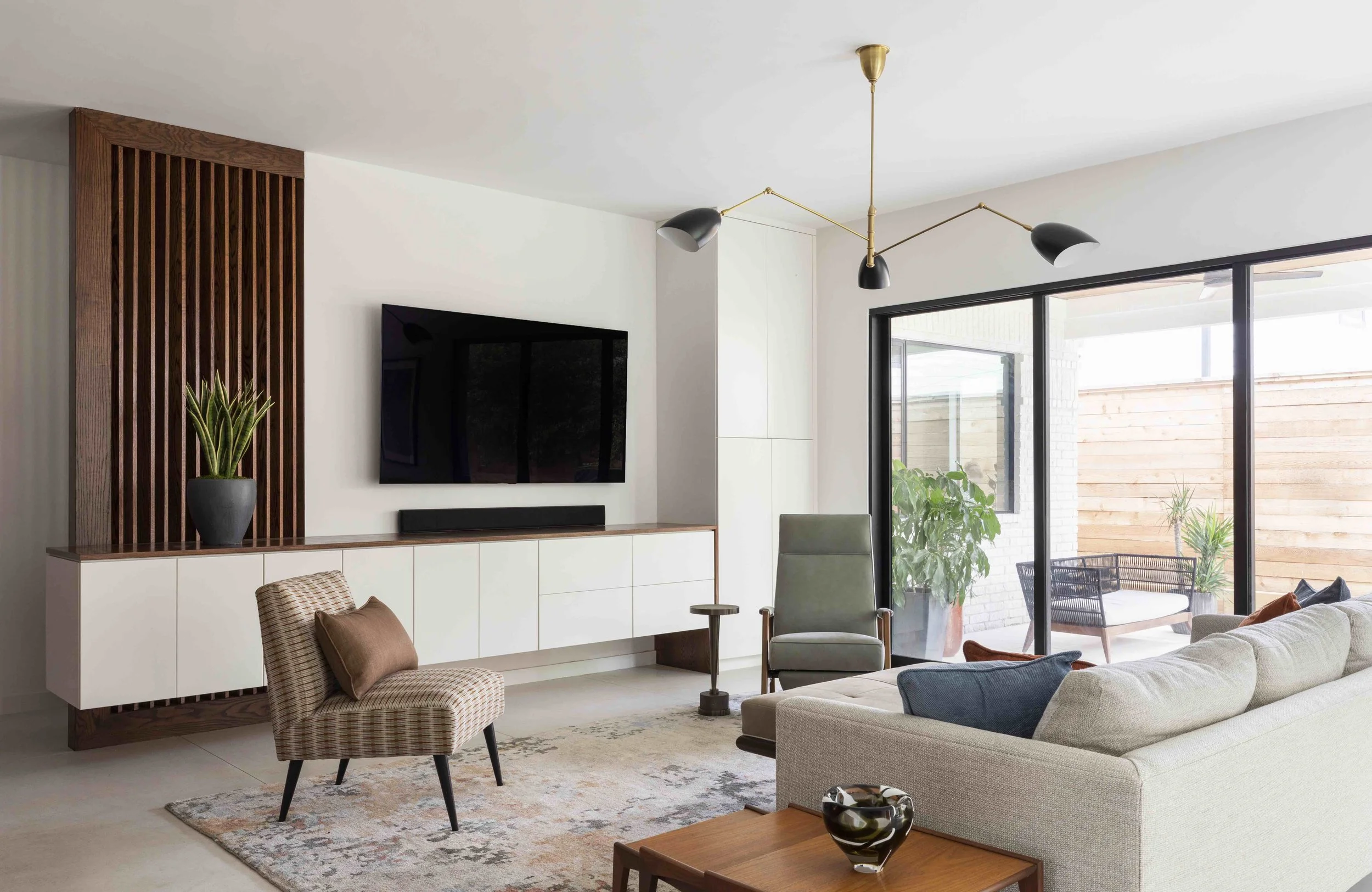
Mid-Century Modern: How to Get the Look Without Living in a Time Capsule
Published: September 26, 2026
There is a reason mid-century modern design never really goes out of style. It is clean without being cold, sophisticated without being fussy, and just retro enough to add a little personality to a room. Best of all, you do not need to live in a 1950s ranch house—or fill your home with vintage furniture—to enjoy it. At Pamela Hope Designs, we are big believers in mixing styles, periods, and pieces that have meaning. A home is much more interesting when it feels collected over time rather than ordered from a single catalog. Mid-century modern works particularly well with that philosophy because its simple shapes and warm materials play nicely with everything from antiques to contemporary art. Think of it as another ingredient in the room rather than the entire recipe. Here are some of our favorite ways to bring a little mid-century modern style into your home while keeping it comfortable, current, and completely your own.
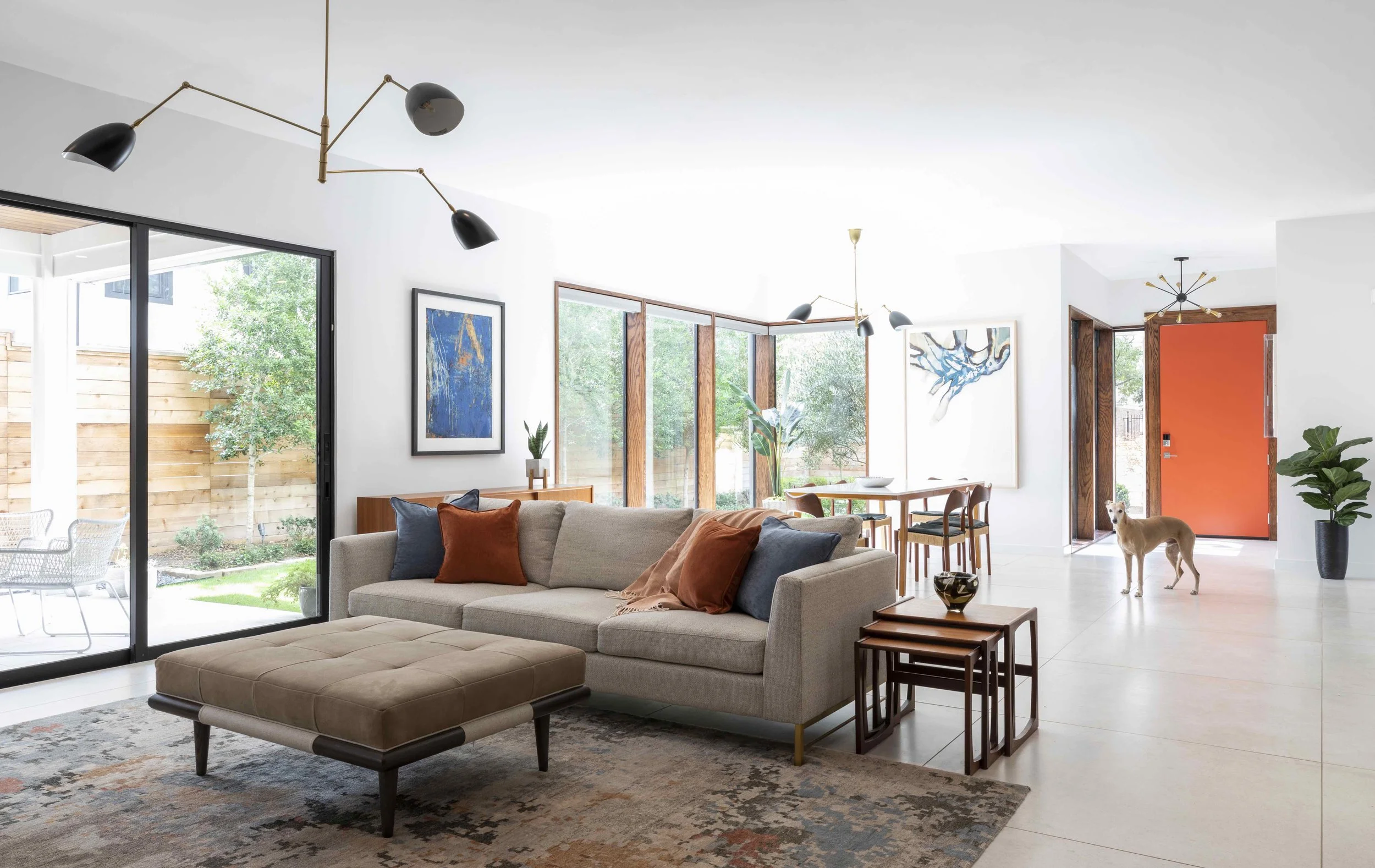
Start With the Shape
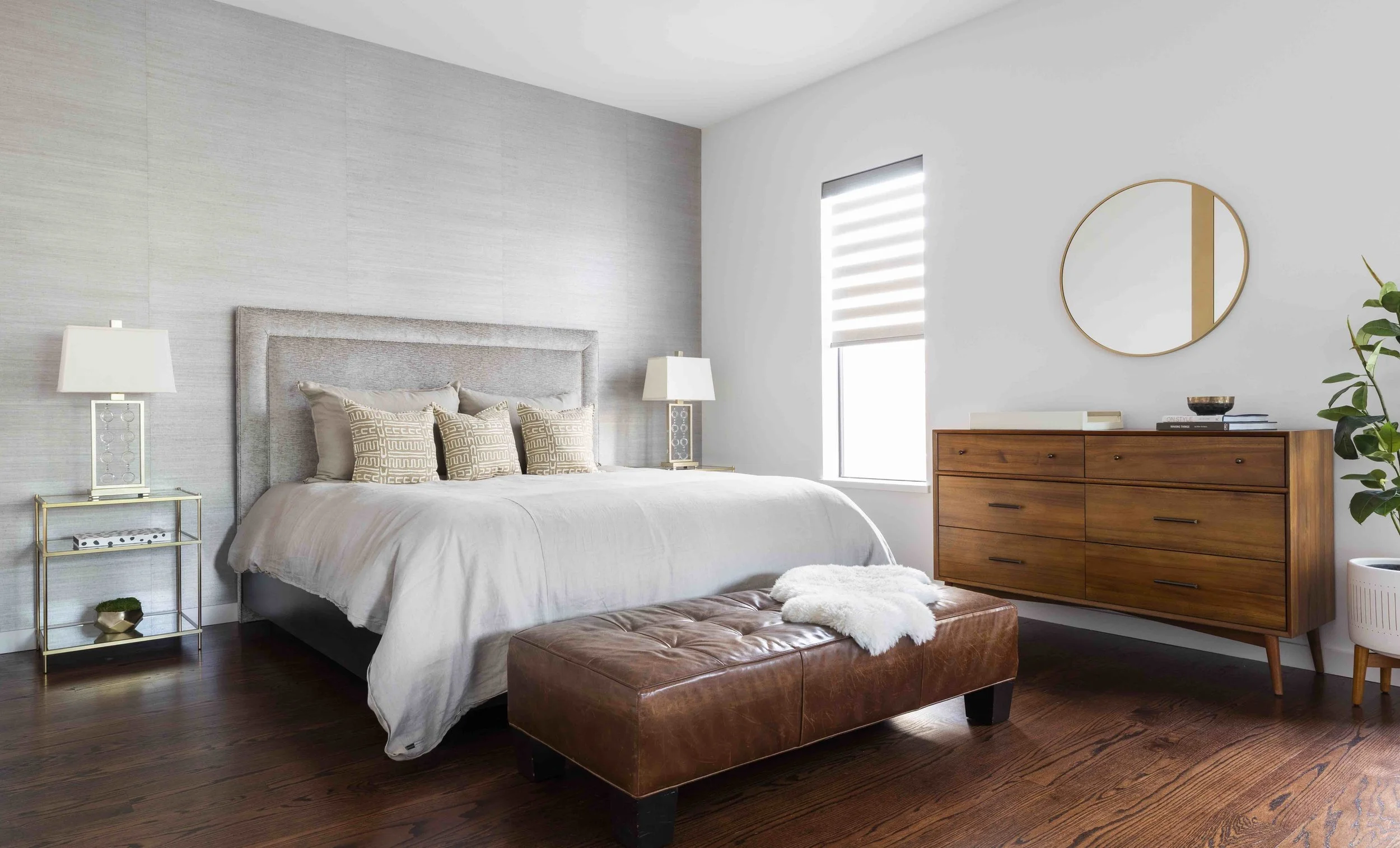
One of the easiest ways to recognize mid-century modern furniture is by its silhouette. Pieces tend to be streamlined, with clean edges, gentle curves, tapered legs, and very little unnecessary ornamentation. Sofas sit a little lower. Chairs often have beautifully shaped wood arms or sculptural frames. Credenzas and consoles seem to float above the floor on slender legs. A fabulous chair, a handsome walnut console, or a beautifully proportioned coffee table can introduce the look without making your house feel like the set of Mad Men.
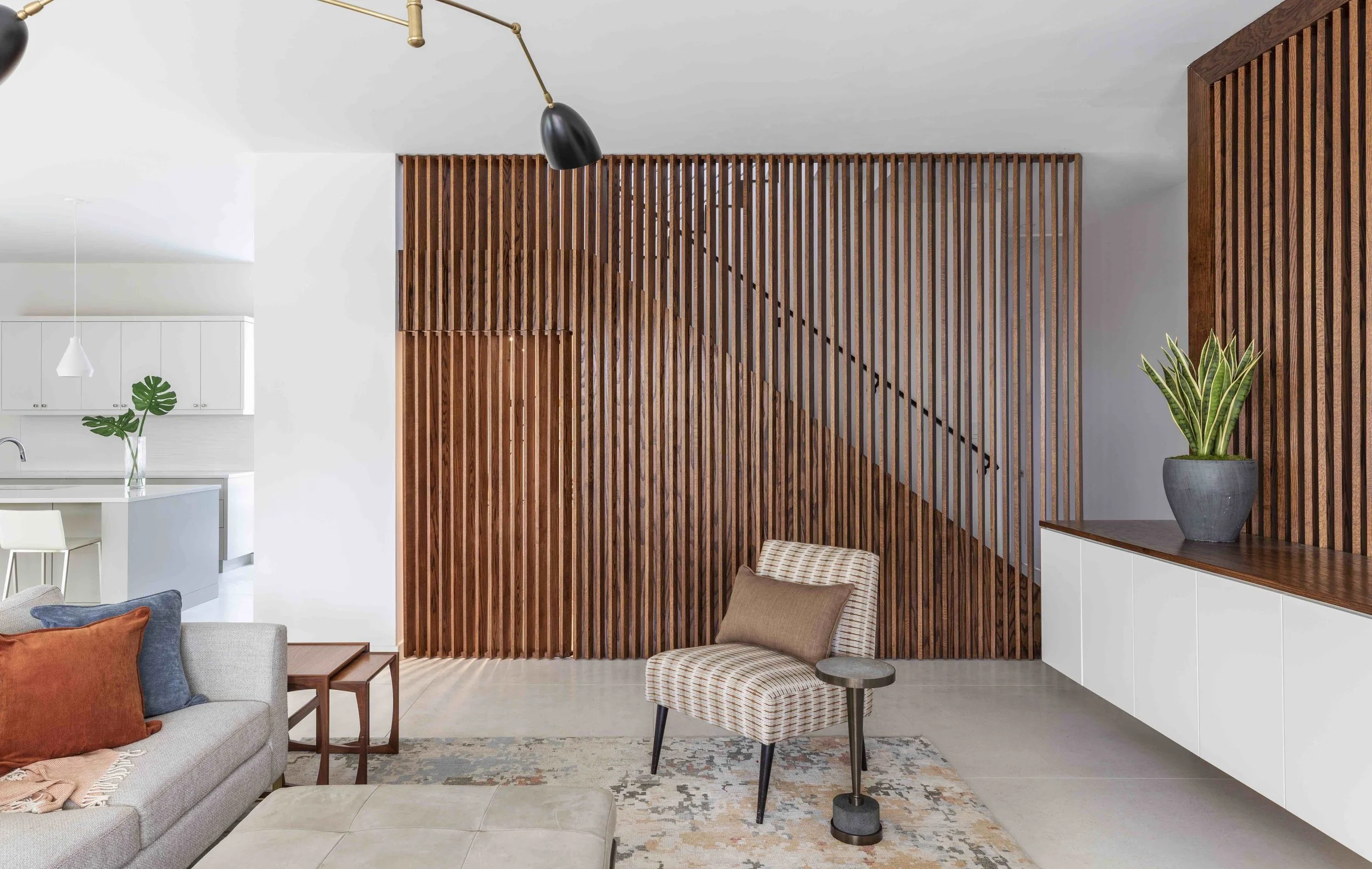
Bring in Beautiful Wood
If there is one material that instantly says mid-century modern, it is wood. Walnut, teak, oak, and rosewood were all popular during the period, and their warm tones still look wonderful today. We especially love wood pieces that showcase beautiful grain rather than hiding it beneath heavy paint or ornamentation. Selecting a walnut dining table, a vintage credenza, a pair of wood nightstands, or even a sculptural wood side table are great pieces that are timeless. Wood is also an excellent way to warm up a home with lots of white, gray, stone, or painted cabinetry. That contrast between sleek finishes and natural materials keeps a room from becoming too cool or sterile.

Choose an Icon or Two
Mid-century design gave us some truly iconic furniture and lighting. Eames chairs. Saarinen tables. Sputnik fixtures. Sculptural lounge chairs. Molded forms. Beautifully simple pieces that still look fresh decades later.
One recognizable piece can make a room feel sophisticated. Six recognizable pieces can make it feel like a furniture exhibit. We would rather see a classic pedestal dining table surrounded by unexpected upholstered chairs, or a great vintage lounge chair sitting beside a contemporary sofa. That little bit of tension is where a room starts to feel interesting. Classic with a twist is always more fun than perfectly matched.
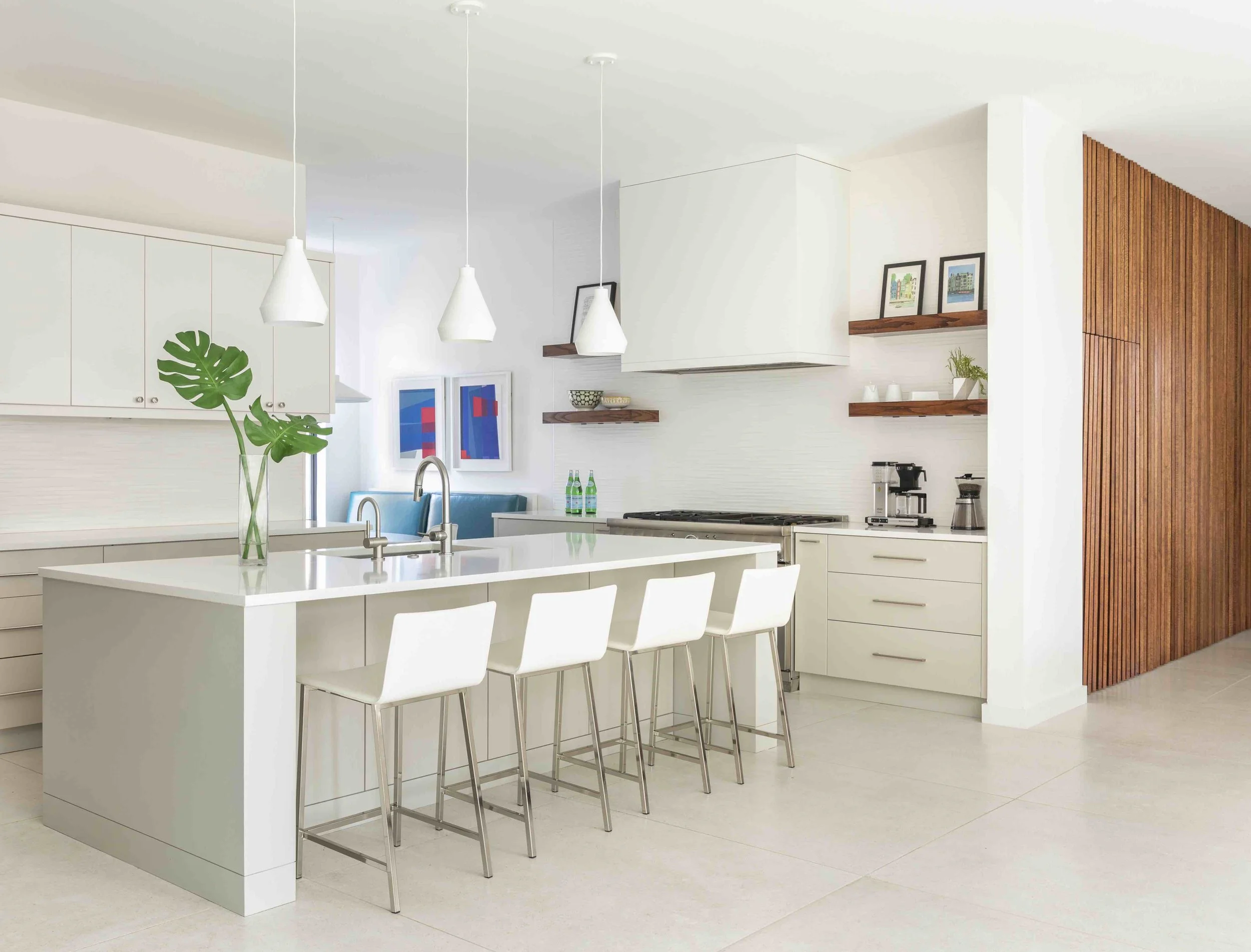
Update the Mid-Century Color Palette
Yes, avocado green, mustard yellow, burnt orange, and brown all had their moment. Thankfully, embracing mid-century style does not require resurrecting the avocado refrigerator.
For today's interiors, we prefer a more nuanced version of the palette. Start with beautiful neutrals—cream, camel, taupe, warm gray, cognac, chocolate, and natural wood—and then layer in richer colors such as olive green, ochre, rust, deep teal, or muted blue. These colors work especially well when used selectively through pillows, artwork, rugs, accent chairs, or accessories. The result still references the period, but in a way that feels sophisticated and current.
Don't Forget Pattern and Texture
Mid-century modern rooms were often much more colorful and playful than today's pared-down interpretations suggest. Graphic patterns, textured fabrics, bold art, and interesting materials were all part of the mix.
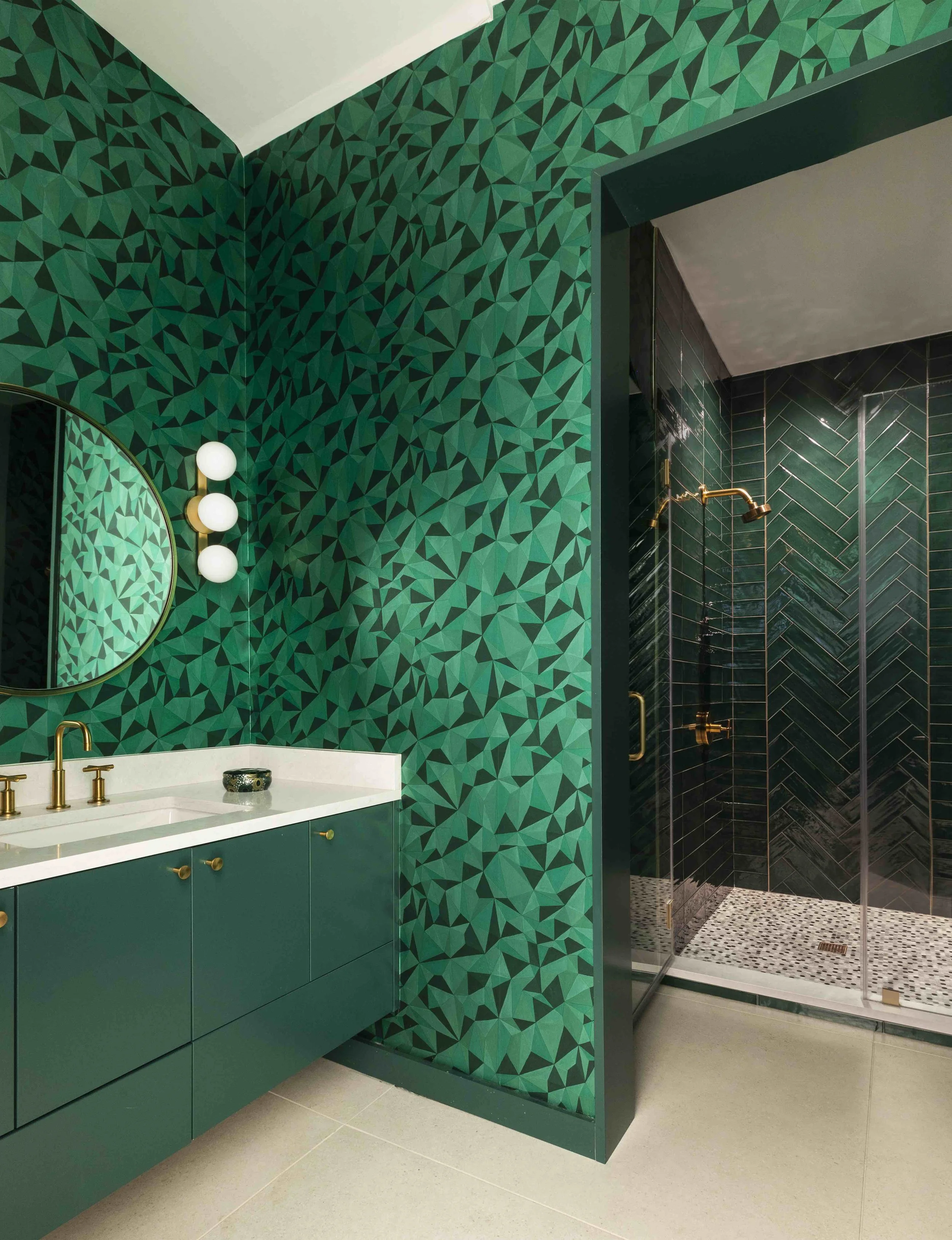
This is a wonderful opportunity to have a little fun. Try a geometric rug under an otherwise neutral seating arrangement. Bring in grass cloth, leather, linen, wool, or a patterned wallcovering.
A powder room is especially good territory for experimenting with a bold, retro-inspired wallpaper. Because the space is small, you can make a bigger statement without committing an entire room to the look. And we are always in favor of giving a powder room a little personality.

Use Lighting as Sculpture
Lighting may be one of the easiest—and most effective—ways to introduce mid-century style. Fixtures from this period often have wonderful sculptural qualities: brass arms, opal glass globes, cones, starbursts, and unexpected shapes.
A great chandelier can completely change the feeling of a dining room. A sculptural floor lamp can turn an empty corner into an intentional moment. Even a pair of interesting table lamps can quietly reinforce the style. Just remember that all of your lighting does not need to match. In fact, we would prefer that it didn't. Mix vintage-inspired pieces with contemporary fixtures and good architectural lighting for a home that feels evolved rather than overly coordinated.
Give Your Furniture a Little Breathing Room
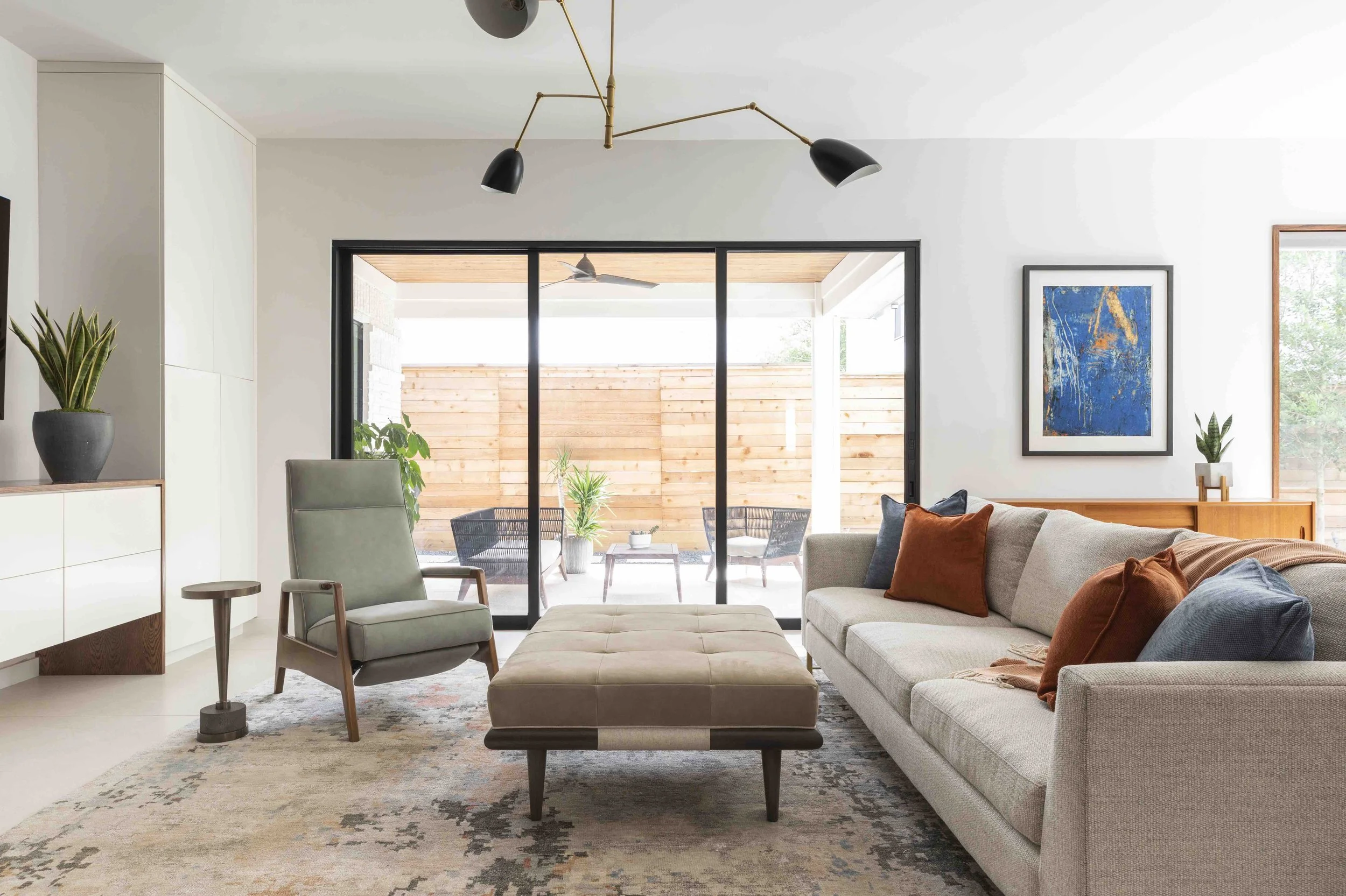
Mid-century architecture emphasized openness, natural light, and a connection to the outdoors. Even if your home was built decades later, furniture placement can create some of that same feeling. Avoid the urge to fill every wall and corner.
A few well-chosen pieces with space around them often have much more impact than a room crowded with furniture. Pieces raised on legs are particularly helpful because seeing more of the floor makes a room feel lighter and more open.
This approach works beautifully in smaller rooms, too. Sometimes removing one piece of furniture does more for a room than adding three new ones.
Add Art That Doesn't Match
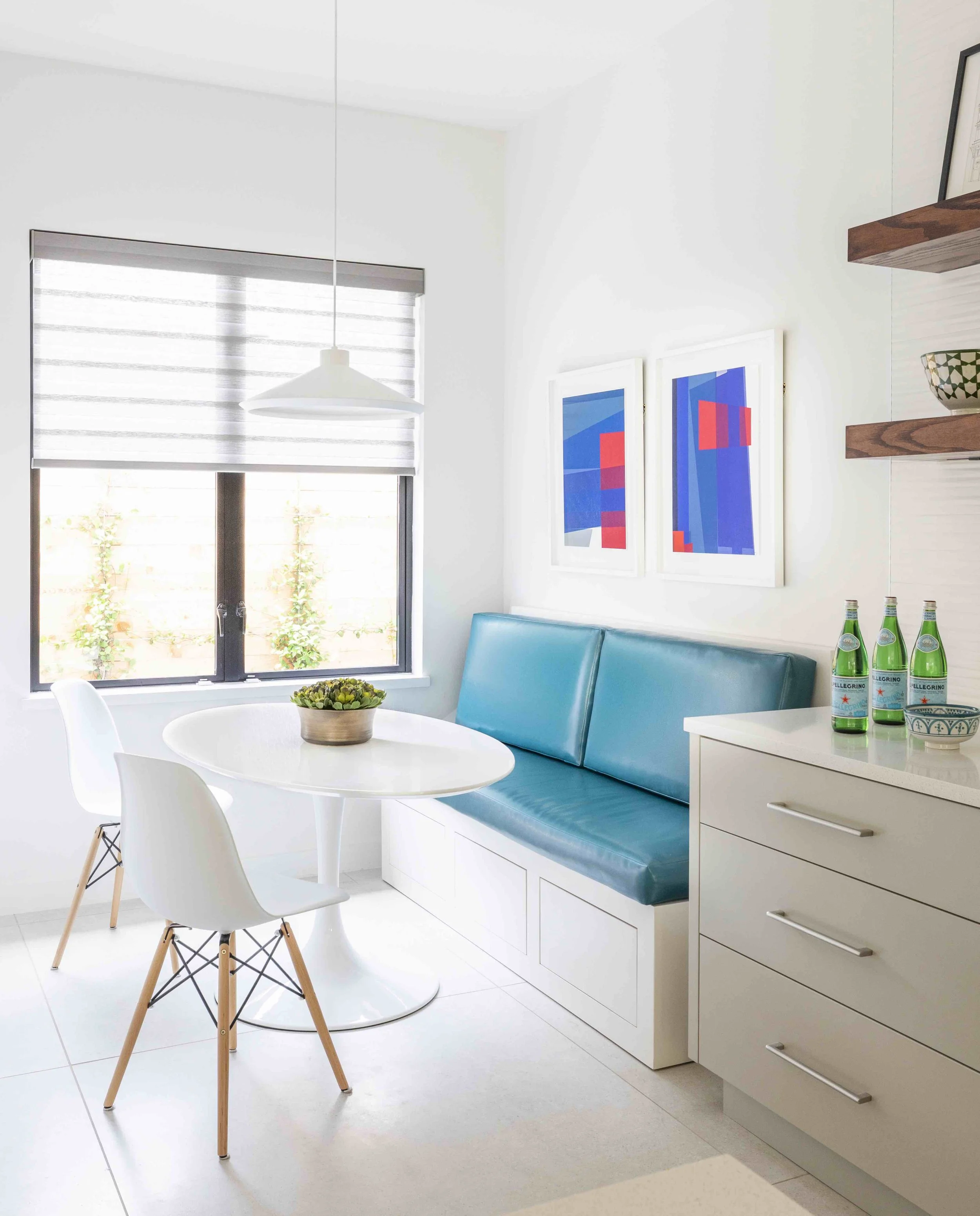
This might be one of our favorite parts. Mid-century furniture looks fabulous with abstract paintings, graphic prints, sculpture, ceramics, and photography—but your art does not need to be from the same era. Quite the opposite.
Hang contemporary art above a vintage credenza. Place an antique object on a modern table. Mix a family heirloom with a sculptural lamp. Bring home something wonderful from your travels and give it a place of honor. Those personal layers keep the room from becoming too predictable. Your home should tell your story, not the story of a particular decade.
Mix It With What You Already Have
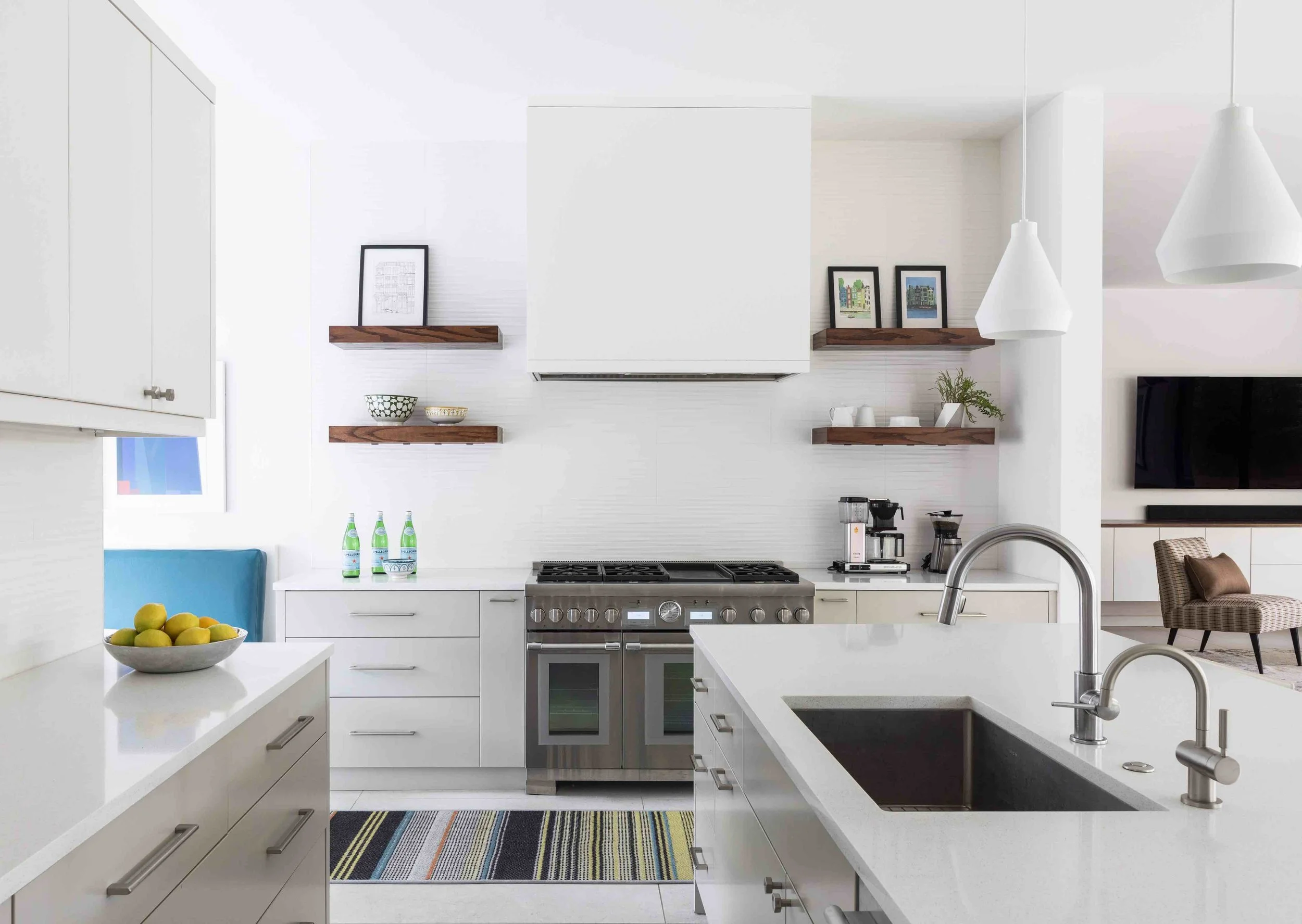
Perhaps the best thing about mid-century modern design is how easily it mixes with other styles. A sleek walnut console can sit underneath an ornate antique mirror. A clean-lined sofa can work beautifully with a traditional Persian rug. A sculptural mid-century chair can bring just the right amount of attitude to an otherwise classic room. This is why you rarely need to start over when you want to introduce a new style.
Often, a few strategic changes are enough to completely change the mood of the room. We would much rather help a client identify what is worth keeping, what could be reimagined, and where a few carefully chosen additions could make the biggest difference.
Make It Personal
The most successful mid-century-inspired homes are not the ones that follow every rule. They are the ones that borrow the best ideas from the period—beautiful proportions, natural materials, thoughtful craftsmanship, interesting shapes, and an easy approach to living—and combine them with the personalities of the people who live there. So bring in that vintage chair. Use the fabulous wallpaper. Mix walnut with your grandmother's antique chest. Hang contemporary art above it.
And if something unexpected makes you smile every time you walk into the room, even better. Because great design should never feel like a formula. It should feel like you.
Ready for a Fresh Perspective?
If you love the mid-century modern look but aren't sure how to make it work with your existing home, we can help. Sometimes all it takes is a fresh set of eyes, a better furniture plan, a few updated finishes, or that one perfect piece to pull everything together. Whether you are redesigning an entire home or simply wondering what your room is missing, Pamela Hope Designs can help you create a space that feels stylish, personal, and made for the way you really live.
The right design changes everything.
We are off to our next design project.
Fondly,
Pamela Hope Designs
Meet Pamela
A LUXURY INTERIOR DESIGNER IN HOUSTON
Pamela O’Brien is the founder of Pamela Hope Designs in Houston, Texas. Pamela is an award-winning luxury interior designer, writer, and speaker. Prior to founding Pamela Hope Designs, Pamela served as a spokesperson in media and public affairs, working with media outlets like Dateline NBC and 48 Hours. This experience allowed her to travel the world and furthered her love for travel, culture, and interior design. After attending an executive course at the Harvard Graduate School of Design, Pamela launched her own interior design firm full-time. Pamela is known for building strong relationships with her clients, who later become friends and collaborators. She is highly influential in the Houston interior design space and shows no signs of slowing down.

Meet Danna
A LUXURY INTERIOR DESIGNER IN HOUSTON
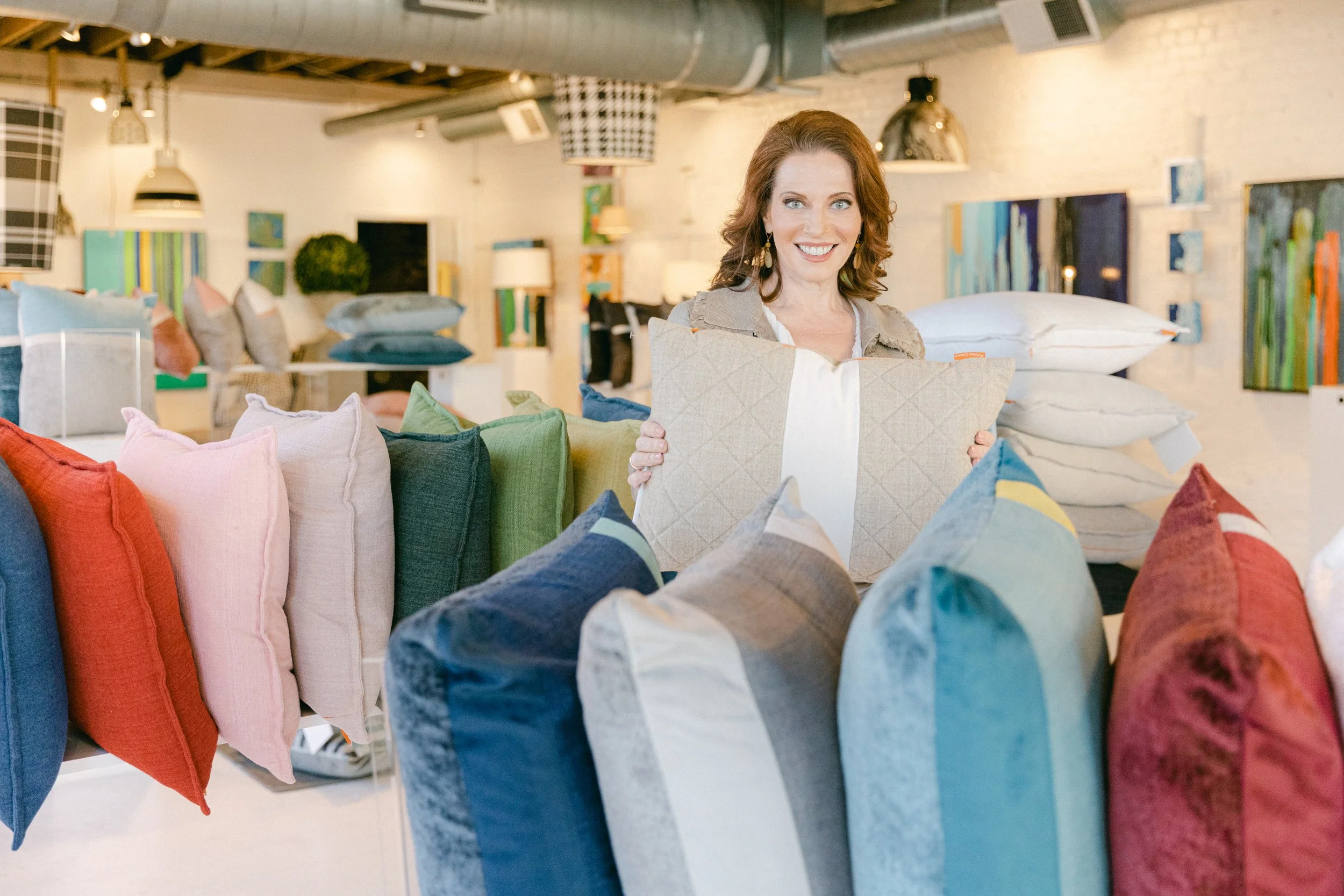
Danna Smith has more than 30 years of experience in the design industry. She has been a buyer and merchandiser for four luxury showrooms in Houston and Dallas. Smith teaches an evening course at Houston Community College to nurture her passion for developing future design stars. Since joining Pamela Hope Designs in 2015, she has worked on some of her most beautiful and innovative projects yet.