
Crafting Your Best Home Office
Published: July 22, 2025
The home office has earned its place as one of the most personal rooms in the house. It is where ambition and daily life collide, where focus has to coexist with everything else happening under one roof. And yet, for all the time we spend in these spaces, many home offices are designed as an afterthought rather than a destination.
The good news is that a thoughtfully designed workspace does not require a dedicated wing or a generous square footage budget. What it does require is honesty about how you actually work and who you actually are. Those two things together are the foundation of a home office that you will want to return to every morning.
Functional Layer
Start With How You Actually Use Your Day
Before you think about paint colors or furniture, spend a few days paying attention to your rhythms. Are you a morning person who does your best thinking in the early hours, or does your focus sharpen in the afternoon? Do you spend the majority of your time on the phone, at the keyboard, or reviewing physical documents? Do clients or colleagues occasionally visit your home to meet?
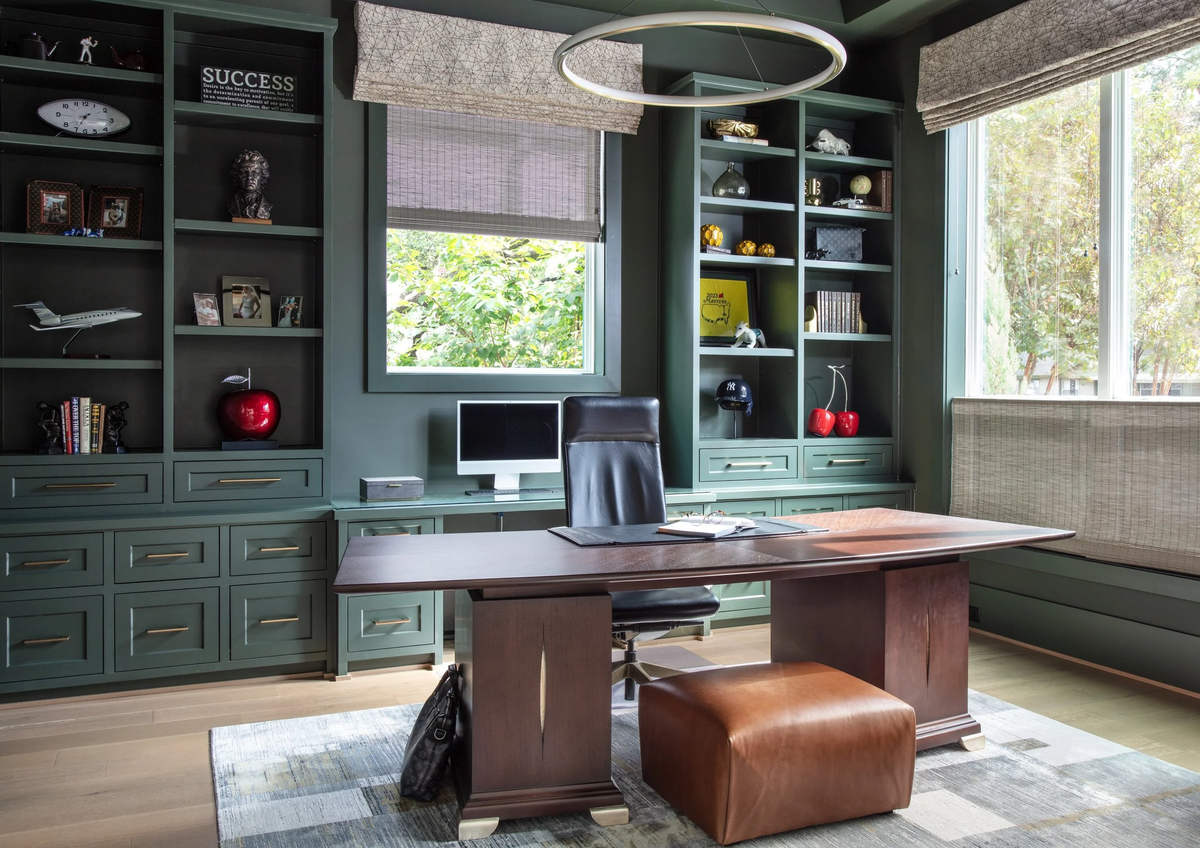
The answers shape everything. A phone-heavy day calls for acoustic considerations and a clean backdrop. A desk covered in drawings and material samples needs horizontal space and good task lighting at a completely different angle than a screen-focused setup. Understanding your actual workflow before purchasing a single piece of furniture will save you from a space that looks right on a mood board but fights you every single day.
Pro Design Tip: Keep a simple log for one week before committing to a layout. Note when you work, how long your deep-focus blocks are, and what physical tools land on your desk most often. That data is more valuable than any design magazine floor plan.
Life Integration
Designing for the Life That Surrounds Your Work
For parents of young children, the home office is rarely a truly private space. School pickup times, nap windows, and the unpredictable nature of small people require a workspace that can accommodate interruption without falling apart. This is not a problem to design around. It is a constraint to design for.
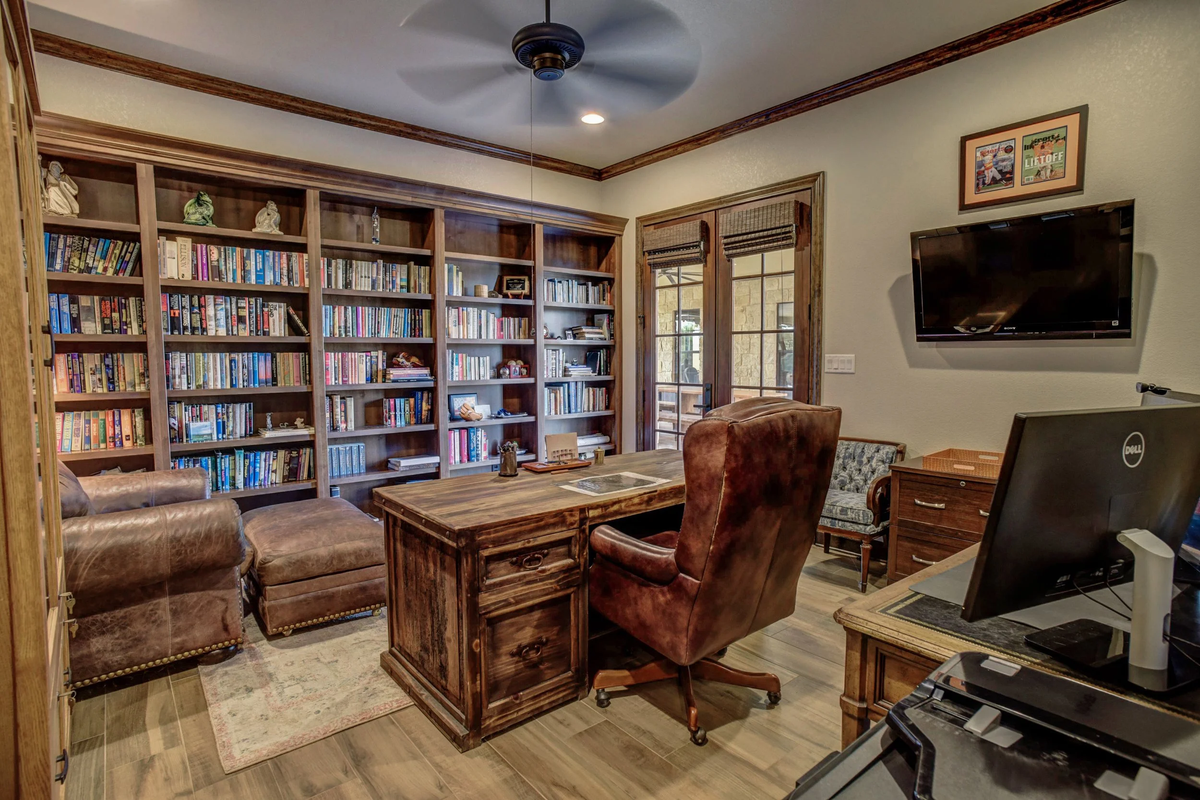
Consider a door that closes and locks, a seating area where a child can read or draw without derailing your concentration, and storage that is genuinely lockable for anything confidential. If your schedule pivots around a caregiver's hours or the school day, orient your most demanding work toward those windows of quiet and design your room to support that kind of burst-focused productivity rather than steady, all-day concentration.
Pro Design Tip: A small basket of quiet activities tucked into the corner of the office is not giving up on focus. It is acknowledging that flexibility is part of the job description for parents or grandparents who work from home, and it will serve you better than pretending otherwise.
Professional Presence
Thinking About How You Show Up on Camera
Video calls have become a professional constant, and the space behind you on camera is now part of your personal brand whether you have thought about it that way or not. A cluttered bookshelf, a window that backwashes your face, or a wall with no visual interest communicates something just as clearly as a polished one does.
If you appear on video regularly, or if you produce any kind of recorded content, podcasts, tutorials, or consultations, the room design needs to account for acoustics and sight lines. Hard surfaces produce echo. A wall of bookshelves or a large textile panel absorbs it. Your camera background should feel intentional: a curated shelf, a piece of art, or a clean painted wall all work far better than an accidental view of a door or a hamper.
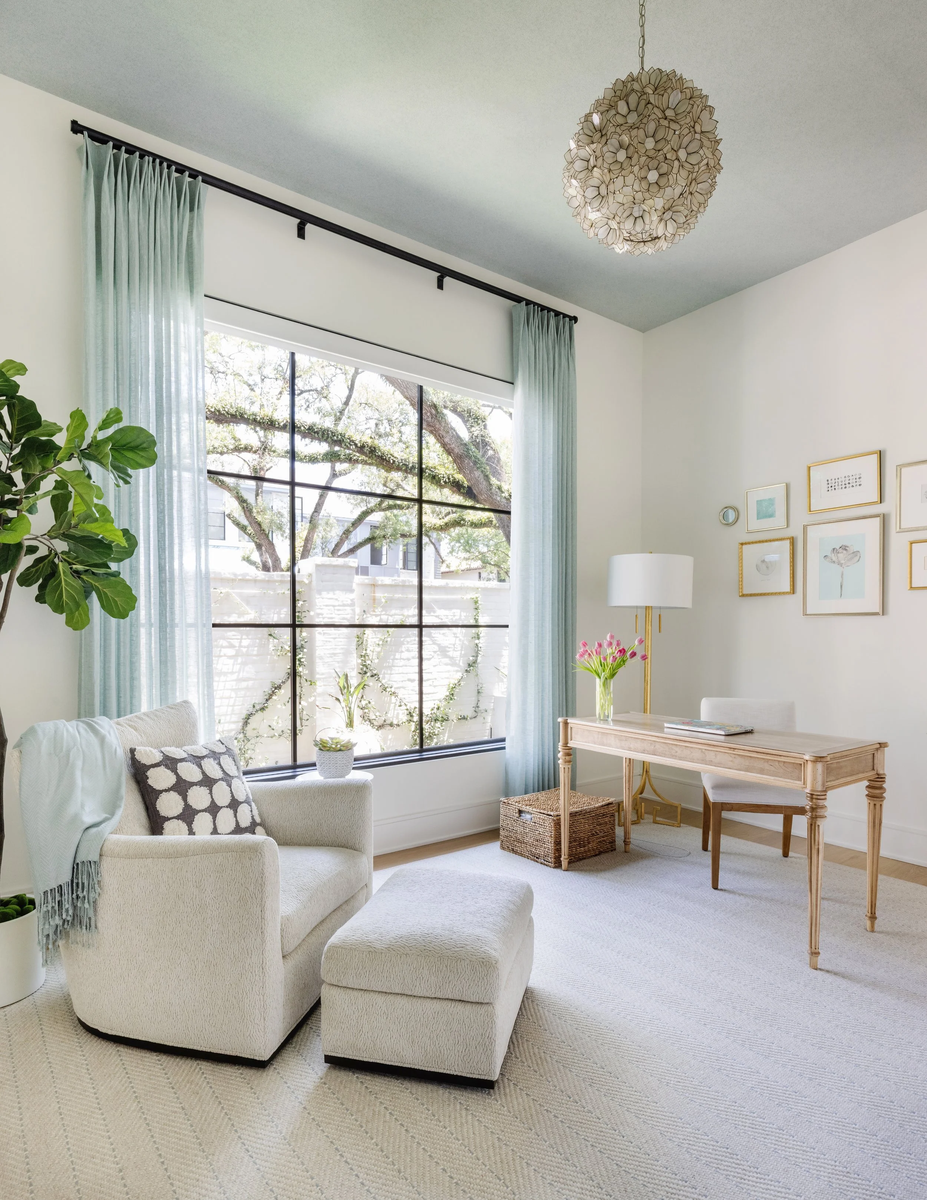
Lighting deserves particular attention. Natural light from the side is ideal. Light from behind you is the enemy. Your selection of window coverings can be the enemy or an ally and allow you better control during different times of day. If your only window is behind your desk, a ring light or a well-placed LED panel positioned in front of you at eye level is a worthwhile investment that costs far less than a full room renovation.
Pro Design Tip: The traditional mahogany study remains one of the most effective camera backgrounds available, precisely because it signals permanence and credibility. You do not need to replicate it literally. The principle of a backdrop that reads as considered is the point.
Organization
Built-Ins and the Power of Hidden Storage
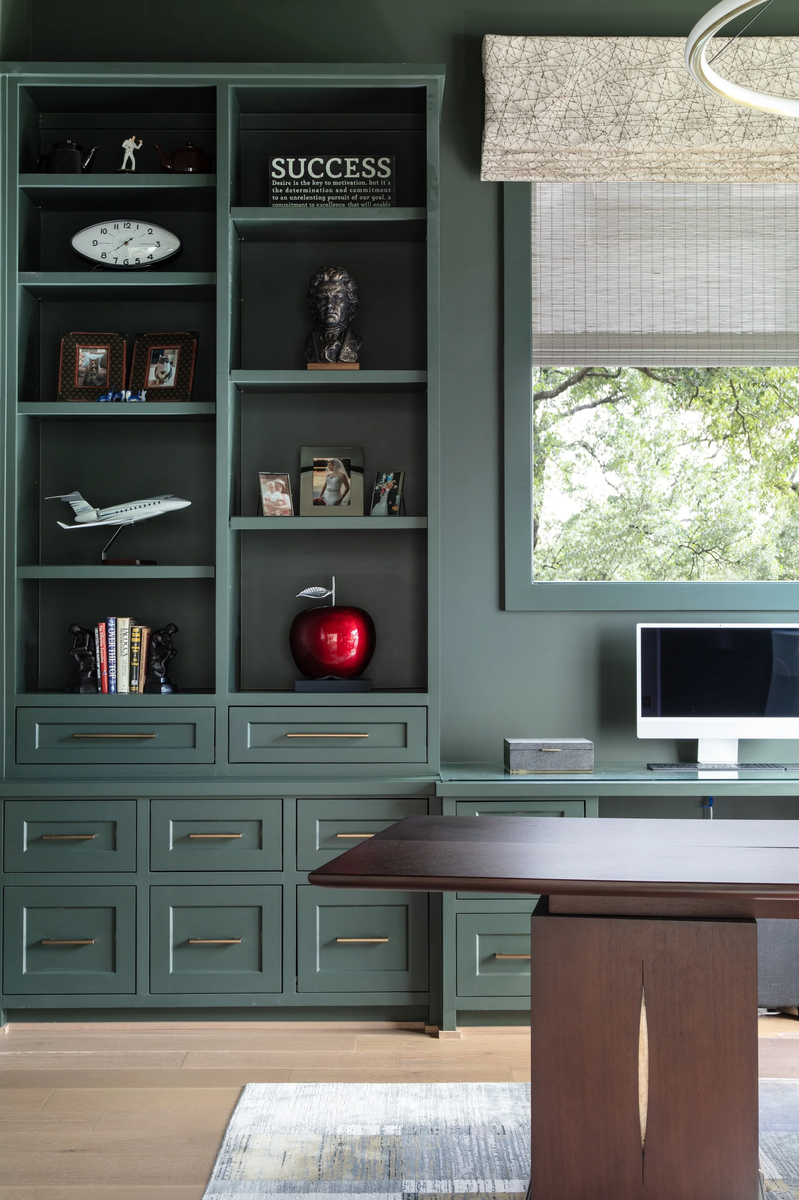
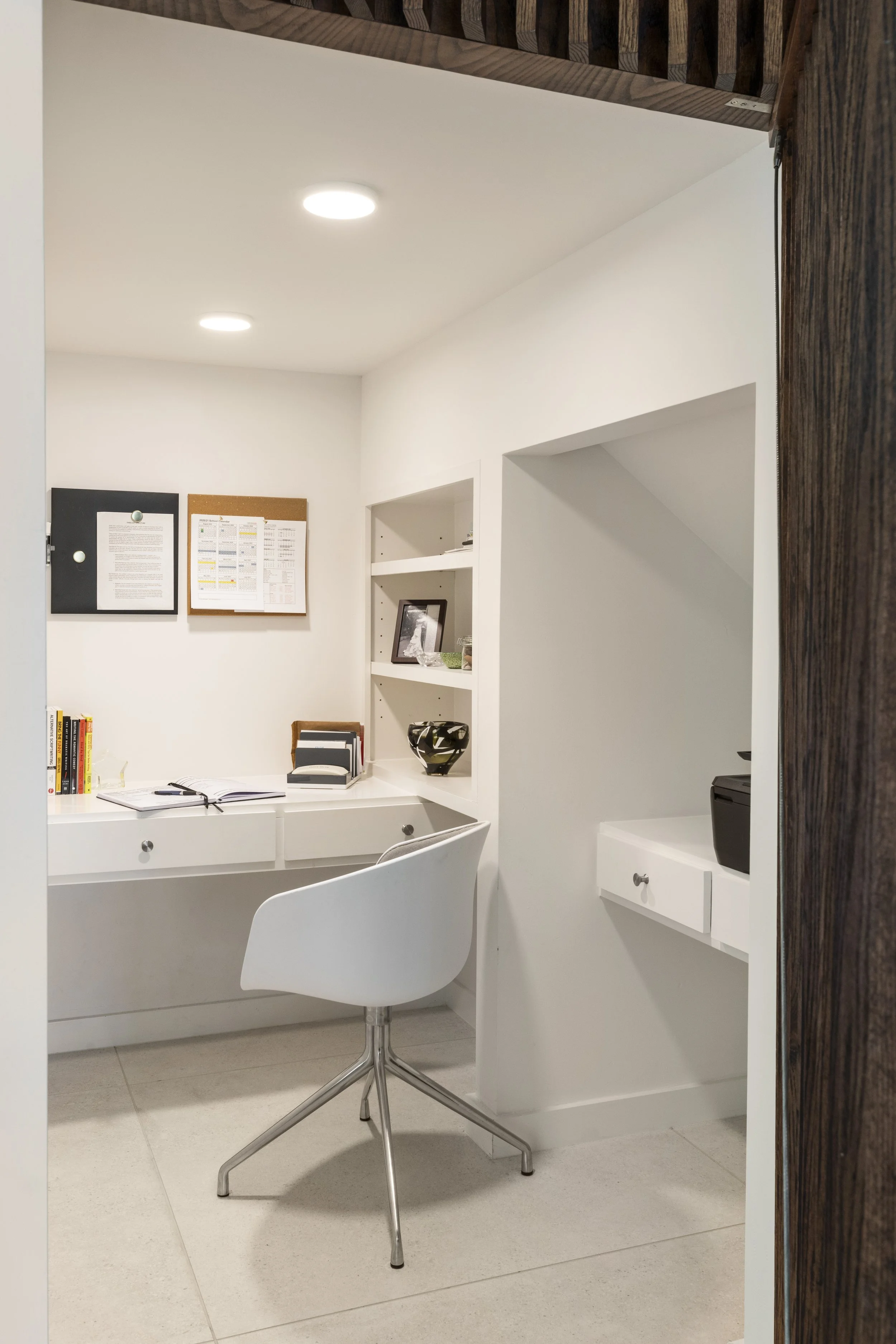
Nothing undermines a beautiful office faster than visible clutter, and nothing defeats clutter more effectively than storage that was designed for the room rather than dropped into it. Built-in cabinetry is one of the single best investments available in a home office renovation, not only because it maximizes every inch of wall space but because it allows you to close a door on the parts of your work that do not need to be visible.
Some of our clients tell us they don’t need a home office, even if they have a dedicated space available. I seldom believe them. Whether starting a career or enjoying retirement, nearly everyone I know has daily computer and paperwork tasks and a home office just makes doing them so much better.
Other clients tell me they are paperless. Then I see the stacks of files on their nightstands and dining room tables piled high. Most of us still have paper or at least have to deal with it few a few minutes, days or weeks at a time. A well-designed home office makes the task of paper organization and storage a breeze.
Another unsightly issue is a spider’s web of cords. It shocks me how many people have cords crossing their rooms. It’s not pretty, it’s not organized and it’s not safe nor convenient. When designing an office, we always discuss access to electricity and wiring and plan the furniture around the best layout.
A printer on a slide-out shelf. A file drawer that pulls out and tucks away. A cabinet tall enough to house binders without stacking them on top of each other. These are not luxuries. They are the difference between a room that stays calm and one that demands constant tidying before you can think clearly.
Pro Design Tip: When planning your home office and built-ins, account for what you have now and leave room for what you will accumulate. Storage that is eighty percent full on day one is full by year two. A dedicated cord management chase and a few more linear feet than you think you need are always worth it.
Bonus Pro Design Tip: Consider Including a well-placed floor plug during new construction or large-scale remodeling. Many builders offer one or two in the living room but you will find them highly useful in most home offices as well.
Design Aesthetic
Color as a Productivity Tool
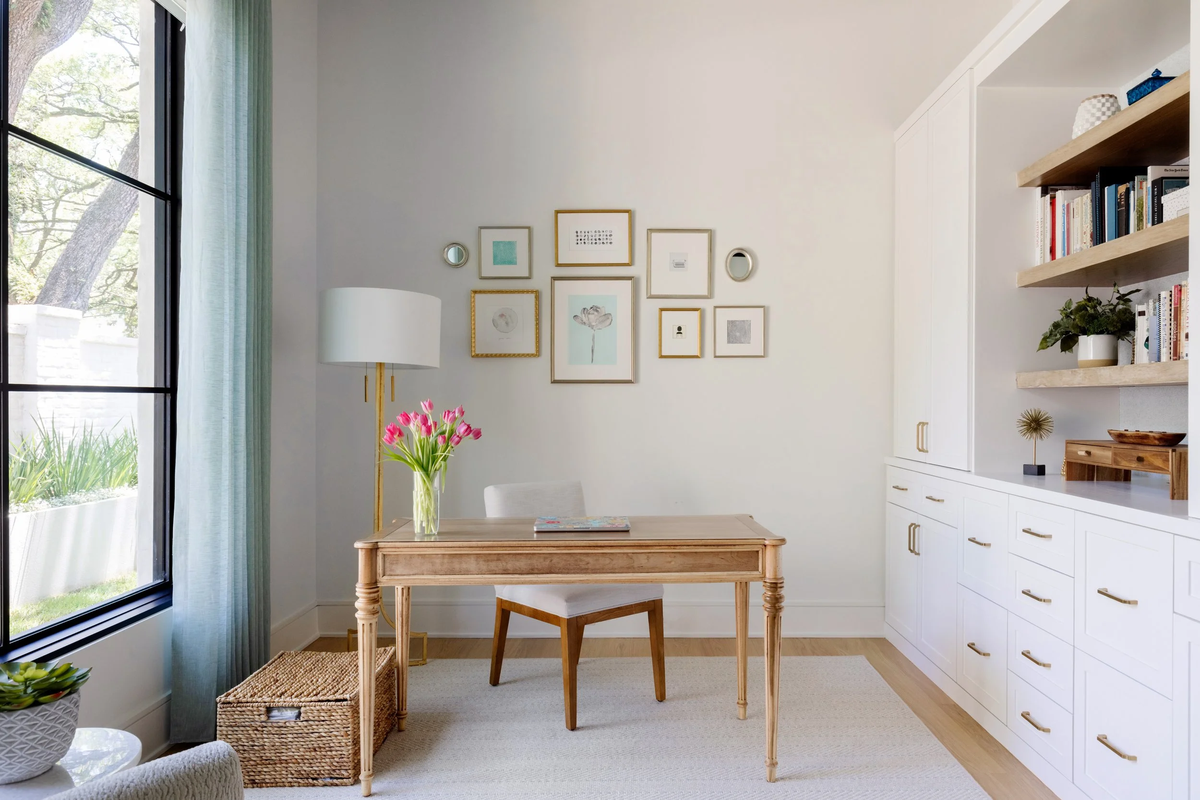
Color is not decoration in a home office. It is part of the ambience and it affects how you think and feel every hour you spend in the room. This is not guesswork. The psychological effects of color have been studied in workplace design for decades, and the conclusions are consistent: cool blues and greens support focus and reduce anxiety. Warm neutrals create comfort. Deep saturated colors, used well, can generate a sense of authority and presence.
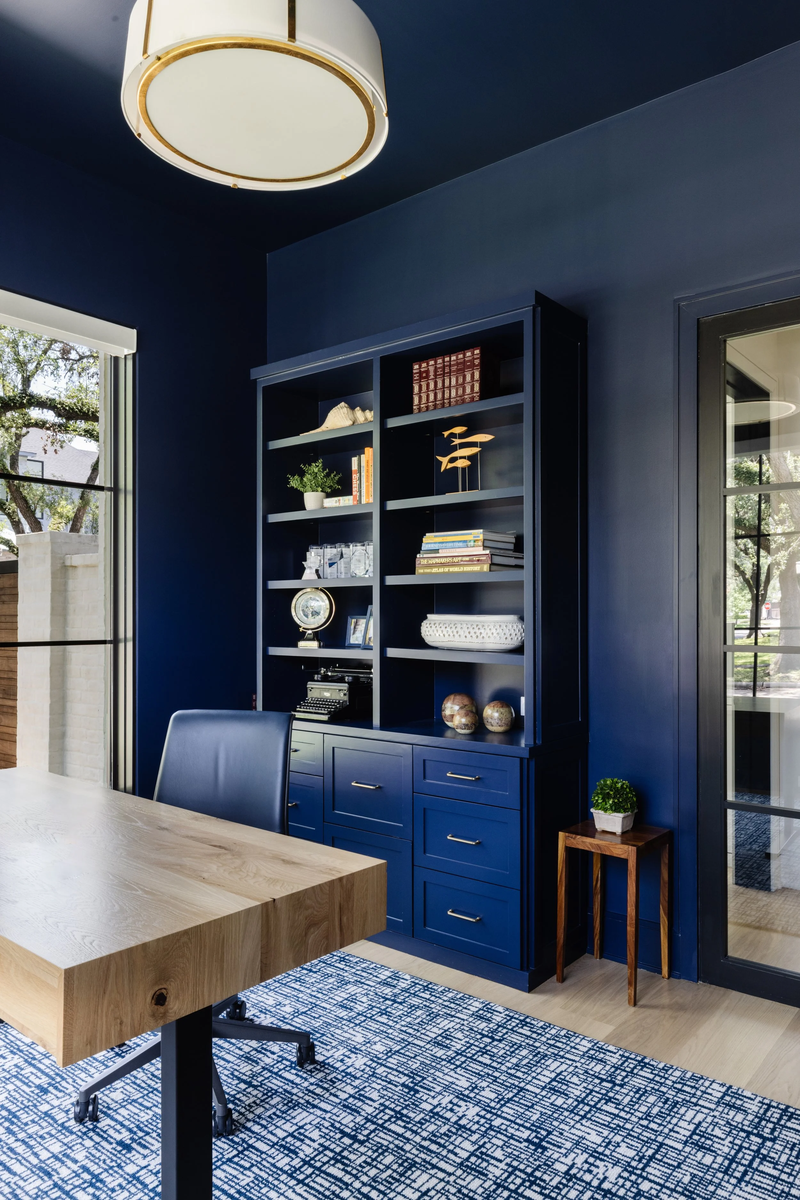
What matters most is choosing intentionally rather than defaulting to what felt safe. A navy room can be extraordinarily productive if you respond well to a sense of enclosure and definition. A room full of light neutrals can be equally productive if your best thinking happens in an open, airy environment. Neither is wrong. The mistake is choosing one that is not right for you.
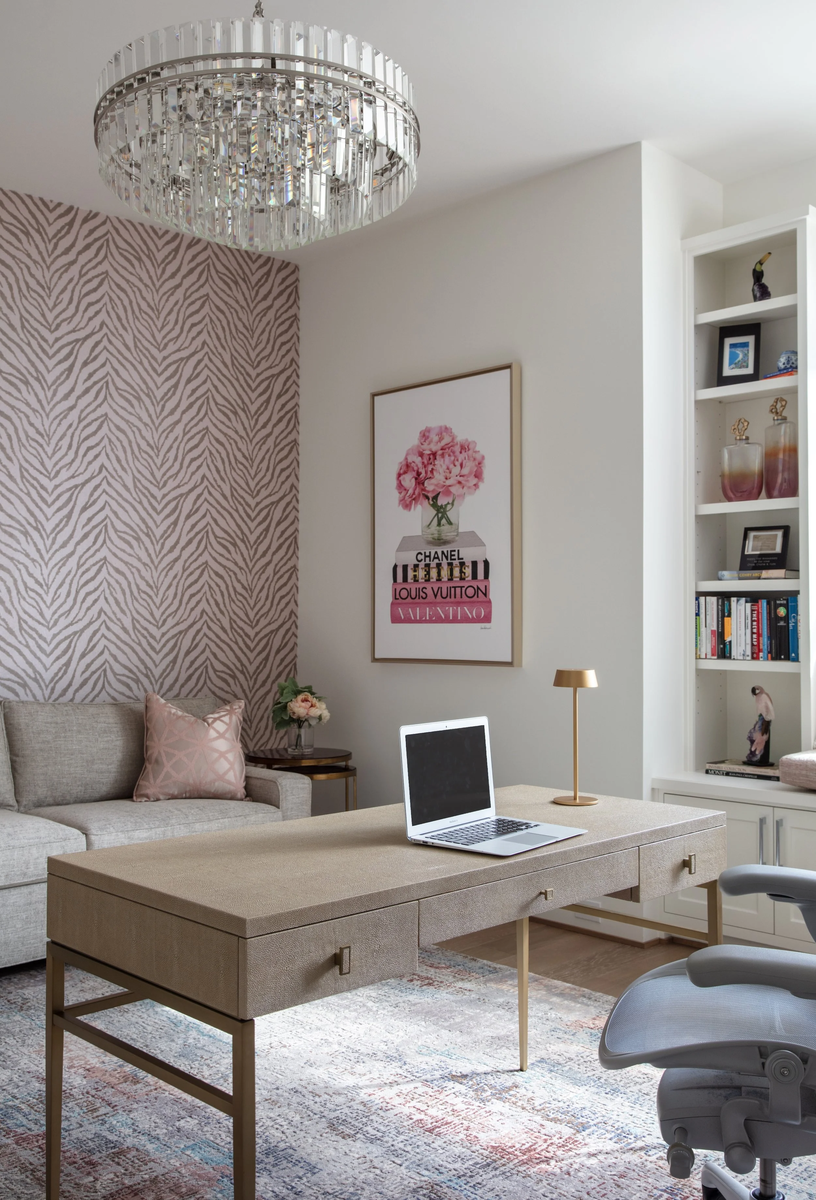
The same logic applies to pattern. A bold wallpaper on a single accent wall, a geometric textile on a chair, or a statement rug can add energy to a space that might otherwise read as flat. Just as with color, the question is whether the pattern supports your particular kind of focus or competes with it.
Pro Design Tip: Paint a large sample, at least two feet by two feet, directly on the wall and live with it for a week before committing. Observe it at every hour of the day. The color you love at noon may feel completely different at eight in the morning when you are sitting down to work.
Flexibility
When the Office Has to Do Double Duty
Not every home has a room dedicated solely to work. Guest rooms, sitting rooms, and even wide hallways have all become productive home offices when they are designed thoughtfully. A dual-purpose room does not have to feel compromised. It simply requires more deliberate decisions about what is always visible and what can fold away or close.
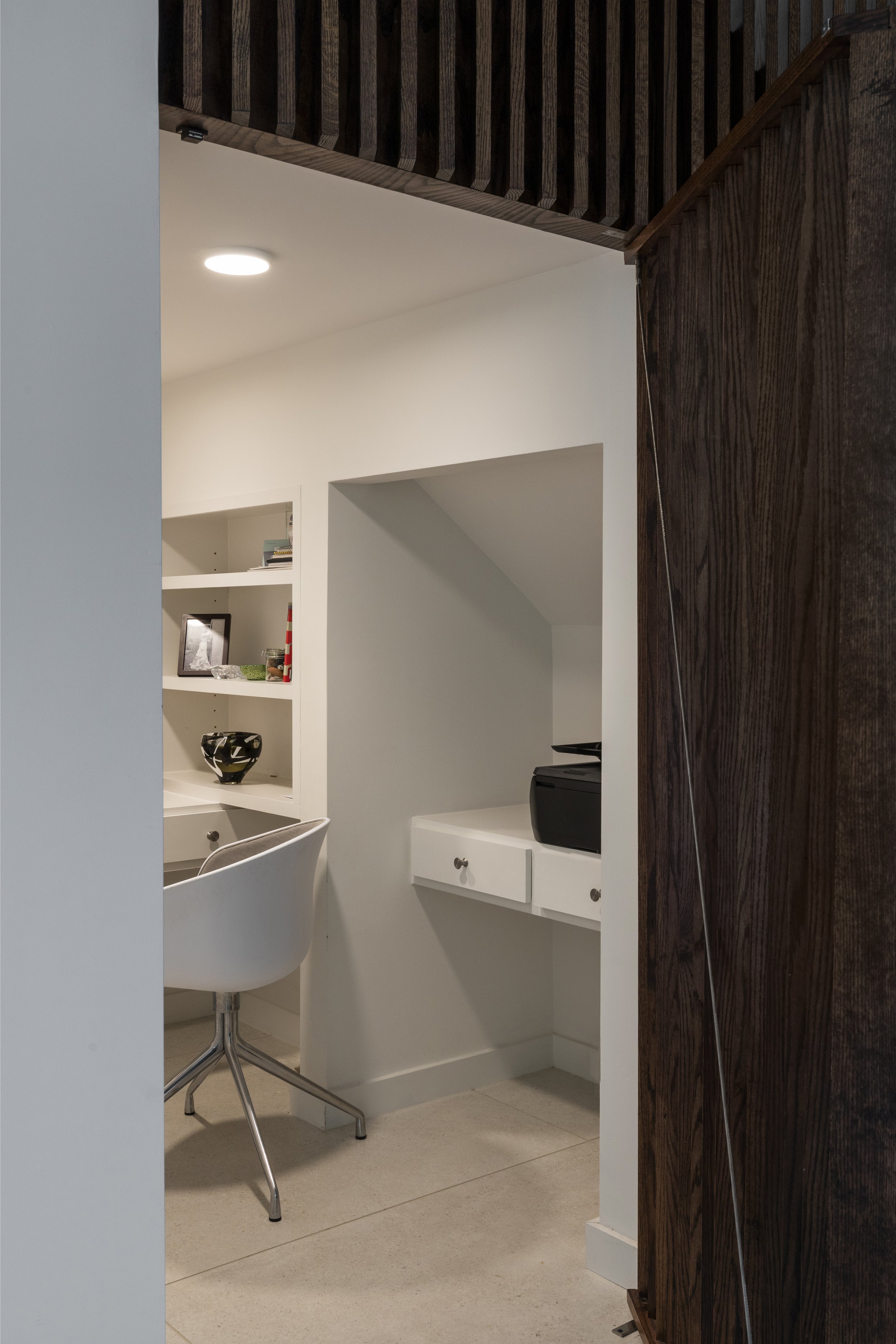
A daybed with tailored upholstery reads as a chaise until the guest arrives. A well-designed desk in a deep closet, concealed by paneled doors, disappears entirely. Murphy beds have evolved significantly and can now be integrated into wall systems that include a desk surface that folds down independently of the bed itself. The best dual-purpose offices are ones where neither function feels like an apology for the other.
Pro Design Tip: Define zones visually, even in a small space. A rug under the desk area, a different light fixture above the seating area, or a change in wall treatment signals a shift in purpose and prevents the room from feeling like it is trying to be two things at once without succeeding at either.
Comfort and Health
Ergonomics Are Not Optional
A home office that hurts you is not a home office. It is a liability. The hours that accumulate in a chair, at a keyboard, and in front of a screen add up quickly, and the physical cost of a poorly configured workstation shows up gradually, then all at once.
The non-negotiables: your monitor should be at eye level, which for most people means raising it significantly from where it sits on a flat desk. Your chair should support the natural curve of your lower back, and your feet should rest flat on the floor or on a footrest. Your keyboard and mouse should allow your elbows to remain close to your body at roughly ninety degrees. These are not preferences. They are the baseline from which everything else can be personalized.
Adjustable desks have become far more accessible in recent years and are worth serious consideration for anyone who spends more than four hours at a desk daily. Alternating between sitting and standing, even for short periods, reduces fatigue and supports circulation in ways that translate directly into better afternoon focus.
Pro Design Tip: Invest in your chair before almost anything else in the room. A beautiful desk paired with an inadequate chair is a bad trade. The chair is the piece of furniture you interact with most directly and most constantly, and it is the one most likely to affect your health over time.
The Office You Deserve to Work In
The home office sits at the intersection of your professional life and your personal one, and it benefits from the same care and intentionality you would bring to any other room in your home. The functional layer, how you work, when you work, and what your work demands, comes first. The design layer follows and expresses who you are.
When those two layers are aligned, the space stops being somewhere you have to be and starts being somewhere you want to be. That shift is worth every decision it takes to get there.
If you are ready to design a home office that truly works for the way you live, we would love to help you get there.
We are off to our next design project.
Fondly,
Pamela Hope Designs
Meet Pamela
A LUXURY INTERIOR DESIGNER IN HOUSTON
Pamela O’Brien is the founder of Pamela Hope Designs in Houston, Texas. Pamela is an award-winning luxury interior designer, writer, and speaker. Prior to founding Pamela Hope Designs, Pamela served as a spokesperson in media and public affairs, working with media outlets like Dateline NBC and 48 Hours. This experience allowed her to travel the world and furthered her love for travel, culture, and interior design. After attending an executive course at the Harvard Graduate School of Design, Pamela launched her own interior design firm full-time. Pamela is known for building strong relationships with her clients, who later become friends and collaborators. She is highly influential in the Houston interior design space and shows no signs of slowing down.

Meet Danna
A LUXURY INTERIOR DESIGNER IN HOUSTON
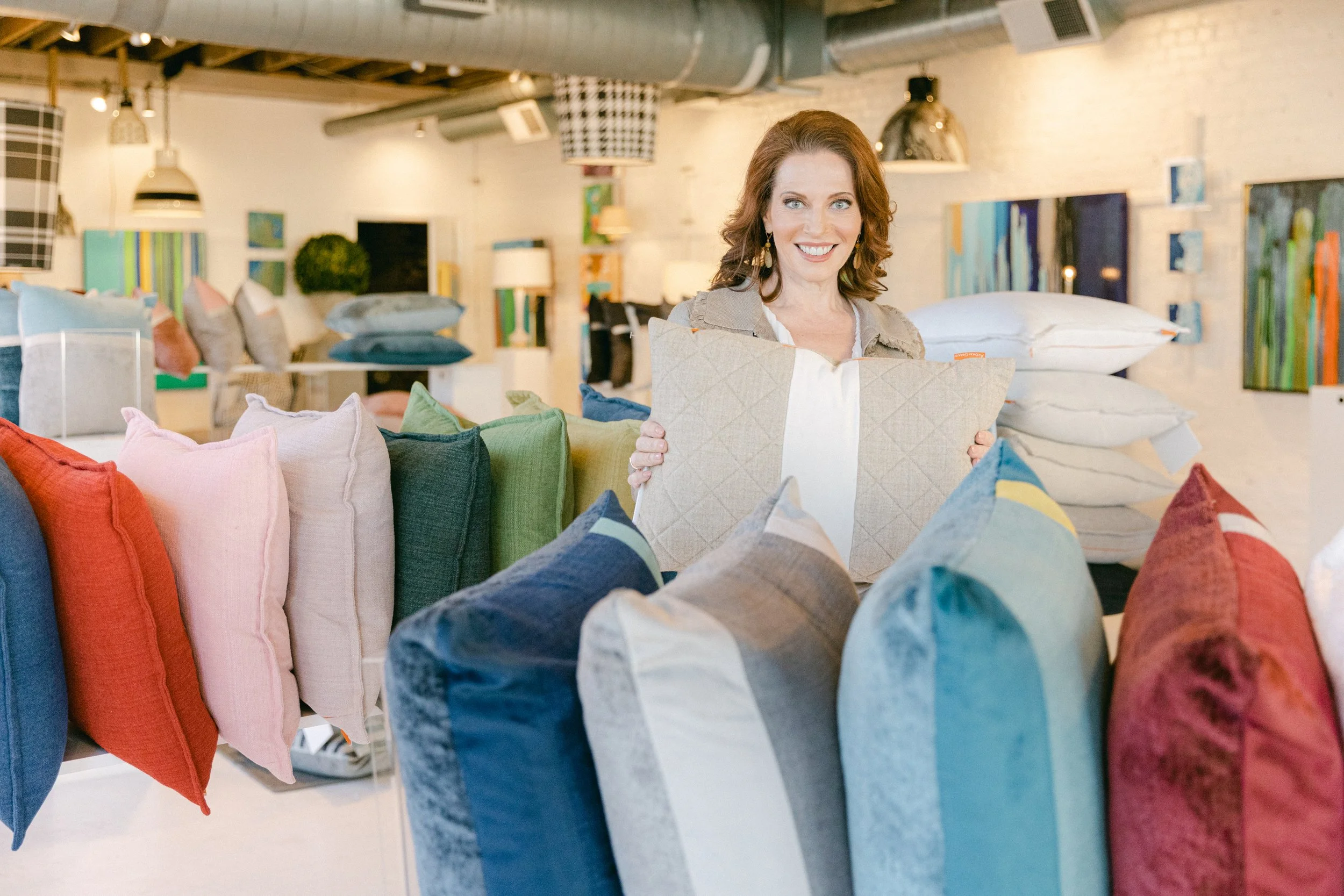
Danna Smith has more than 30 years of experience in the design industry. She has been a buyer and merchandiser for four luxury showrooms in Houston and Dallas. Smith teaches an evening course at Houston Community College to nurture her passion for developing future design stars. Since joining Pamela Hope Designs in 2015, she has worked on some of her most beautiful and innovative projects yet.