Choosing the Right Fixtures for Your Space
Published: October 8, 2026
Fixtures are the jewelry of a room. They are among the smallest elements in a home, and among the most noticed. A beautifully chosen faucet, a perfectly scaled set of cabinet pulls, a towel bar in exactly the right finish: these are the details that signal to anyone paying attention that this space was designed, not simply decorated. And when they are chosen carelessly or as afterthoughts, the room will tell that story just as clearly.
At Pamela Hope Designs, fixtures are never an afterthought. We select them in the same conversation as the cabinetry, the countertops, and the tile, because they are inseparable from those decisions. The finish of a faucet changes how you read the warmth of a stone. The scale of a cabinet pull changes how you experience a door. These are relationships, and like all relationships, they require intention
The Foundation
Choose Your Metal Finish First, Then Build Around It
Before selecting a single faucet or pull, the most important fixture decision in any project is the metal finish. This choice functions as a through-line for the entire home. It determines which faucets are available to you, which cabinet hardware families you can draw from, which towel bars and robe hooks will read as intentional rather than incidental. Everything that follows depends on it. You don’t have to choose the same finish for everything but your selections should flow from room to room without being jarring.
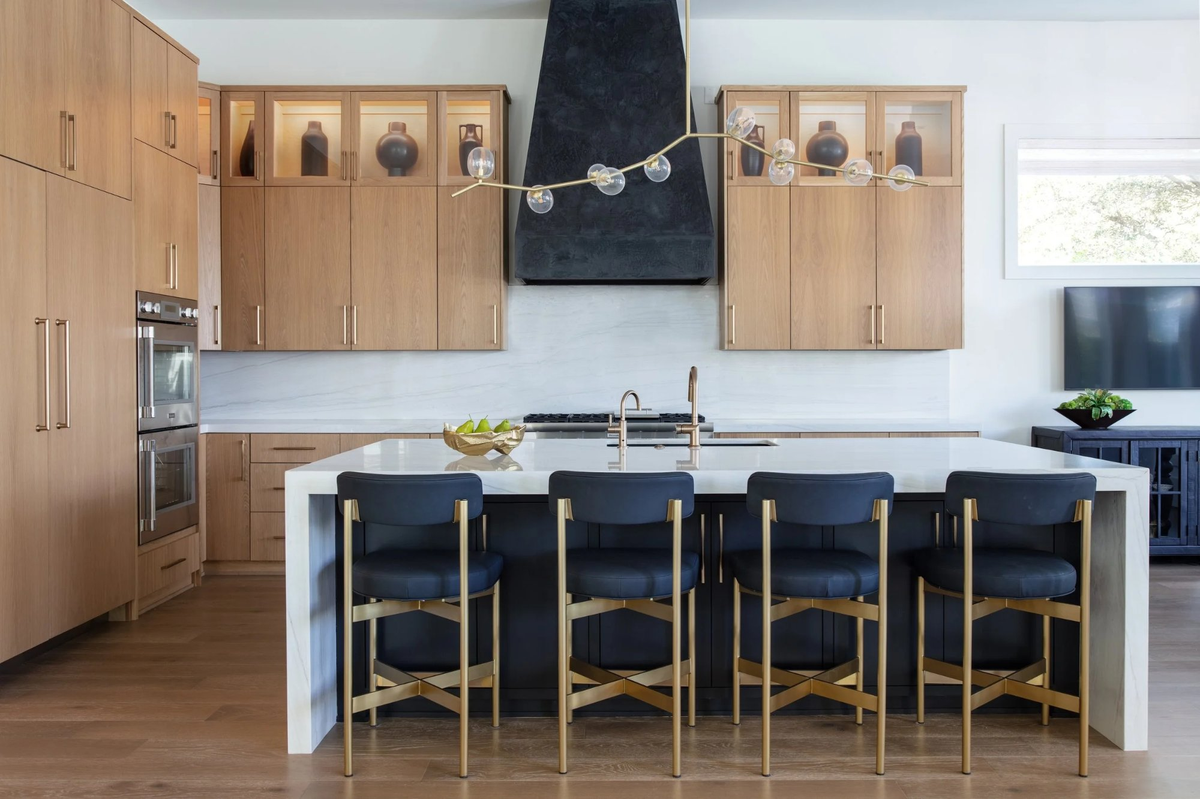
The finish landscape has never been richer. Unlacquered brass develops a warm, lived-in patina over time and suits everything from traditional interiors to the current wave of organic modern design. Brushed nickel sits in a versatile middle ground, cool enough to read contemporary, classic enough to pair with traditional millwork. Its non-shiny surface nearly disappears when necessary.
Matte black makes a strong graphic statement and pairs well with high-contrast palettes. It can easily be overdone so consider one or two matte black accents such as a light fixture or a mirror and avoid selecting it for plumbing, lighting and hardware. Polished chrome is the most enduring of all: precise, clean, and timeless in the truest sense of the word. Satin brass, oil-rubbed bronze, and brushed gold occupy the spaces between these anchors, each with its own character.
Our guidance is almost always to establish one dominant finish and apply it with consistency throughout the home. Not rigidly, but consistently. The kitchen faucet, the cabinet pulls, the bathroom faucets, the towel bars, the door hardware: when these all speak the same metallic language, the home feels cohesive in a way that is felt before it is analyzed. The rooms seem to belong to each other. Guests cannot always say why. We can.
Pro Design Tip: If you are building or renovating in Houston's climate, consider the long-term performance of your chosen finish alongside its aesthetics. Unlacquered brass and oil-rubbed bronze develop patina gracefully. Polished chrome and brushed nickel hold their finish reliably. Avoid trend-driven finishes you are not willing to live with for ten to fifteen years, because fixture replacement is rarely a simple swap.
The Exception
When and How to Mix Metal Finishes
Mixing metals is not a mistake. Done well, it is one of the more sophisticated moves in residential design. The mistake is mixing metals without intention, which produces rooms that feel unresolved rather than layered.
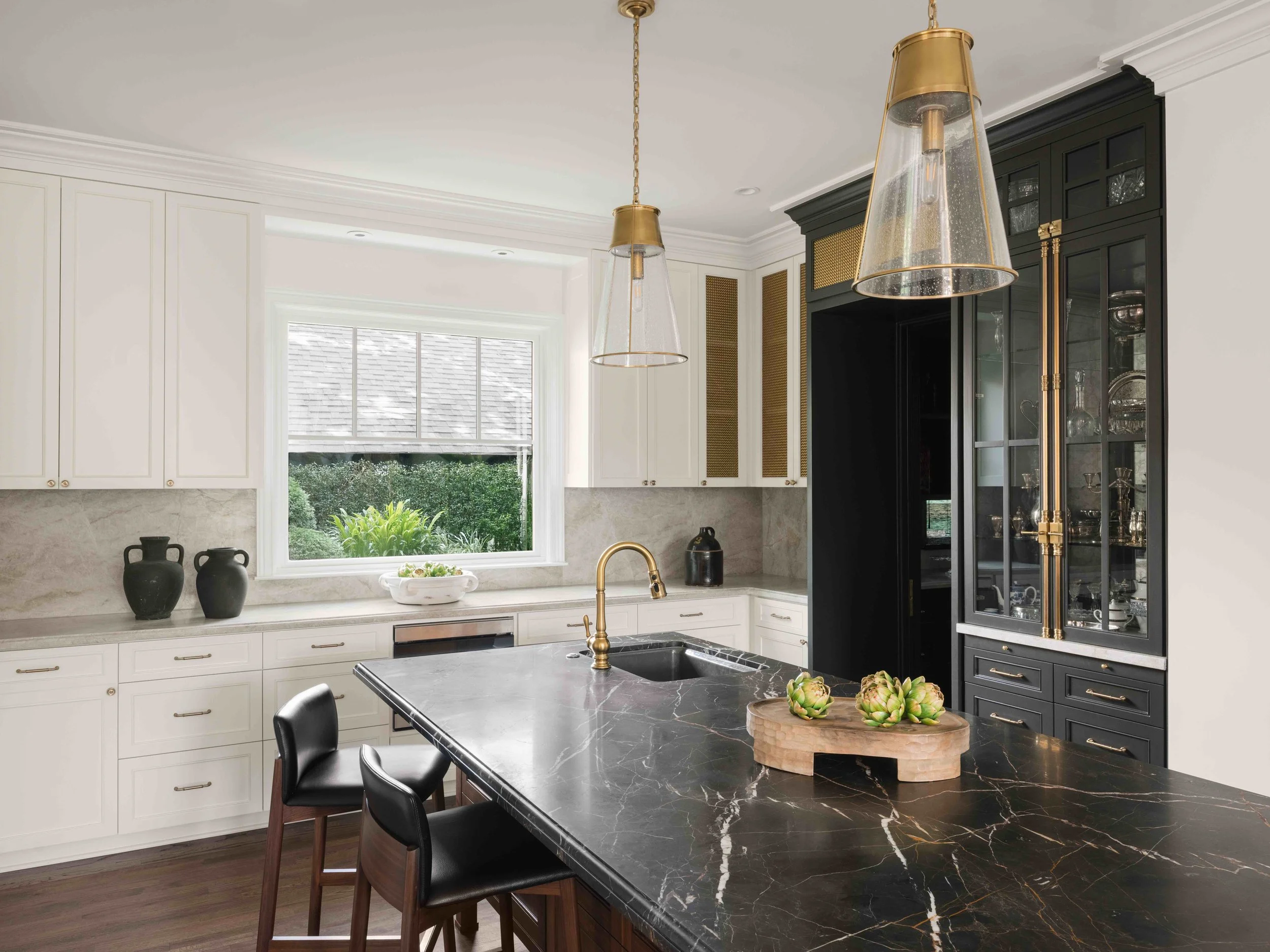
The rule we follow is straightforward: establish one dominant finish that appears on the functional fixtures, and introduce a secondary finish through the decorative ones. In a bathroom where brushed nickel carries the faucets, shower system, and towel bars, a warm walnut-framed mirror and a set of unlacquered brass sconces can introduce a second metallic note that reads as curated rather than inconsistent. The dominant finish unifies. The secondary finish adds depth.
The fixtures that carry the most visual weight should share a finish: the faucet, the shower valve trim, and the primary towel hardware belong together. Smaller or more decorative elements, a robe hook in a contrasting finish, cabinet pulls that introduce warmth into a cool-toned bathroom, a mirror frame that bridges the palette, these are the places to layer. The eye reads the primary fixtures first and accepts the secondary finish as an accent rather than a discrepancy.
What does not work is an equal split: two faucets in different finishes, or a room where every fixture is in a different metal with no clear hierarchy. This does not read as intentional. It reads as unresolved.
Pro Design Tip: When mixing metals, limit yourself to two finishes per room and establish a clear dominant and secondary relationship. A 70/30 split, roughly 70 percent dominant and 30 percent accent, is a reliable proportion. If you find yourself closer to 50/50, pull back and consolidate.
The Kitchen
Kitchen Faucets and Pot Fillers: Function That Earns Its Place
The kitchen faucet is one of the most-touched fixtures in the home. It is handled dozens of times a day, seen from multiple rooms in an open floor plan, and photographed in nearly every kitchen portrait. It deserves serious attention.
The most significant decision in kitchen faucet selection is not finish, though finish matters enormously. It is form. A bridge faucet with its two-handle configuration and elevated cross-bar reads as traditional and architectural, lending itself to kitchens with classical millwork, warm wood tones, and period-influenced detail. Here the faucet is not merely functional. It is a design statement in its own right, given as much visual weight as the cabinetry and countertop it sits alongside.
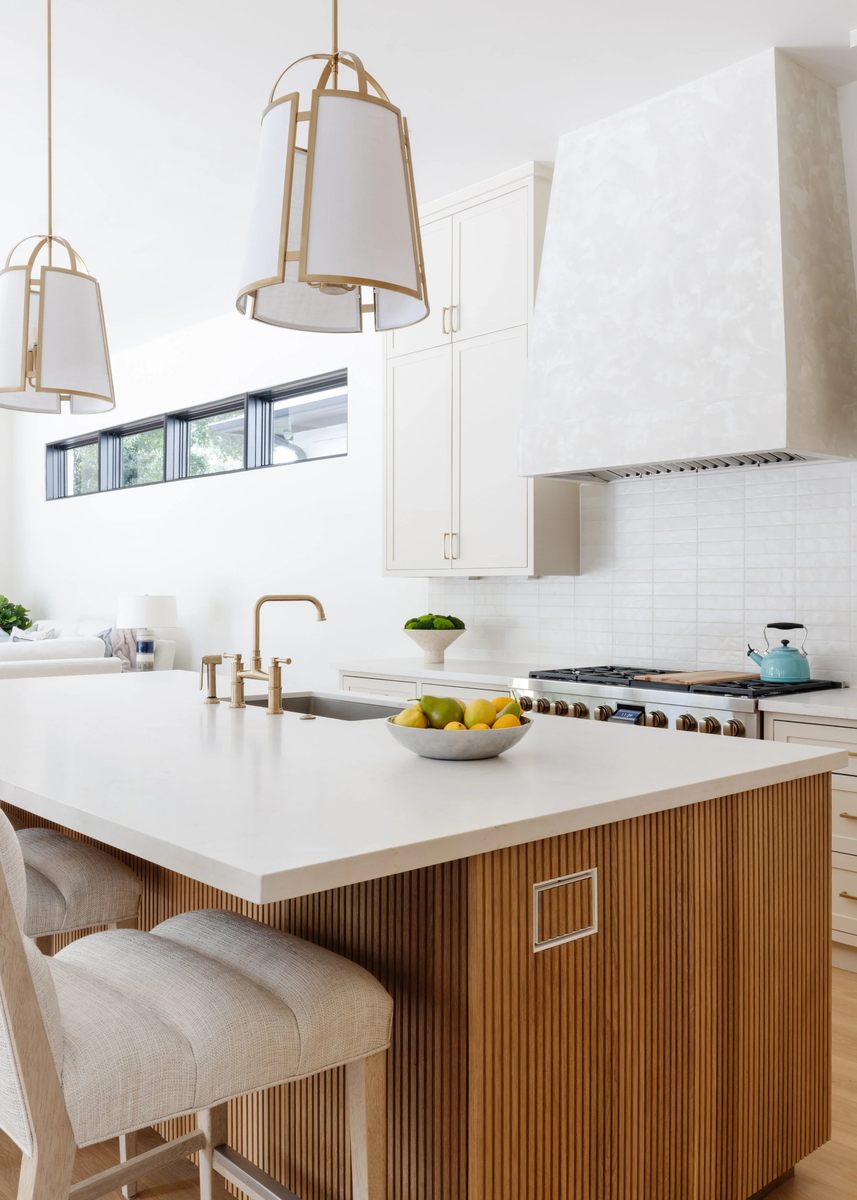
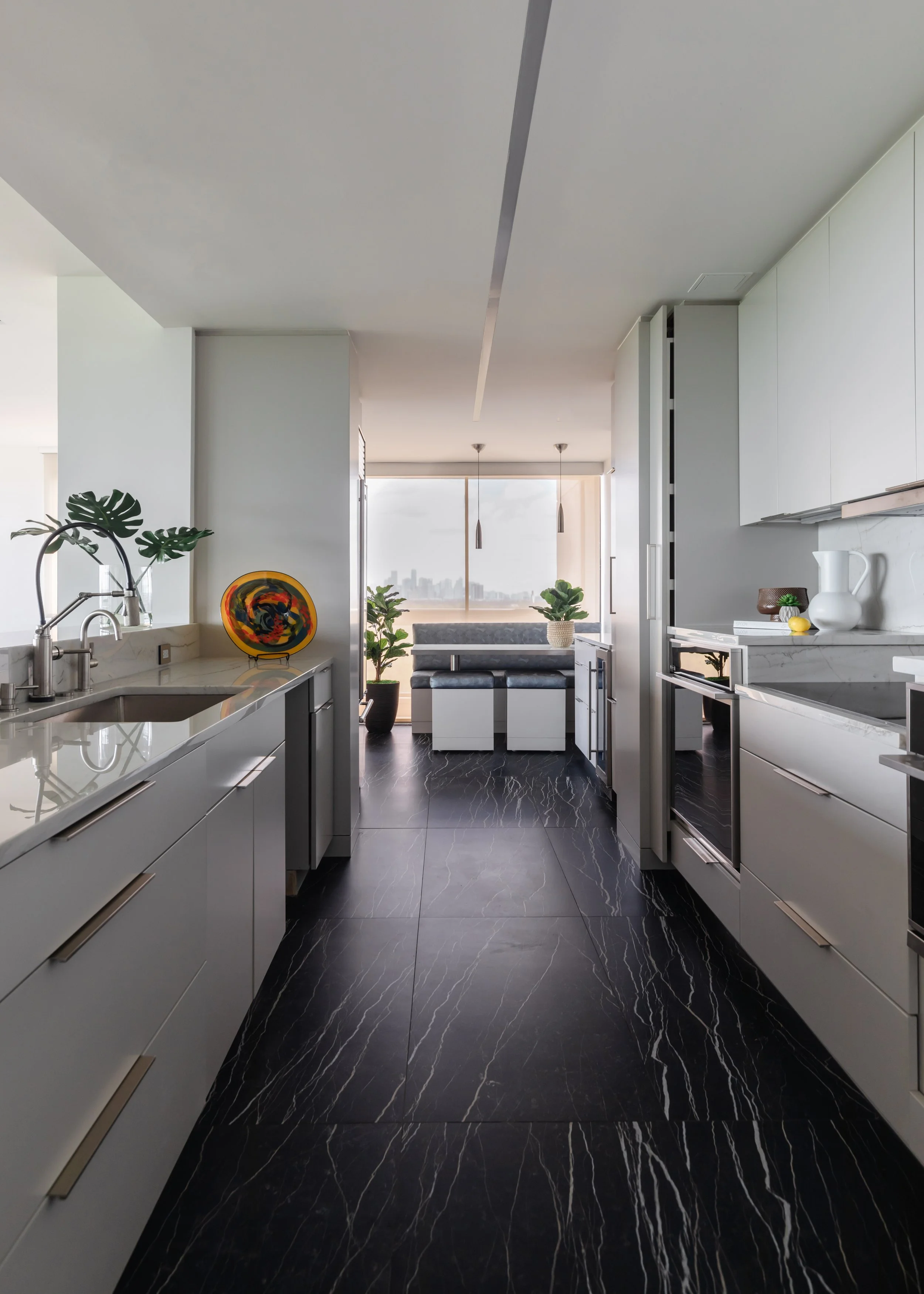
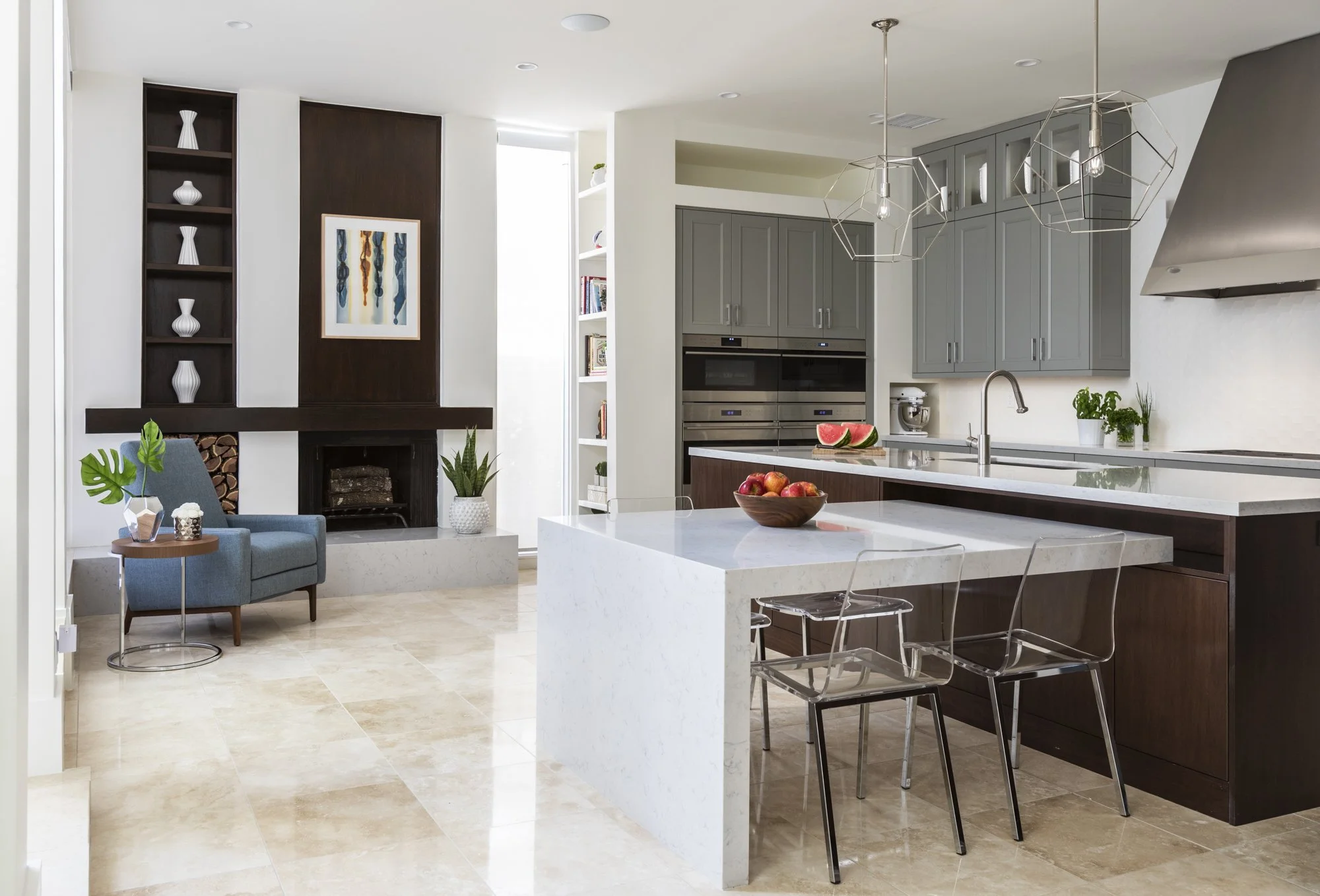
The opposite philosophy is equally valid and equally intentional. In a contemporary kitchen where the architecture, the material palette, and the spatial experience are doing the heavy lifting, the fixtures should step back entirely. Integrated pulls that nearly disappear into flat-front cabinetry, a simple single-lever faucet in a cool brushed finish, hardware chosen to serve the hand without announcing itself to the eye: this is restraint as a design strategy, and when it is executed with consistency it produces rooms of exceptional calm and precision. The fixtures are not absent. They are simply not asking for attention.
The pot filler is a fixture category that generates frequent questions in our projects. We used to have nearly all of our clients ask for one. I would later ask how much they used it. Reports varied from daily to never turning it on. We love a pot filler where it is genuinely used, which means in a kitchen where the primary cook actually fills large pots at the range rather than at the sink. When it is used, it is indispensable. When it is not, it is simply a very visible fixture that draws attention without earning it. The question to ask before specifying one is honest: will this be used weekly, or is it aspirational? Also, consider the stone or tile wall behind it and if the pot filler will add or subtract from that design. Lastly, unless you have whole-house water filter, you may not like the water that comes out of the filler.
Pro Design Tip: In kitchens with an island sink and a perimeter sink at the range wall, specify faucets that share a finish but allow for different forms. A bridge faucet at the island for visual presence, a simpler pull-down at the perimeter for hard-working practicality, covers both aesthetic and functional needs without sacrificing cohesion.
The Primary Bath
Bath Faucets, Tub Fillers, and Shower Systems
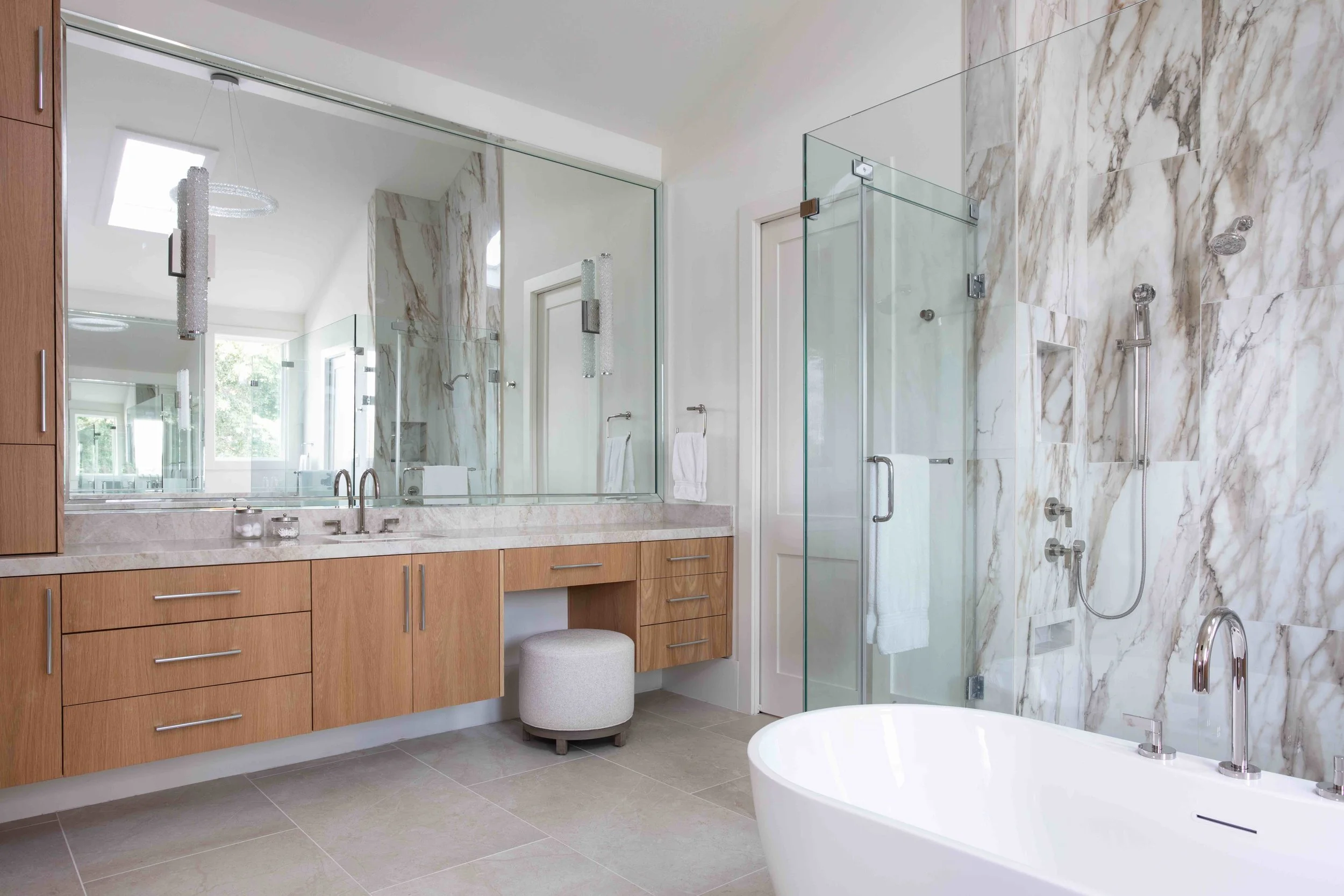
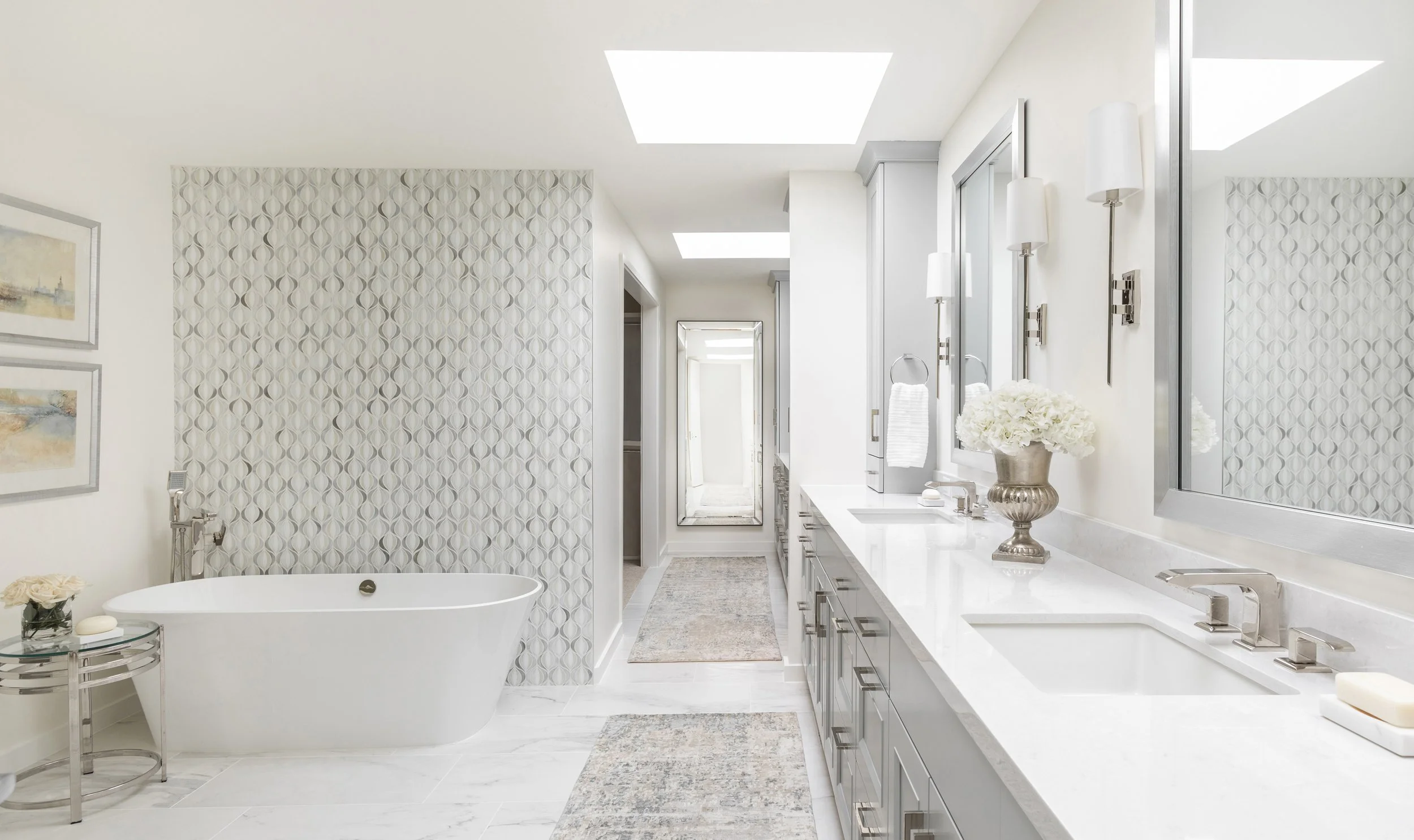
The primary bathroom is where fixture decisions carry the most collective weight, because there are more of them in close proximity than anywhere else in the home. Vanity faucets, a tub filler, a shower system, towel bars, robe hooks, and toilet paper holders all share one room and, ideally, one finish.
Vanity faucets in a primary bath should be selected in direct conversation with the vanity itself. A furniture-style vanity in a warm, traditional wood calls for a faucet with some presence and personality: cross handles, a bridge configuration, or a decorative spout. A sleek, minimalist floating vanity asks for a faucet that shares its restraint: a simple lever handle, a wall-mount configuration, or a clean single-hole design that nearly disappears.
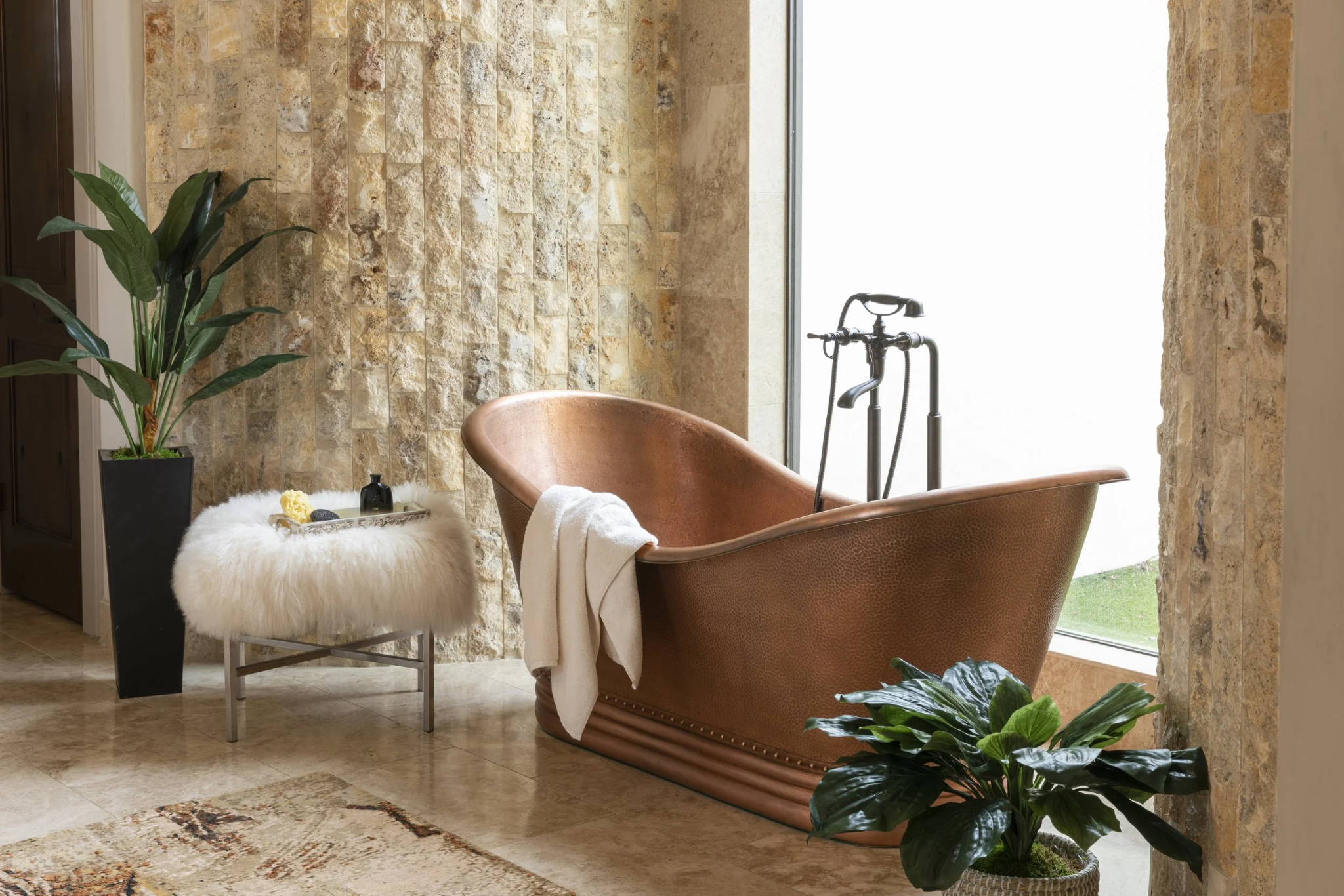
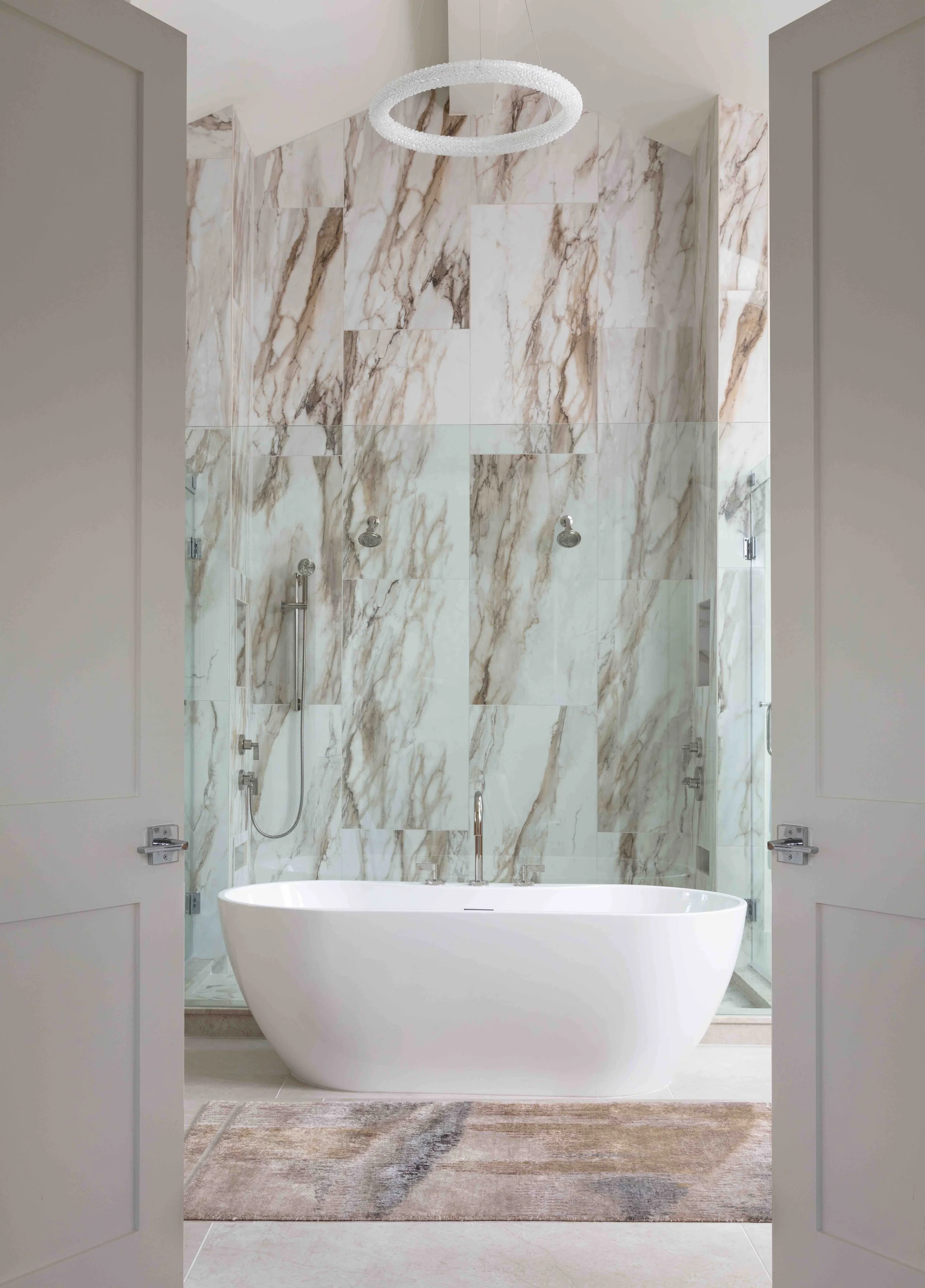
The freestanding tub filler is the fixture with the greatest opportunity for drama in a primary bathroom. Because the tub itself is often the visual centerpiece, the filler that serves it should be chosen to complement the tub's silhouette rather than compete with it. A floor-mount filler with a graceful arc suits a sculptural, organic tub form. A more structured, architectural filler pairs well with a rectangular or angular tub. The relationship between these two elements is one of the more rewarding decisions in bathroom design when it is given the attention it deserves.
Shower systems are where functional specification and design intent intersect most directly. The visible trim elements, the valve plate, the showerhead, the hand shower, and the body spray covers if specified, represent a significant area of fixture visibility. A thermostatic system with clean, coordinated trim presents as a complete fixture family rather than a collection of parts. We almost always specify a thermostatic valve in primary bathrooms because the experience it provides, water at an exact temperature the moment you turn it on, is one of those details that clients notice and appreciate every single day.
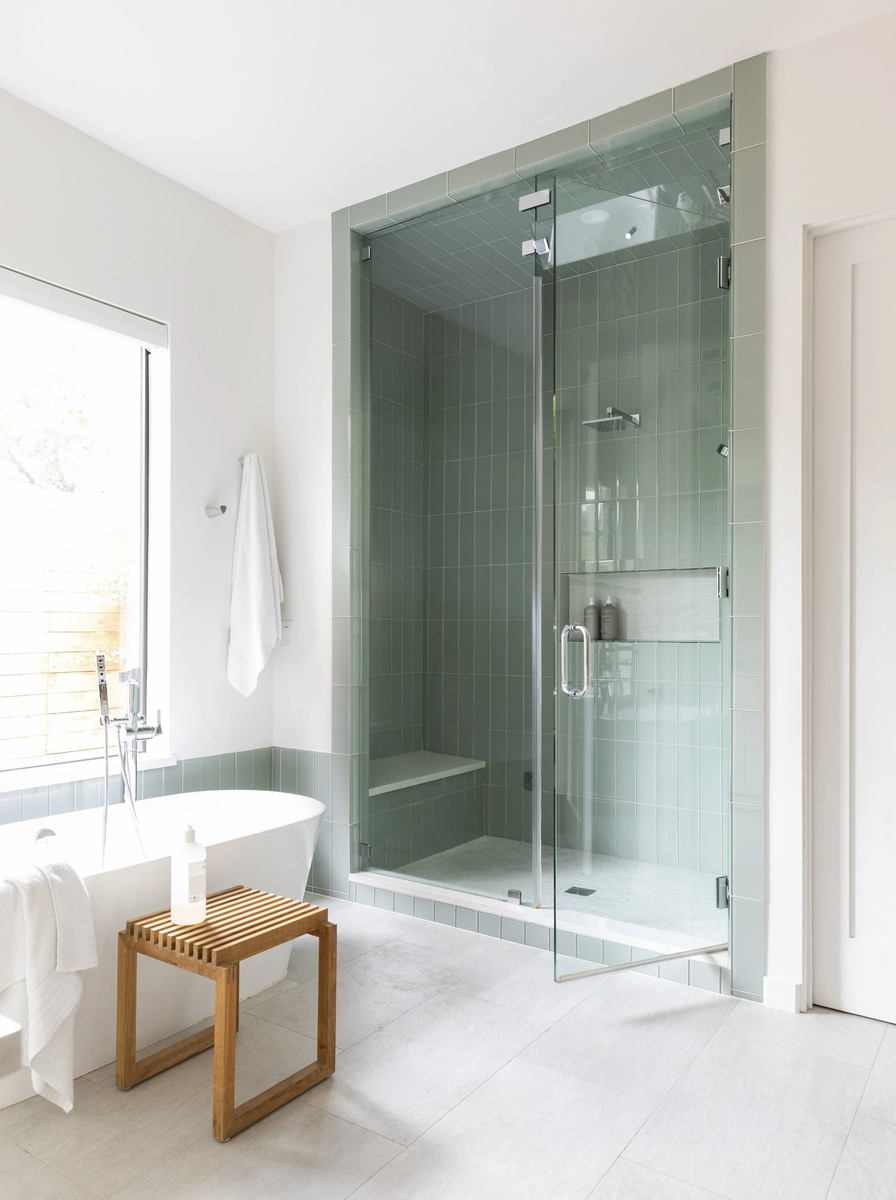
Rain heads and hand showers each serve distinct purposes. A ceiling-mount rain head provides an immersive, spa-like experience that feels generous and unhurried. A hand shower is a practical necessity for rinsing and cleaning. In most primary bathrooms, we specify two showerheads, both controlled through a diverter or a thermostatic system that allows independent operation. As a rule, we find women tend to hate rainheads. They just aren’t always planning on drenching their hair! Some of our most convenient showers swap a high-quality wall mount shower head on an arm rather than a ceiling mount. Sometimes you need to stay out of the rain!
The decision of which showerhead to position as the featured element versus the secondary one should follow the same logic as every other fixture relationship in the room: one leads, the other supports.
Pro Design Tip: When selecting shower trim, resist the impulse to mix trim families within a single shower, even in the same finish. A thermostatic valve from one manufacturer paired with showerheads from another can create subtle differences in proportion and detail that read as disjointed up close. Specify within a single trim family wherever possible, and the system will read as designed rather than assembled.
The Powder Bath
Small Room, Outsized Fixture Impact
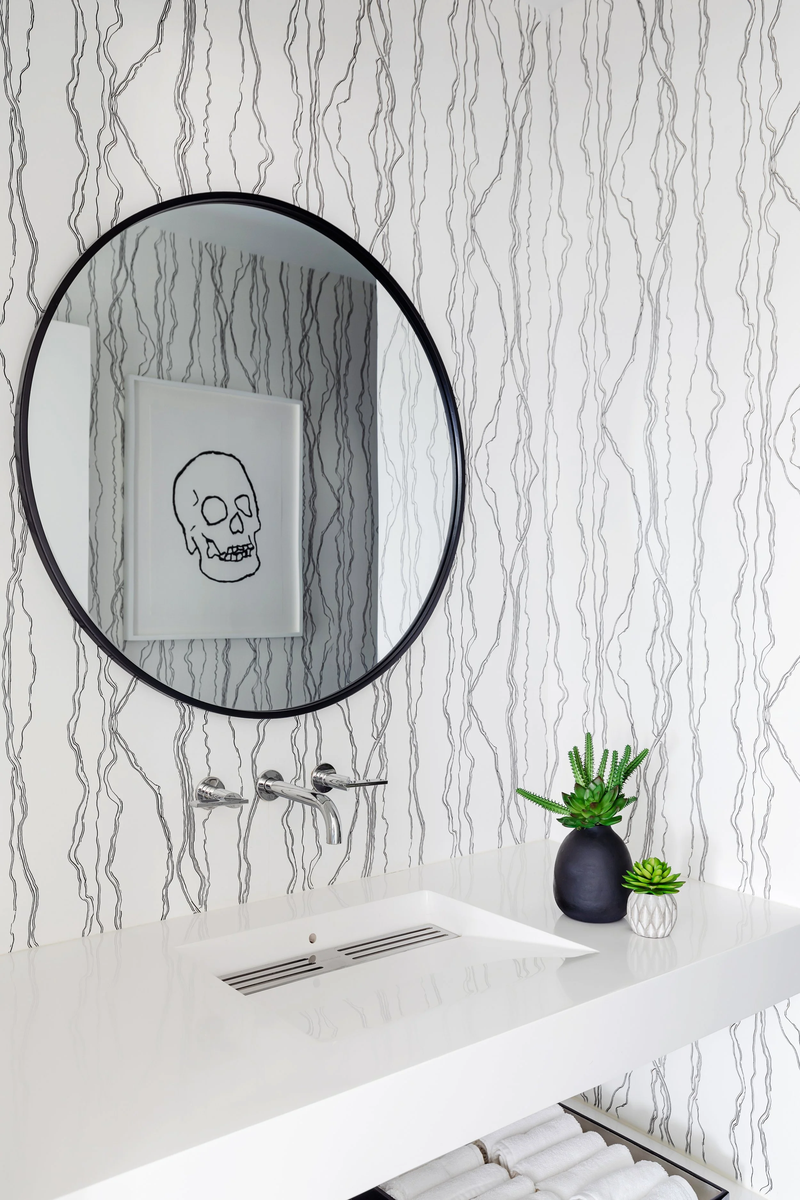
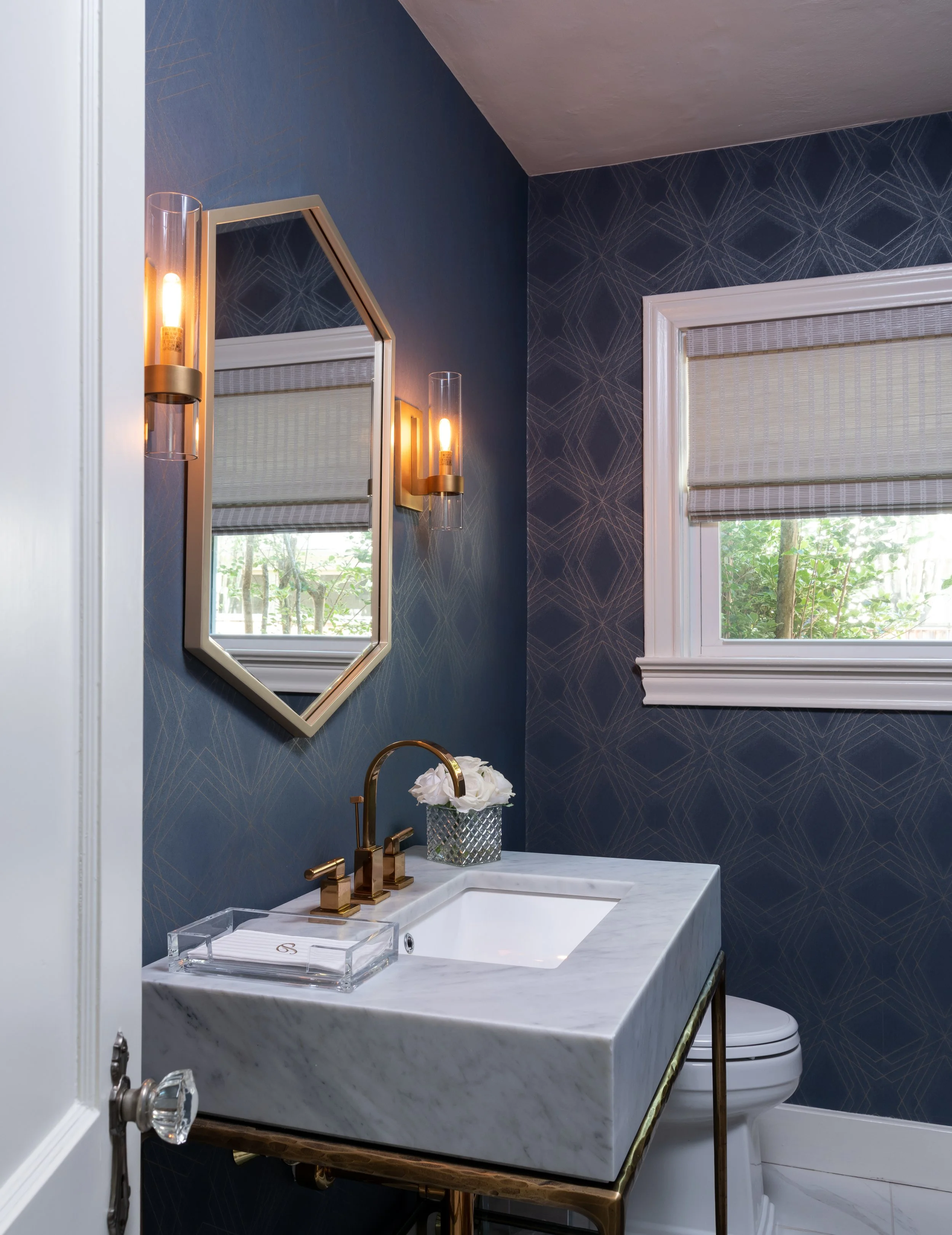
The powder bath is the room where we most consistently encourage clients to take a fixture risk. It is small, it is used briefly, and it is seen by every guest in the home. That combination makes it the ideal environment for a statement faucet, an unexpected finish, or a wall-mount configuration that would feel too bold in a larger, more functional bathroom.
A wall-mount faucet, in particular, is one of our preferred specifications for powder baths. It clears the countertop entirely, creates a clean visual line that suits both contemporary and transitional aesthetics, and gives the vanity a floating quality that a deck-mount faucet cannot achieve. The trade-off is that wall-mount faucets require the rough plumbing to be planned early in the construction process which is why this decision must be made at the beginning of a project rather than at the end. There are fewer wall-mount faucets on the market and they tend to be more expensive so that may also factor into the plan.
Cabinet hardware in a powder bath can be bolder than anywhere else in the home for the same reason: small room, brief encounter, high impact. A dramatic oversized pull or a knob with a distinctive profile reads as confident and considered in a powder bath in a way that might feel excessive in a kitchen where you are looking at the same pull forty times a day.
Pro Design Tip: The single vanity in a powder bath is one of the few places in a home where a vessel sink with a tall, architectural faucet creates genuine drama without the practical drawbacks that vessel sinks carry in high-use bathrooms. If you have always wanted a vessel sink, the powder bath is the room to put it in.
Throughout the Home
Cabinet Hardware: The Detail That Ties Every Room Together
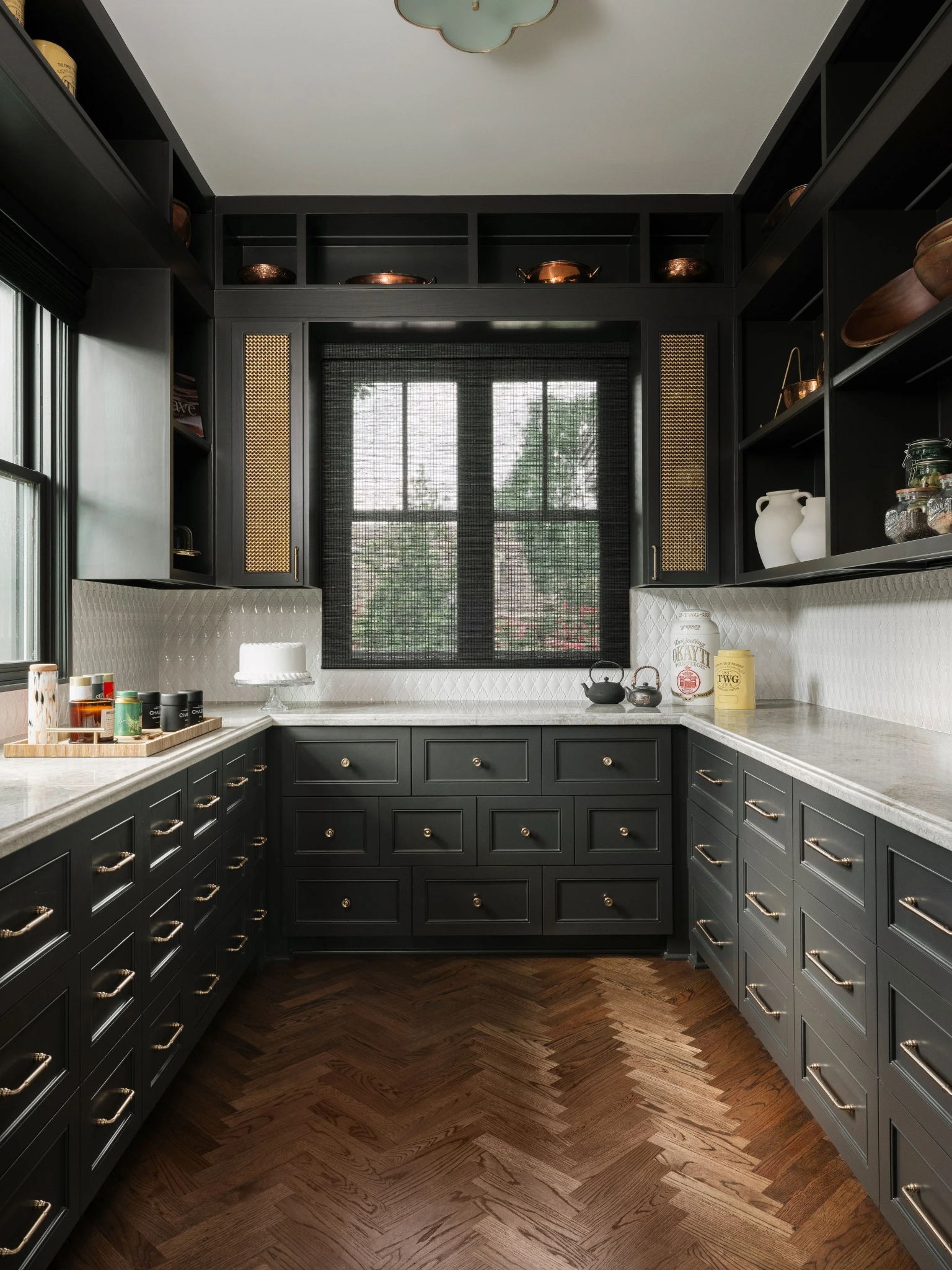
Cabinet hardware is, in terms of sheer quantity, the fixture category with the most pieces in any home. A kitchen alone may have forty or fifty pulls. A well-appointed primary closet can have thirty more. The cumulative visual impact of these small elements is enormous, and the decision to treat them as a coordinated system rather than a series of individual choices is one of the clearest marks of a professionally designed home.
The primary decision in cabinet hardware is the same as in plumbing: finish first, then form. Once the finish is established, the form question follows directly from the cabinetry style. Shaker cabinets are versatile enough to support nearly any pull profile, from a simple bar pull to a more decorative cup pull. Flat-front contemporary cabinetry calls for a pull with clean lines and minimal profile. Raised-panel traditional cabinetry often looks best with a bin pull or a knob that references its period sensibility.
Scale matters as much as form. A pull that is too small for a wide drawer reads as tentative. A pull that is too large for a cabinet door overwhelms the frame. We size pulls relative to the door or drawer they serve, not according to a single standard dimension applied uniformly. On drawers wider than 24 inches, we often specify two pulls rather than one centered pull, which reads more proportionally correct and is more comfortable to use.
Door hardware, often the last fixture category to receive attention in a renovation, deserves to be selected carefully. We generally suggest a finish that compliments other fixed elements in the home such as paint, stone and flooring. We also like to commit to one finish for all door hardware about 90% of the time. Hinges, knobs and door stops should all match. Keeping them consistent create an established feel to your doors, whereas changing door hardware from room to room feels incongruous. While prices vary, a heavier doorknob is a small splurge that will feel luxurious every time you open the door. Consistency here is not about rigidity. It is about the quiet coherence that makes a home feel complete.
Pro Design Tip: When specifying cabinet hardware for a full home renovation, order a minimum of ten to fifteen percent overage. Hardware is discontinued more frequently than nearly any other fixture category, and matching pulls for a cabinet replacement years down the line can be genuinely difficult. Store the overage in a labeled box in a utility space and your future self will be grateful.
The Finishing Layer
Bathroom Accessories: Where Coordination Becomes Cohesion
Towels bars, robe hooks, toilet paper holders, and hand towel rings are the final layer of fixture specification in any bathroom, and they are the layer most frequently underestimated. These are the pieces that complete the story. When they share a finish family with the plumbing fixtures and are scaled and positioned with care, the bathroom reads complete. When they are chosen separately or purchased as generic add-ons, the room will feel like something is slightly off, even in an otherwise beautifully designed space.
Towel bar placement is a functional and aesthetic decision in equal measure. A 24-inch bar is standard for a single hand towel. A 30 or 36-inch bar serves a full-size bath towel more comfortably. The positioning height, typically 48 inches from the floor for a standard bath towel bar, should be adjusted for ceiling height: in a room with exceptionally high ceilings, raising the bar slightly prevents it from looking stranded in the lower half of the wall.
Robe hooks are among the most frequently requested additions in our projects, and among the most overlooked in standard construction. Clients who live with a robe hook understand their value immediately. A single hook positioned near the shower entry, at a height of 65 to 70 inches, is one of the most practical fixture decisions in a bathroom. Double hooks near the primary entry serve families where two people share a bathroom and need independent space. They are also great additions to closets and utility rooms. We suggest additional hooks in dressings to hang robes, pajamas and workout clothes.
Toilet paper holders deserve a brief note because they are the one fixture in a bathroom where there is genuine room for a small departure from the dominant finish, handled carefully. A recessed holder in a complementary finish, or a free-standing holder in a warm metal that introduces a secondary note, can add a subtle layer of interest in an otherwise consistent space. It is the kind of detail that no one will point to specifically, but that contributes to the sense that every corner of a room received attention.
Pro Design Tip: Specify bathroom accessories as a coordinated set from a single manufacturer wherever possible. Mixing towel bar brands, even in the same finish, often produces subtle differences in proportion, bar diameter, and hardware profile that read as inconsistent from across the room. A complete set from one line is almost always the more polished choice.
The Details Make the Design
Every fixture in a home is a decision. Not all of them need to be dramatic, and most of them should not be. But all of them should be intentional. The homes that feel most complete, most considered, most genuinely designed, are the ones where someone made a decision about every pull and every faucet and every towel bar, and those decisions add up to a room that feels right in a way that is almost impossible to articulate but immediately apparent.
At Pamela Hope Designs, we love this part of the work. The layering of finish decisions across an entire home, the quiet satisfaction of a cabinet pull that is exactly the right scale, the confidence of a faucet that was chosen for this room and no other: these are the details that separate a house from a home.
If you are navigating fixture decisions for a renovation or a new build here in Houston, we would love to help you work through them. The details are our favorite part.
We are off to our next design project.
Fondly,
Pamela Hope Designs
Meet Pamela
A LUXURY INTERIOR DESIGNER IN HOUSTON
Pamela O’Brien is the founder of Pamela Hope Designs in Houston, Texas. Pamela is an award-winning luxury interior designer, writer, and speaker. Prior to founding Pamela Hope Designs, Pamela served as a spokesperson in media and public affairs, working with media outlets like Dateline NBC and 48 Hours. This experience allowed her to travel the world and furthered her love for travel, culture, and interior design. After attending an executive course at the Harvard Graduate School of Design, Pamela launched her own interior design firm full-time. Pamela is known for building strong relationships with her clients, who later become friends and collaborators. She is highly influential in the Houston interior design space and shows no signs of slowing down.